
Ronald Gunawan: Oil and Gas Still Needed, Regulatory Stability Is the Key to Investment
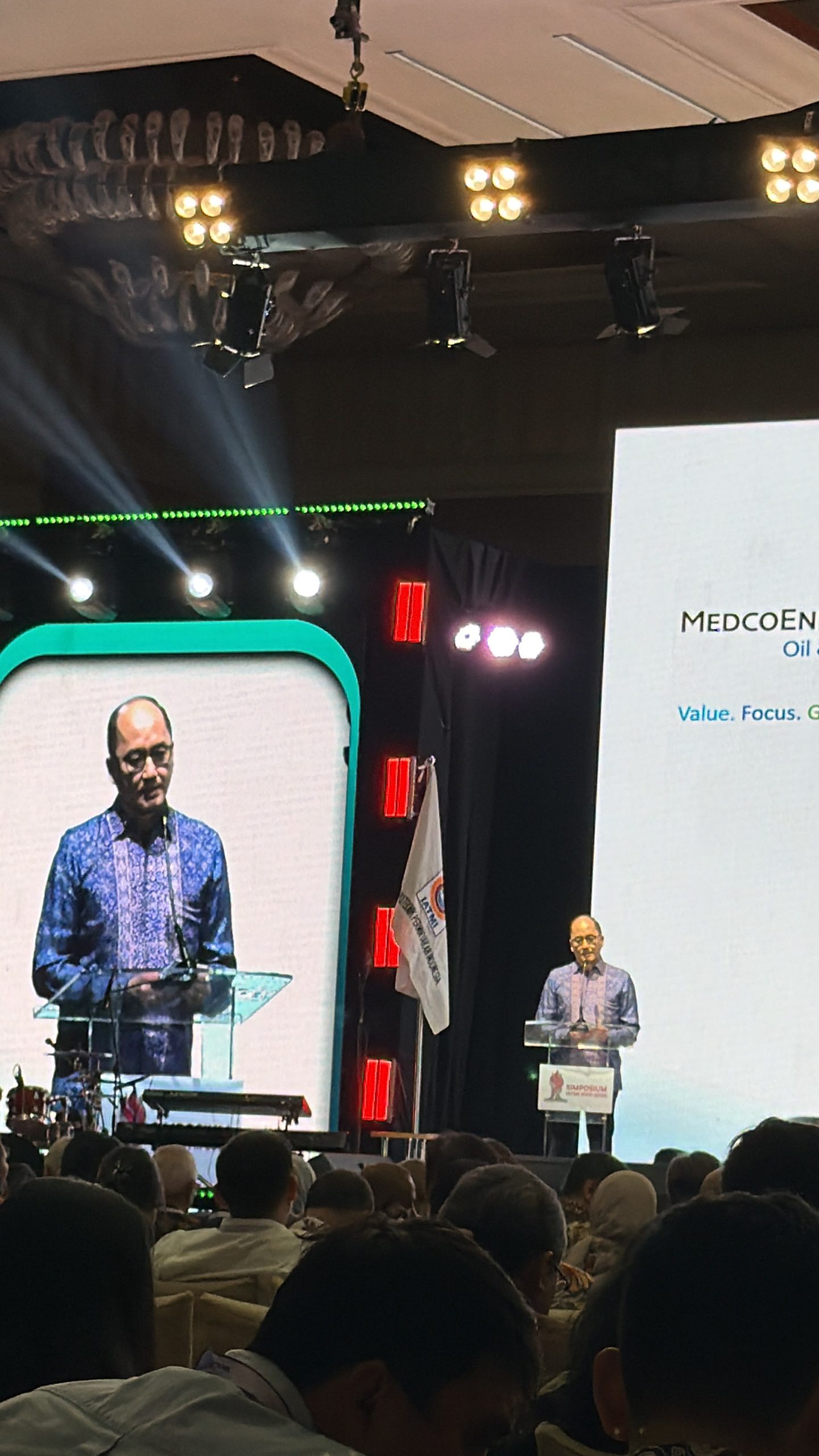
Central Jakarta, Jakarta, ruangenergi.com—The oil and gas industry is not a business that can run in a matter of months. It requires large investments, high technology and long-term certainty.
Chief Executive Officer (CEO) of PT Medco Energi Internasional Tbk, Ronald Gunawan, affirmed that stability and certainty are essential factors in maintaining the attractiveness of Indonesian oil and gas investment.
Ronald made these remarks in his presentation at the 18th IATMI Symposium 2026 on Tuesday (15/9/2026).
According to Ronald, the capital-intensive character of the oil and gas business makes investors highly sensitive to uncertainties. Moreover, oil and gas operations today are cross-border in nature.
Medco, for example, not only develops its oil and gas business in Indonesia but also invests in several countries such as Malaysia, Thailand and Oman.
“The most important thing for investors is how to avoid uncertainties. Uncertainty makes it difficult for us to make decisions,” Ronald said in his presentation.
For that reason, he said, Indonesia needs to maintain regulatory consistency even amid leadership changes and policy shifts. Such certainty is one of the foundations that give investors the confidence to commit capital for the long term.
Beyond regulation, Ronald views the technical capability of human resources as another important pillar. The oil and gas industry is high-tech and high-risk, requiring workers with strong technical competence.
Interestingly, Ronald considers Indonesia’s current Production Sharing Contract (PSC) terms to be sufficiently competitive.
Over the past three to five years, the government has offered profit-sharing schemes he regards as attractive to investors. Splits can range from 60:40 to 55:45, with cost recovery schemes of up to 100 per cent.
However, Indonesia’s problem is no longer merely about contract terms and conditions.
“The terms are already good enough. The challenge is time to market,” Ronald said.
According to him, the lengthy period from an investment decision to a project delivering economic value remains a major challenge.
Ronald compared the situation to Oman, where, he said, project execution can be completed in about two years because the procurement process is relatively simple and land acquisition issues are far fewer.
Oman’s geography, with much of its territory being desert, also makes project development relatively straightforward.
“So even if the terms may not be as good as Indonesia’s, if the time to market is fast, the economic benefits can be felt sooner,” he explained.
For investors, speed is an essential part of project economics.
Oil and Gas Still Have a Role Amid the Energy Transition
Ronald also highlighted the changing global energy landscape. According to him, the development of renewables does not automatically mean oil and gas will be abandoned immediately.
He sees renewables today as more accurately viewed as energy additions, not a total replacement for hydrocarbons in a short timeframe.
Therefore, oil and gas will still play a role in maintaining energy resilience and security.
Medco itself, Ronald said, has anticipated these changes since 2017-2018 by building three business pillars.
First, oil and gas. Second, power and renewables. Third, mining.
For its mining business, Medco has chosen to focus on commodities considered relevant to the needs of future industry, particularly copper and gold.
This strategy reflects Medco’s approach of not pitting hydrocarbons against new energy, but building a more balanced portfolio.
Ronald cautioned that the energy transition requires balance. He cited Australia’s experience facing electricity supply problems after pursuing a rapid energy shift.
According to him, Australia has large gas reserves, but most of that gas has been exported, so when domestic demand rose, energy supply problems emerged.
“So we must learn that transitions must be balanced,” he said.
For Indonesia, a balance between hydrocarbons and new energy is important so that the energy transition agenda does not sacrifice energy security.
IATMI and the Oil and Gas Human Resources Challenge
In his presentation, Ronald also emphasised the importance of professional organisations such as the Indonesian Petroleum Engineers Association (IATMI) in building the geoscience industry ecosystem.
According to him, professional organisations play an important role in developing the competence and accountability of human resources, while providing technical perspectives to the government.
The oil and gas industry is characterised by high technology and high capital. A technical error in a single operation, particularly drilling, can cause losses of up to millions of dollars.
Therefore, competence development is non-negotiable.
However, Ronald reminded the audience that a technical perspective cannot stand alone. Technical input to the government must always consider economic aspects.
“A technical point of view cannot be separated from an economic point of view,” he asserted.
According to him, Indonesia’s ability to face global industry challenges will be determined largely by its ability to marry technical expertise with economic considerations.
Ultimately, Ronald stressed the importance of collaboration among all stakeholders. Future energy challenges concern not only oil and gas production or renewable energy development, but also electricity, investment, technology, human resources and shifting global geopolitics.
His message was clear: Indonesia needs sufficient energy, sustainable investment, stable regulation and competent human resources to win the global energy competition.
Source: jawawa.id (https://jawawa.id/newsitem/ronald-gunawan-oil-and-gas-still-needed-regulatory-stability-is-the-key-to-investment-1789498214)
Originally published by ruangenergi.com (https://www.ruangenergi.com/ronald-gunawan-migas-tetap-dibutuhkan-stabilitas-regulasi-jadi-kunci-investasi/), translated from Indonesian