
Rolling Blackouts Spotlight Government's Rp110 Trillion Debt to PLN
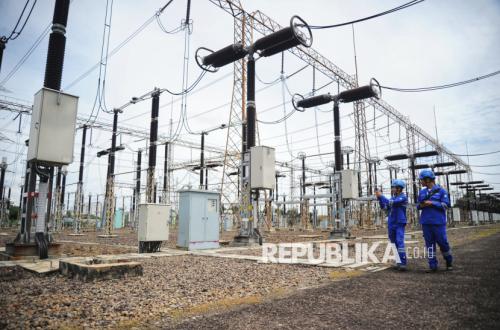
The surge in government receivables to PT PLN (Persero) has come under scrutiny, with the figure reaching Rp110.74 trillion by the end of 2025. Imaduddin Abdullah, Director of the Institute for Development of Economics and Finance Green Transition Initiative (INDEF GTI), noted this value has more than doubled compared to the end of 2024, when it stood at Rp43.29 trillion. “These are PLN’s receivables from the government, not PLN’s debt. The government has the outstanding bill,” Imaduddin stated in Jakarta on Monday (22/6/2026). He explained that the core issue arising from the ballooning receivables is the pressure on PLN’s cash flow. A significant portion of the government support that the company should have received has not yet materialised as cash, instead accumulating as unpaid bills. “The main problem lies in cash flow. Around a third of government support in 2025 did not enter as cash but became unpaid receivables. As a result, PLN’s liquidity is squeezed and its room for investment becomes increasingly narrow,” Imaduddin said. He clarified that this condition is not a direct cause of the power outages. However, he added that cash constraints can amplify the risk of electricity supply disruptions by narrowing PLN’s ability to operate optimally. “When PLN’s cash is held up in receivables, the company’s capacity for procuring primary energy and maintaining power plants becomes more limited,” he continued. Imaduddin assessed that the problem is structural, as the national electricity system remains heavily dependent on coal. This dependency, he conveyed, means PLN continually faces coal pricing issues through the domestic market obligation (DMO) scheme. “As long as the system relies on coal, PLN will remain trapped in the tug-of-war over DMO prices. If the DMO price is raised, the cost burden essentially just shifts to PLN’s balance sheet. So, that policy does not truly solve the problem,” he added. Consequently, Imaduddin urged the acceleration of the transition to new renewable energy, particularly solar power plants, as a long-term solution to alleviate PLN’s financial pressure. He noted that solar plants have no fluctuating fuel costs, are not tied to the DMO mechanism, and have relatively more stable operational costs. “Thus, they do not continuously generate cost differentials that ultimately become receivables,” he remarked. Imaduddin highlighted a paradox in the national energy transition effort. PLN requires massive investment to reduce its dependence on coal, yet on the other hand, the company’s investment capacity is being eroded by the large amount of funds still held up as receivables from the government. “The irony is that breaking free from coal requires huge investment, but that investment capacity is being eroded by cash trapped in receivables,” Imaduddin concluded.