
Rokhmin: KNMP needs to utilise cold chain to maintain fish export competitiveness
If the quality of fish and seafood declines, it does not only result in economic impacts, such as low selling prices or products becoming unsellable; there are also implications for health and a reduction in our export value.
Surabaya, East Java (ANTARA) - A member of Commission IV of the Indonesian House of Representatives (DPR RI), Rokhmin Dahuri, stated that the Red and White Fisherman Village (KNMP) needs to utilise cold chains to improve the welfare of fishermen and Indonesia’s export competitiveness.
According to him, energy-efficient cold chains are essential infrastructure for maintaining the quality of fish from the moment they are caught or harvested until they reach the consumer. Therefore, such a system is a strategic step toward increasing fishermen’s welfare and Indonesia’s export competitiveness.
“I very much welcome and appreciate the holding of a symposium or workshop on cold chain systems that support the success of the Red and White Fisherman Village programme,” said Rokhmin Dahuri in his statement in Surabaya, East Java, on Saturday.
Rokhmin revealed that of approximately 15 million tonnes of Indonesian fishery production annually, less than 12 per cent can be handled with a cold chain system. This limitation is one of the issues causing some fishery products to decline in quality or even go to waste before reaching consumers.
“If the quality of fish and seafood declines, it does not only impact the economy through low selling prices or products becoming unsellable. There are also impacts on health and our export value,” he said.
According to him, this issue has a ripple effect. When fish quality drops, fishermen’s selling prices are pressured. On the other hand, products that are not handled properly can pose health risks and struggle to meet export market standards.
This condition also explains why Indonesia, despite being one of the world’s large fishery producers, still lags in export value compared to countries such as Vietnam, Thailand, and Norway.
To address these challenges, Rokhmin encouraged the use of more efficient and environmentally friendly cold chain technology. He stated that low-carbon or even zero-carbon technology needs to be implemented in the national fishery system, particularly by utilising Indonesia’s solar energy potential.
“We must utilise increasingly sophisticated technology, especially regarding low-carbon or zero-carbon technology. Indonesia is a treasure trove of solar energy resources,” he said.
Rokhmin continued that the use of solar energy could be applied gradually to various needs in the fishery sector, ranging from fishing vessels, cold storage, and refrigerators to cool boxes. He reminded that cooling systems in the fishery sector should gradually cease to depend on fossil fuels or petrol.
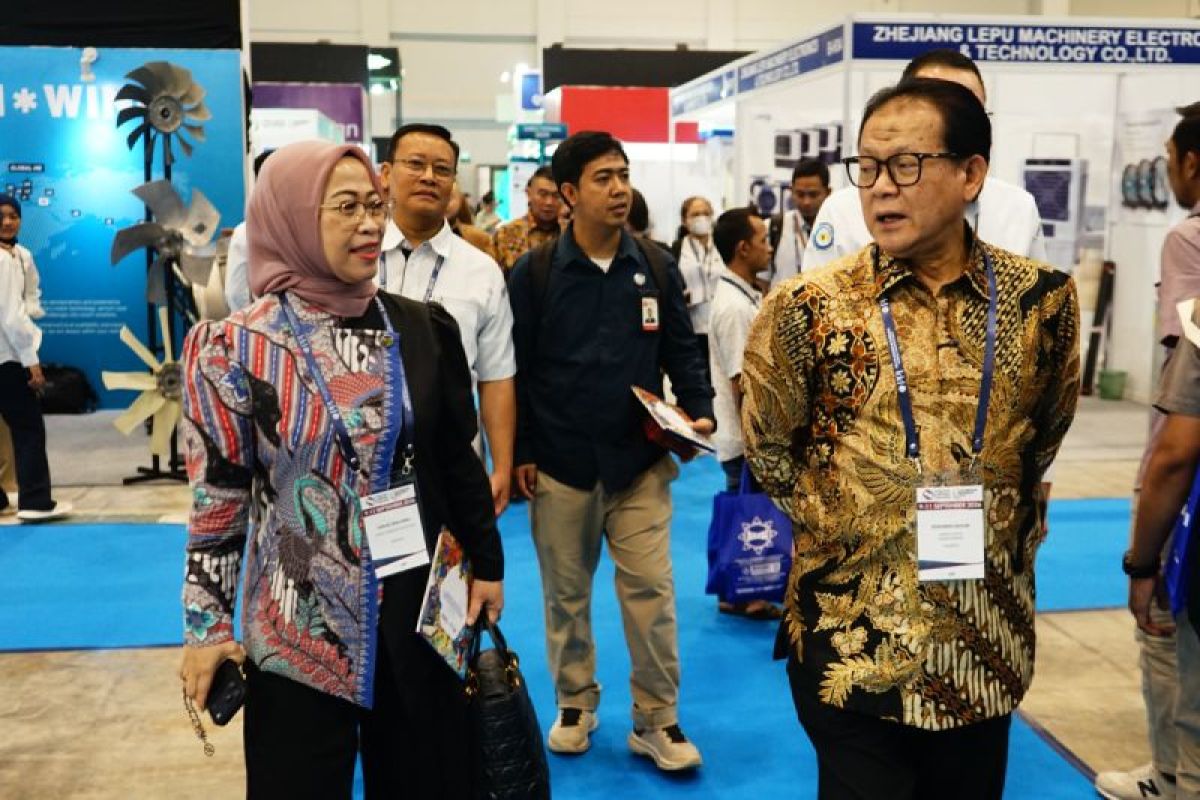
Meanwhile, the need for efficient cold chain technology is also a focus for the industry. PT DS Solutions International, as the official representative of TITAN Containers in Indonesia, introduced portable cold storage technology at the RHVAC Indonesia 2026 exhibition held from 9–11 September 2026 at the Nusantara Indonesia Convention Exhibition (NICE), PIK2, Hall 5 & 6.
In an event bringing together business players, engineers, and operators in the refrigeration, HVAC, and cold chain industries, TITAN Containers presented two portable cold storage units directly at their booth. Additionally, the company will hold a business presentation on the second day of the exhibition to introduce cooled storage solutions to the food, beverage, fishery, and pharmaceutical sectors.
The two units displayed are the ArcticBlast 20FT and the ArcticStore Horizon 40FT. The ArcticBlast 20FT is a unit designed for rapid chilling and blast freezing, featuring a dual-engine system capable of lowering temperatures to -40°C. This technology is intended for commodities such as meat, poultry, and seafood that require rapid cooling or freezing to maintain product quality.
Meanwhile, the ArcticStore Horizon 40FT is the latest generation of the ArcticStore family, introduced to Indonesia for the first time at the event. This unit has a temperature range of -30°C to +30°C and claims to reduce average energy consumption by up to 55 per cent compared to conventional reefers. This efficiency is supported by the latest generation of insulation panels and a refrigerant with a Global Warming Potential (GWP) of 0.5. The Horizon unit can also be equipped with optional solar panels, which can typically reduce energy consumption by a further 25 per cent.
While opening opportunities for cooperation with foreign companies, Rokhmin emphasised that the government must ensure such partnerships provide maximum benefits to the national industry. One aspect that needs to be strengthened is the level of Domestic Component Level (TKDN), including encouraging the domestic production of cold chain technology components.
“The benefits of cooperation with foreign nations must be realised immediately, namely technology transfer, added value must remain with us, and the benefits for labour must also be for us. We must not simply import finished goods without any components being produced domestically,” he asserted.
He ensured that Commission IV of the DPR RI will help oversee this policy so that international cooperation does not stop at technology import activities. In his view, ideal cooperation should result in technology transfer, increase national industrial capacity, create domestic added value, and simultaneously create job opportunities for the Indonesian people.