
Robotics and AI in the Spotlight at IHKS 2026 Forum, Entering the World of Surgery but Doctors Remain in Control
The development of robotics and Artificial Intelligence (AI) technology is bringing changes to the world of orthopaedic surgery. The technology is considered capable of helping doctors perform operations more precisely, from surgical preparation and measurement to maintaining stability during the procedure.
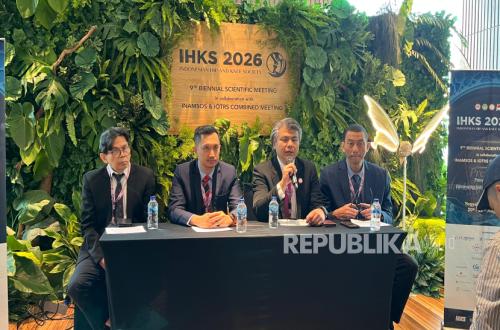
This was one of the topics discussed at the 2026 Indonesian Hip and Knee Society (IHKS) Annual Scientific Forum held in Yogyakarta over three days from 20 to 22 August 2026. The forum brought together hundreds of orthopaedic surgeons and researchers from 15 countries to exchange knowledge and discuss the latest developments in the treatment of hip and knee disorders, including the use of technology in surgical procedures.
IHKS President Dr Rizki Rahmadian said that robotic technology in orthopaedic surgery essentially functions as an aid for surgeons. Robots do not replace the role of doctors, because control and medical decision-making remain in human hands.
“Although the term is robotically guided surgery, the operator is still the surgeon. The operator and the thinking are still done by humans,” said Dr Rizki on Friday (21/8/2026).
According to him, the use of robotics primarily helps doctors perform measurements more precisely. In joint replacement surgery, for example, doctors must accurately measure and install implants, much like an engineer installing a device.
Robotics can also help maintain stability during surgery. Rizki acknowledged that humans have physical limitations, such as fatigue or tremors under certain conditions. Robotic systems can help doctors perform procedures with more stable and measured movements.
“What we usually measure with tools, with rulers, with callipers and so on, now there is a digital robot that helps us calculate. It is usually more precise,” he said.
“The robot in principle is an assistant so that surgical outcomes are better, more stable and more precise,” he added.
In addition to robotics, the development of AI is also beginning to be utilised to support various stages of medical services. Rizki assessed that AI has the potential to help doctors collect and process data, support the diagnostic process, and generate predictions about the likely outcomes of a medical procedure.
“The technology has indeed reached that point now, how artificial intelligence has developed, is already among us and we cannot deny that it is a good technology. But it still requires the human brain to filter whether the information is appropriate for us to use or not,” he explained.
The use of AI still depends on the readiness of accurate medical big data in Indonesia.
Speaking on the same occasion, President of the Indonesian Orthopaedic and Traumatology Society (IOTRS), Dr Norman Zainal, said that AI is essentially a tool that works by utilising big data. Therefore, data quality is one of the important challenges in the application of AI in the health sector in Indonesia.
“Artificial intelligence is just a tool, an instrument to help us. The problem is that it operates on the basis of big data. Our weakness in Indonesia is that our data is not yet correct,” said Norman.
According to him, if the available medical data becomes more complete and of higher quality, AI can help speed up examination and analysis processes. The technology even has the potential to process information from physical examinations and camera recordings to help identify patient conditions and determine the level of urgency for treatment.
In addition, Dr Norman also mentioned that AI can be developed to provide an overview of the likely outcomes of surgical procedures. Thus, patients are expected to obtain more measurable information about their condition and the results that may be achieved through a procedure.
“Another advantage of AI is its ability to perform predictive results. So, the likely outcome can be predicted and conveyed to the patient. For example, if surgery is performed, the shape will be like this, the size can reach this much. If it exceeds that size, it is no longer possible,” he said.
Nevertheless, he stressed that the use of AI still requires the ability of doctors to verify and filter the information generated by the technology. This is important so that medical decisions are not entirely handed over to AI systems.
“Verification by doctors also remains an important part of the application of this technology,” he said.
Regarding the IHKS 2026 forum, IHKS Chairman Aditya Fuad Robby Triangga said it serves as a platform for orthopaedic experts to discuss the latest developments in the treatment of joint disorders. Over three days, the activities were filled with workshops and interactive scientific sessions reviewing the options of preserving joints or performing joint replacement according to the patient’s condition.
The biennial forum also featured around 100 speakers from home and abroad. They consisted of 24 international speakers from 15 countries and around 76 national speakers from various regions in Indonesia.
“In this forum we discuss and disseminate knowledge to orthopaedic colleagues throughout Indonesia, especially regarding how to improve knowledge in preserving joints or performing joint replacement procedures to improve patients’ quality of life,” he said.
“The main goal is the transfer of knowledge so that orthopaedic treatment standards in Indonesia are in line with international standards,” he added.
The discussions at IHKS 2026 also involved other organisations, one of which was the Indonesian Musculoskeletal Oncology Society (INAMSOS). This collaboration broadened the discussion, especially in handling complex cases related to the musculoskeletal system.
Source: jawawa.id (https://jawawa.id/newsitem/robotics-and-ai-in-the-spotlight-at-ihks-2026-forum-entering-the-world-of-surgery-but-doctors-remain-in-1787579595)
Originally published by Republika (https://rejogja.republika.co.id/berita/tk9yaf291/robotik-dan-ai-jadi-sorotan-forum-ihks-2026masuk-dunia-bedah-tapi-dokter-tetap-pegang-kendali), translated from Indonesian