
Robert Kiyosaki Admits to Holding Rp19 Trillion in Debt, Explains the Purpose
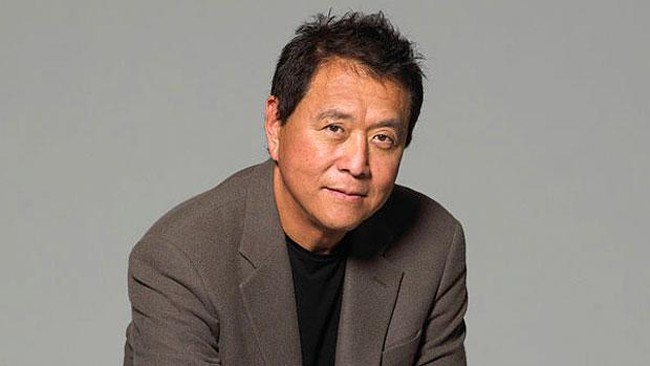
Robert Kiyosaki, the author of the ‘Rich Dad, Poor Dad’ series, has revealed that he holds debt amounting to US$1.2 billion, or approximately Rp21.32 trillion (assuming an exchange rate of Rp17,770). However, this debt is not entirely Kiyosaki’s personal liability, but rather belongs to a group of property investors involving himself and his partners.
According to Money Wise, Kiyosaki’s former wife and business partner, Kim Kiyosaki, explained that the debt is related to the ownership of around 1,500 apartment units. Meanwhile, the portion of the debt that is Kiyosaki’s personal responsibility is said to be much smaller than the US$1.2 billion figure.
The figure was previously disclosed directly by Kiyosaki during an appearance on ‘The Iced Coffee Hour’ podcast. When asked directly about his debt amount, Kiyosaki answered without hesitation that he owes US$1.2 billion.
Rather than feeling anxious, Kiyosaki believes the scale of the debt aligns with his long-standing financial philosophy. He believes that debt can be used strategically to purchase assets that are capable of generating income while simultaneously appreciating in value.
When asked if such a large amount of debt makes him fear default, Kiyosaki laughed. According to him, the difference between small and very large amounts of debt lies in who ultimately bears the burden when the debt cannot be repaid.
Kiyosaki stated that the primary reason banks are willing to provide such fantastic loans is down to two words: real estate. He believes that property investment often requires leverage—the use of debt—to purchase and expand an asset portfolio.
This philosophy stands in stark contrast to conventional financial views that encourage people to become debt-free as quickly as possible. Kiyosaki even stated that, according to the principles taught by his ‘rich dad’, one should actually utilise borrowed funds to buy productive assets rather than always relying on one’s own money.
Kiyosaki admitted that he continues to purchase property using debt and mentioned that this strategy helps him legally reduce his tax burden. He stated that he currently owns hotels and approximately 15,000 rental properties, which he claims can generate significant wealth without paying taxes.
This strategy essentially utilises the debt attached to assets to obtain both financial and tax benefits. When investors purchase property using loans, interest payments can, under certain conditions, serve as tax deductions even if the property continues to generate positive cash flow.
Investors can also borrow by using their owned assets as collateral instead of selling them. If property values increase, investors can leverage the increase in equity to obtain funds without having to sell the property, potentially avoiding capital gains tax.
However, this strategy does not mean that debt is ‘free money’, as loan obligations must still be met. A leverage strategy can only function if the owned assets generate sufficient income to meet loan repayments.
Property investment can indeed serve as an instrument to both maintain and build wealth, as it provides rental income, protection against inflation, and various tax benefits. Indeed, property is said to account for nearly 25% of the portfolios of typical family offices.
Nevertheless, the use of large amounts of debt can also magnify losses when market conditions worsen. Without stable cash flow and experience in property management, market downturns or rising interest rates can quickly transform previously manageable debt into a financial burden.
Kiyosaki does not rely solely on property for his wealth-building strategy. He is also well-known as a supporter of investing in precious metals and Bitcoin, which he believes can serve as a hedge when inflation erodes the purchasing power of currency.
Gold is one of the prominent assets in Kiyosaki’s investment philosophy. He has repeatedly encouraged investors not to rely solely on cash and stocks, but to consider assets believed to maintain their value when inflation rises.
Despite his unconventional approach, Kiyosaki stated that his financial goal is not merely to enrich himself. In a Vanity Fair profile from August 2026, he described financial education as part of his mission to help others build wealth.
This perspective began to form after Kiyosaki met futurist R. Buckminster Fuller. When Kiyosaki expressed that his goal was to become wealthy, Fuller encouraged him to have a larger purpose, which subsequently led Kiyosaki to focus on teaching others about finance.
Alongside Kim Kiyosaki, he later ran the financial education company ‘Money & You’, which uses games to teach financial concepts. Kiyosaki subsequently created the board game ‘Cashflow’ before publishing ‘Rich Dad, Poor Dad’ in 1997.
The book has sold over 44 million copies, making Kiyosaki one of the biggest names in the world of personal finance. Although some of his investment views have faced criticism, he still sees himself as a financial educator.
However, Kiyosaki’s strategy is not necessarily an approach that all investors should follow. Property, precious metals, and cryptocurrencies all carry risks, and the use of large amounts of debt can magnify both gains and losses.
Thus, the key lesson from Kiyosaki’s strategy is not merely to follow his chosen types of investment. Instead, investors need to understand how assets, income, and debt can be integrated into a cohesive financial plan.
Source: jawawa.id (https://jawawa.id/newsitem/robert-kiyosaki-admits-to-holding-rp19-trillion-in-debt-explains-the-purpose-1788343056)
Originally published by CNBC Indonesia (https://www.cnbcindonesia.com/market/20260902132928-17-764350/robert-kiyosaki-ngaku-punya-utang-rp19-triliun-buat-apa), translated from Indonesian