
Roadmap for Tame Elephants in Indonesia
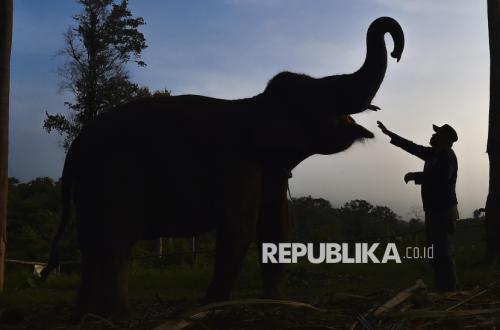
Amidst the shrinking forests of Sumatra and the increasing frequency of human-wildlife conflict, the fate of tame Sumatran elephants is relatively rarely discussed. Conservation agendas are more frequently focused on wild populations in Leuser, Ulu Masen, Tesso Nilo, or Bukit Tigapuluh. However, behind various conflict management efforts, there are approximately 250–280 tame Sumatran elephants that have been an important part of Indonesia’s conservation system for decades (Directorate General of KSDAE, 2024).
These elephants are located in elephant conservation centres, conservation response units (CRU), elephant response units (ERU), flying squads, safari parks, zoos, and other conservation facilities. Most are not the result of captive breeding. Many of them are wild elephants captured during the 1980s and 1990s, when domestication was used as one approach to mitigate human-elephant conflict (Sukumar, 2003).
The legacy of this policy demonstrates a shift in the conservation paradigm. Previously, elephants entering plantations or settlements were often viewed as pests that had to be relocated. The government subsequently established various training and conservation centres, including the Saree Elephant Conservation Centre in Aceh, the Minas Elephant Training Centre in Riau, and the Way Kambas Elephant Conservation Centre in Lampung (Ministry of Forestry, 2007).
The problem is that relocating individuals does not eliminate the source of conflict. As long as habitats continue to shrink, roaming ranges are fragmented, and ecological corridors are converted into plantations, roads, or settlements, conflict will continue to find its own way. Elephants simply follow their ecological needs: searching for food, water, mates, and space to move.
Conservation science has since shifted this perspective. Elephants are no longer viewed solely as animals that must be kept away from humans, but as an umbrella species as well as a keystone species, whose existence is linked to the sustainability of vast ecosystems (Sukumar, 2003). This change in perspective should also change how Indonesia treats tame elephants.
With a population of approximately 250–280 individuals, this group is not a small population that can be managed without long-term planning. Some are located in conservation and training centres, some perform conflict mitigation functions through CRUs, ERUs, and Flying Squads, while others are in ex-situ conservation facilities (Indonesian Elephant Conservation Forum, 2024).
If the wild Sumatran elephant population is estimated at around 1,300–1,700 individuals and the tame elephant population is around 250–280 individuals, the total population in Indonesia lies in the range of 1,550–1,980 individuals (IUCN SSC Asian Elephant Specialist Group, 2024). These figures indicate that the tame elephant group is a component that cannot be ignored in the national conservation strategy.
Source: jawawa.id (https://jawawa.id/newsitem/roadmap-for-tame-elephants-in-indonesia-1791370660)
Originally published by Republika (https://analisis.republika.co.id/berita/tmj7oe483/roadmap-gajah-jinak-di-indonesia), translated from Indonesian