
Riyadh seminar highlights AI development and the limits of human creativity
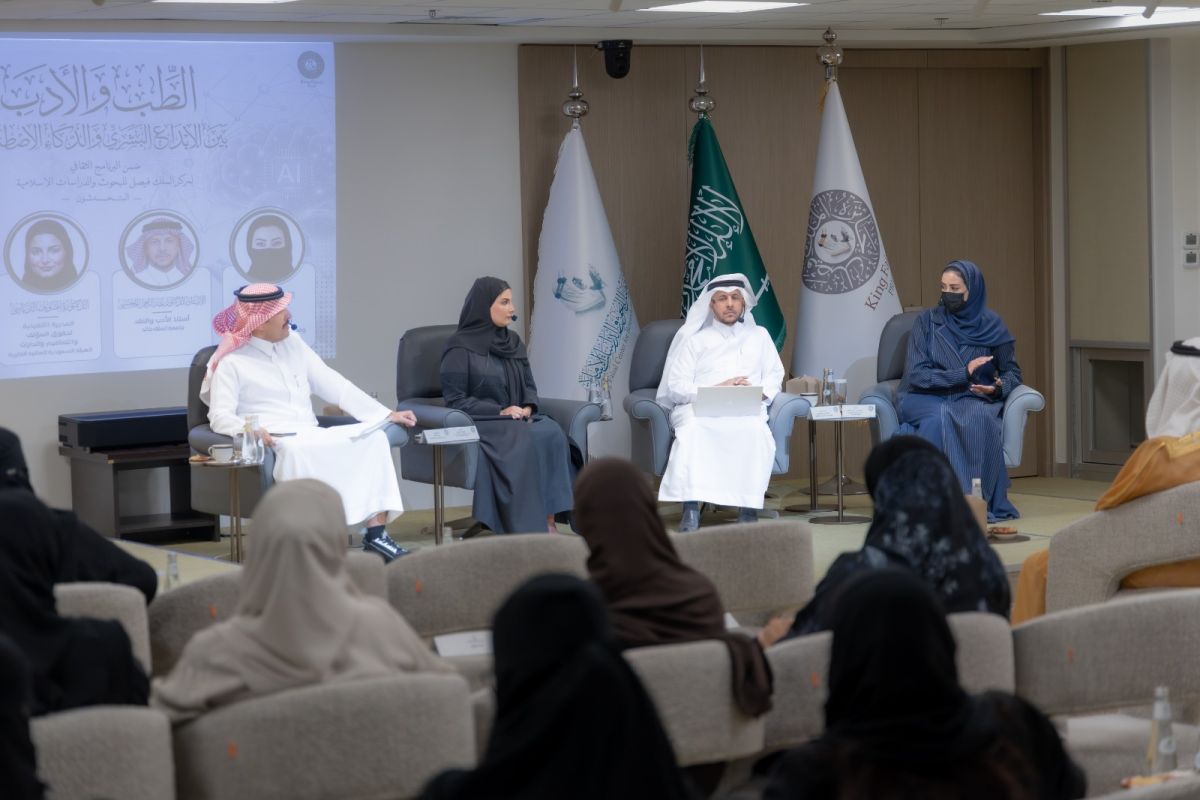
The development of artificial intelligence (AI) and its impact on human creativity, scientific research, medicine, literature and the protection of intellectual property rights were discussed at a scientific seminar organised by the King Faisal Prize and the King Faisal Center for Research and Islamic Studies (KFCRIS) in Riyadh.
The seminar, titled “Medicine and Literature between Human Creativity and Artificial Intelligence”, was part of the King Faisal Prize and KFCRIS cultural programme. The event brought together academics and experts in literature, AI and intellectual property to discuss the changes brought about by generative technology to the production and dissemination of knowledge.
The seminar, held in Riyadh on Thursday (27/8), was attended by Prince Turki Al-Faisal, Chairman of the KFCRIS Board of Directors and Deputy Chairman of the King Faisal Prize Board.
Speakers at the seminar included Dr Shorouq Al-Sinan, Director of the Artificial Intelligence Centre and Director of Scientific Publishing at Princess Nourah bint Abdulrahman University; Prof Dr Abdulrahman Al-Muhsini, Professor of Literature and Criticism at King Khalid University; and Dr Al-Hanouf Al-Dabbasi, Executive Director of Copyright, Designs and Integrated Circuits at the Saudi Authority for Intellectual Property.
The discussion was moderated by Prof Dr Omar Al-Saif, professor of Arabic at Alfaisal University and King Saud University, who also serves as Secretary General of the Ghazi Al-Gosaibi Award.
Participants discussed changes in the world of creativity and knowledge as AI’s ability to generate text and various forms of intellectual work continues to grow.
These developments raise questions about the meaning and limits of creativity, particularly in distinguishing works produced entirely by humans from works created or assisted by AI technology.
The discussion also highlighted the ability of generative technology to imitate human experience and produce literary works as well as scientific research material. Speakers emphasised the importance of preserving human and intellectual values in creativity amid the rapid development of AI.
Copyright and intellectual property were among the main issues raised at the seminar. Generative technology was seen as presenting new challenges for the protection of intellectual and creative works, particularly as the boundary between human works and machine-generated content becomes increasingly difficult to determine.
Participants also discussed the scientific and ethical aspects of AI use in knowledge-based fields, including medicine, scientific research and literature.
The debate also has relevance to policy developments in Indonesia. The Indonesian government is currently reviewing copyright protection for works produced with the assistance of or through AI technology, positioning AI as a tool rather than a legal subject.
The review is aimed at finding a balance between technological development and protection for creative industry players, including media, musicians, filmmakers and digital creators.
The Riyadh seminar was part of a series of cultural and academic programmes by KFCRIS and the King Faisal Prize aimed at enriching scientific discussion on contemporary issues, strengthening dialogue between the humanities and the sciences, and examining the influence of modern technology on the future of knowledge and creativity.
Source: jawawa.id (https://jawawa.id/newsitem/riyadh-seminar-highlights-ai-development-and-the-limits-of-human-creativity-1787806405)
Originally published by Antara (Indonesian) (https://www.antaranews.com/berita/5713076/seminar-riyadh-soroti-perkembangan-ai-dan-batas-kreativitas-manusia), translated from Indonesian