
River cleaning in West Jakarta to be accompanied by plecostomus fish captures
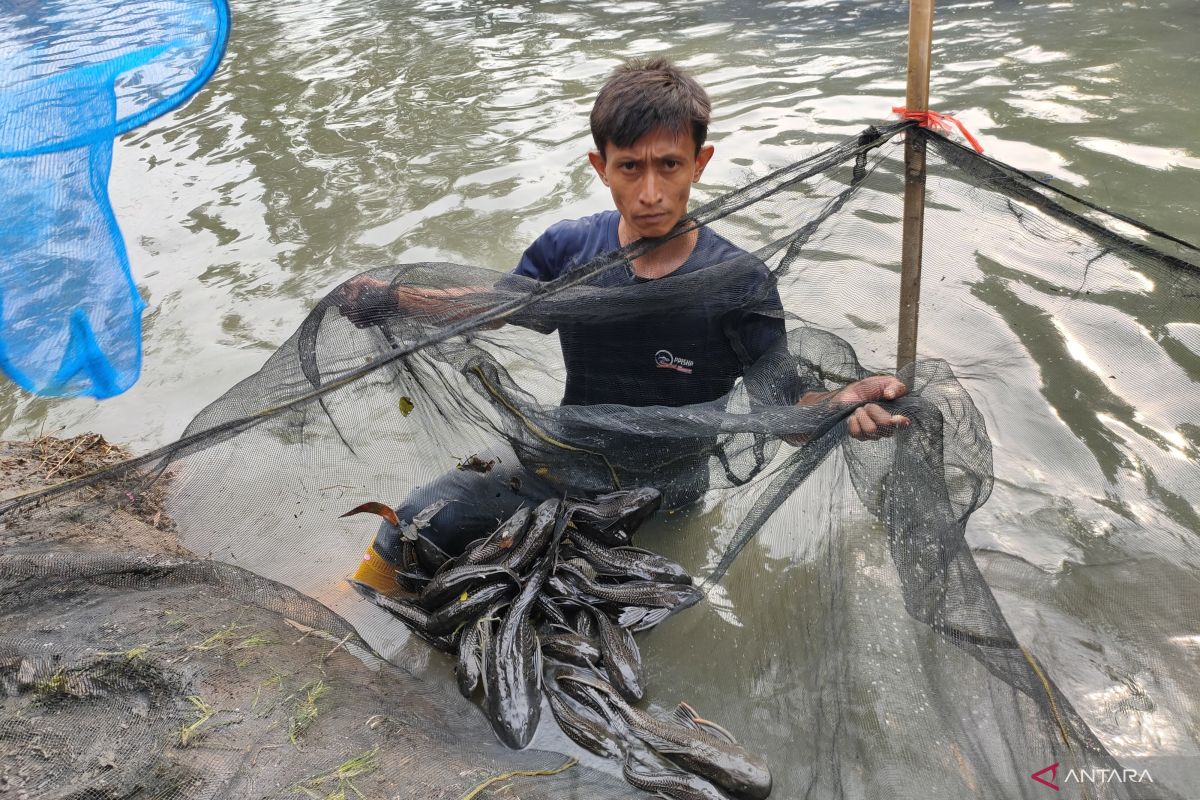
Jakarta (ANTARA) - The West Jakarta City Government (Pemkot Jakbar) is stepping up efforts to eradicate plecostomus fish in its territory, alongside activities to clean rivers or canals of sediment deposits.
Assistant for Economy and Development of West Jakarta City, Imron Sjahrir, stated that all regional work units (UPKD) tasked with transporting sludge have been instructed to also catch plecostomus fish while working.
“We have coordinated with the UPKD, particularly the Water Resources Sub-Directorate, and colleagues from the sub-districts, PJLP, and PPSU, so that in addition to draining the sludge, they can also capture plecostomus fish,” Imron explained when contacted in Jakarta on Monday.
He said the plecostomus capture will become a routine weekly programme. This also aligns with the DKI Jakarta Provincial Government’s programme to suppress the population of the fish that often damage river walls and embankments.
“We have directed this and even possibly every week, in all sub-districts, as part of the Mayor’s programme, we will carry out sludge draining along with plecostomus fish capture,” Imron stated.
Meanwhile, the Head of the Fisheries Section of the Food Security, Maritime Affairs, and Agriculture Sub-Directorate (KPKP) of West Jakarta, Aas Asih, explained that plecostomus fish are considered invasive and thus dangerous to other fish populations in the Taman Semanan Indah Canal.
“So they reproduce very quickly, causing local fish to be displaced,” Aas said.
In addition, this species also creates holes in the walls of embankments, making them brittle quickly.
“Indeed, the nature of plecostomus fish is that they bore into walls to make burrows. So this can damage the embankments of the channels in the Jakarta area,” Aas stated.
Furthermore, Aas said, plecostomus fish are often hunted by certain individuals to be processed into foods like siomay.
Meanwhile, the fish contain bacteria such as E. coli or Salmonella, and even worse, heavy metals like lead.
“It is concerning if the public consumes it continuously, as the heavy metals accumulate. That’s why the plecostomus must be eradicated,” Aas concluded.