
Rising Raw Material Import Values Increase Business Cost Pressures
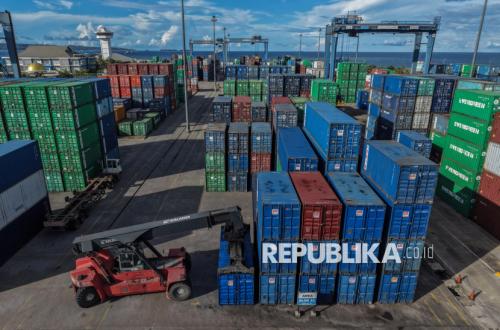
The increase in the cost of importing raw materials is adding pressure to the cost structures of businesses that rely on overseas supplies. This condition makes the ability of companies to rapidly monitor the cost of goods sold (COGS), expenses, and profitability increasingly vital as exchange rates and trade costs fluctuate.
Data from the Indonesian Central Statistics Agency (BPS) shows that the value of Indonesia’s imports of raw materials and auxiliary goods between January and July 2026 reached US$116.70 billion, an increase of 20.42 per cent compared to the same period the previous year. Changes in raw material costs and exchange rates can directly impact COGS and margins, particularly for manufacturing and trading businesses that utilise imported materials.
Suwandi Soh, Chief Executive Officer (CEO) of Mekari, stated that while companies cannot control exchange rate movements or global trade policies, they can accelerate the process of determining the impact on their costs and margins.
“Businesses in Indonesia cannot control currency fluctuations or global trade tariff policies, but they can control how quickly and accurately they understand the impact on their COGS and margins. When raw material costs and exchange rates fluctuate within months, the businesses that survive are not necessarily the largest, but those that are quickest to know their own numbers. That is what we aim to provide through Meklar Jurnal: consistent financial control and clarity, regardless of external conditions,” Suwandi said on Thursday (17/9/2026).
According to Suwandi, AI-based report analysis can also accelerate the process of converting financial data into more understandable information. This technology is intended to assist the analysis process rather than replace human decision-making.
“So, AI does not replace human decision-making; rather, it accelerates the process leading up to it,” he added.
Import cost pressures are also reflected in the movement of the Rupiah exchange rate, which was reported in the range of Rp20,400–Rp21,000 per US dollar during May–June 2026, before moving to the range of Rp17,700–Rp17,900 per US dollar during August–September 2026. These currency shifts represent cost risks that companies conducting transactions in foreign currencies must account for.
In the poultry trading sector, PT Ayam Kota Untuk Negara previously faced challenges in tracking stock and calculating inventory value manually. After adopting Mekari Jurnal, the company reported gaining real-time access to stock and financial reports, as well as integrating data across teams.
“I find Mekari Jurnal’s financial reports to be good and up-to-date; they are generated instantly. The presence of AI also helps in reading and analysing report contents, making them easier to understand. Mekari Jurnal is highly relevant to our needs,” said Nasirin, Inventory Control at PT Ayam Kota Untuk Negara.
Data management needs also arise in the import-export business. PT Alpine Renewables Commodities, which trades palm oil mill effluent (POME), conducts transactions in both Rupiah and US dollars, making multi-currency recording an operational necessity.
In the logistics sector, PT Gold Shine Logistik previously used an offline accounting system that slowed down the financial adjustment and reporting process. After switching to an online system, the company noted that the monthly closing process has become faster.
Meanwhile, PT Sinar Pahala Utama faces more complex financial monitoring needs due to its nine subsidiaries. The company utilises integrated profitability, profit and loss, and balance sheet reports to monitor COGS and financial conditions at the group level.
“The system is complete, a total package, and easy to understand,” said Abdul Khamid, Financial Controller at PT Sinar Pahala Utama.
These four companies represent the trading, import-export, logistics, and food manufacturing sectors. While their specific needs differ, managing cost and financial data has become a shared necessity as companies face changes in raw material costs, exchange rates, and supply chain conditions.
Jansen Jumino, Chief Business Officer of Mekari Jurnal, stated that real-time data visibility can help companies navigate business uncertainty.