
Rising LPG Imports Strain Energy Security, CNG Conversion Not an Instant Solution
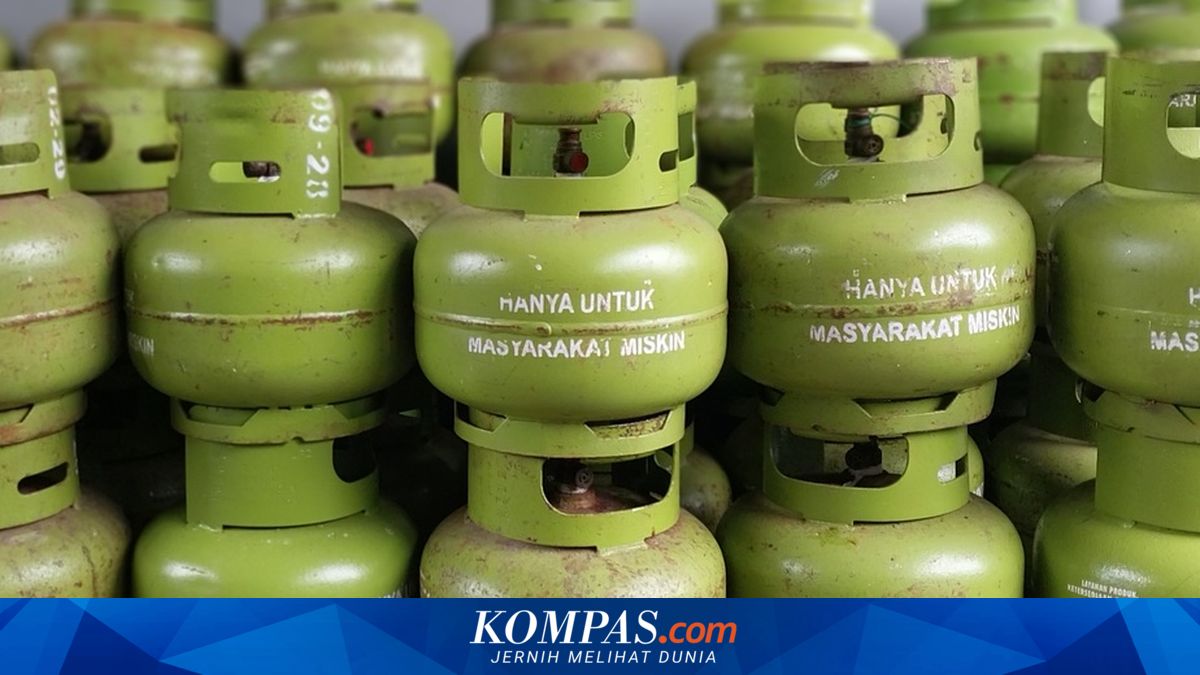
JAKARTA, KOMPAS.com - Rising LPG imports are increasingly straining energy subsidies and national energy security. Amid this situation, plans to convert LPG usage to Compressed Natural Gas (CNG) are being considered as an option to reduce energy import dependency. However, implementing the policy is deemed difficult due to major challenges in infrastructure, regulatory readiness, safety standards, and the nation’s and public’s fiscal capacity. ‘When household energy structures rely too heavily on imports, global volatility directly impacts the national budget and economic stability,’ said Muhammad Kholid Syeirazi, a member of the National Energy Council (DEN), in a press statement on Tuesday (26 May 2026). He stated that national LPG consumption has been rising in recent years. In 2025, domestic LPG demand is projected to reach approximately 9.27 million metric tonnes (MT), while domestic production is only around 1.91 million MT. Kholid also highlighted the growing pressure on national energy subsidies and compensations over the past decade. According to DEN data, total energy subsidies and compensations rose from around Rp119.1 trillion in 2015 to Rp313.9 trillion in 2025. Even in 2022, the figure surged to around Rp551 trillion due to global energy price spikes following the Russia-Ukraine conflict. According to Kholid, this situation has prompted the government to push for household energy diversification and domestic gas utilization. He explained that domestic natural gas usage has exceeded national gas exports since 2012. In 2025, domestic gas utilization reached approximately 3.882 BBTUD, while exports fell to around 1.718 BBTUD. ‘Indonesia actually has significant domestic gas potential,’ Kholid stated. ‘The challenge is converting this potential into energy that is safe, efficient, and affordable for the public,’ he added. Energy-wise, natural gas costs around Rp38.5 per MJ, significantly lower than non-subsidised LPG, which can reach Rp285 per MJ. Moreover, CNG is seen as having significant potential for use in household, transport, and industrial sectors. In the transport sector, CNG use can reduce operational costs and produce lower emissions than conventional fuel. In the industrial sector, natural gas is considered more efficient and stable than coal or fuel oil. However, Kholid stressed that implementing household CNG still faces considerable technical and safety challenges. A key issue is the lack of specific international standards for household CNG cylinders, including valves, hoses, and installations. He explained that CNG cylinder pressure can reach 150-200 bar, far higher than household LPG cylinders at around 8 bar. This makes the cylinder materials much more complex and expensive. ‘Safety concerns are critical due to CNG’s differing characteristics from LPG,’ Kholid emphasised. ‘The government must ensure standardisation and monitoring systems are in place before large-scale implementation,’ he added. Additionally, DEN highlighted the limited national CNG refuelling station (SPBG) infrastructure. Currently, the number of active stations is very limited and unevenly distributed across Indonesia, making distribution and accessibility the main hurdles for CNG.