
Rising House Prices Leave Millennials Unable to Afford Mortgages
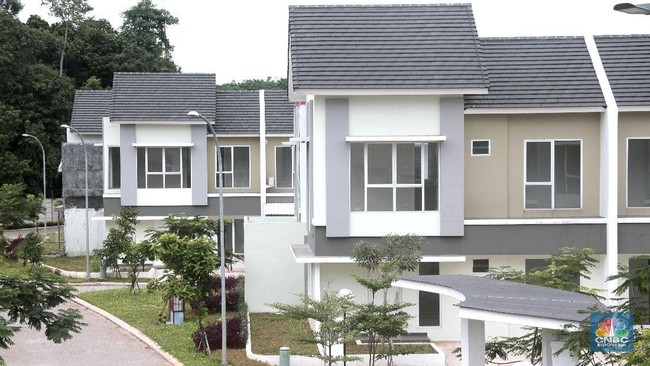
Owning a home remains a major aspiration for many millennials in Indonesia. However, amidst rising property prices, high mortgage interest rates, and incomes that fail to keep pace with housing costs, this dream is becoming increasingly difficult to realise.
This phenomenon aligns with recent survey results from the United States, which show that some members of the younger generation are beginning to give up on buying homes. The 2025 Home Affordability Survey conducted by Bankrate found that one in six prospective homebuyers failed to find a residence within their financial means between 2020 and 2025, eventually abandoning their intention to purchase.
In Indonesia, although a similar survey has yet to be conducted, housing affordability remains a massive challenge. In fact, a recent report by The Economist ranks Indonesia as one of the most unaffordable countries in the world for housing. According to the list, Indonesia ranks sixth among the most unaffordable nations, following the Philippines, Sri Lanka, Thailand, India, and South Korea.
Abel Anita (33), a resident of Jakarta, admits that owning a home is still a dream she wishes to achieve. However, current property prices mean many must think twice before committing. She notes that the current economic climate is causing many to postpone purchases and continue renting while attempting to save.
“I wouldn’t say giving up, but seeing how the economic condition is getting worse, most people choose to rent first while saving or investing,” she said. Abel estimates that a monthly income of approximately Rp8 million to Rp10 million is the minimum threshold for considering a home purchase. However, the high cost of daily living makes saving for a down payment a persistent challenge. She also highlighted the burden of mortgage (KPR) payments, which can become heavy when interest rates fluctuate according to market conditions.
Similar complaints were voiced by Ghina Nanda (32), a resident of Depok. She believes that while homeownership remains a dream for the younger generation, purchasing power is being eroded by high property prices. “In the current economy, owning a home still feels like a dream. If income is still based on the minimum wage (UMR), it is quite tight for the current generation to buy a house,” she told CNBC Indonesia.
According to Ghina, government-subsidised affordable housing programmes often face issues regarding location, being situated far from economic hubs and workplaces. “Subsidised housing for the people is now very far away. I have to look towards the direction of Bandung. If the residence is far from work, transport costs increase and it is exhausting to spend so much time on the road; one needs more than one source of income to afford the mortgage,” said Ghina, who works in Jakarta.
She noted that house prices in the Depok area continue to rise, with even houses located in narrow alleys being offered at prices approaching Rp1 billion. “In Depok, a house in an alley is already Rp1 billion, let alone in Jakarta,” she said.
Meanwhile, Doni (33), a resident of North Jakarta, believes that owning a home remains a goal for almost everyone. However, the continuous increase in property prices is not in line with the financial capabilities of most workers. “It is a huge dream for everyone, especially for a house in Jakarta,” said Don’ni. He noted that current minimum wages are insufficient to keep up with rising property costs. “It is difficult because the current UMR is minimal. UMR is intended for single individuals, not for those who have families,” he added.
For many Indonesian millennials, the issue is no longer a lack of desire to own a home. The greatest challenge lies in chasing property prices that continue to soar amidst an increasing cost of living. Consequently, more young people are choosing to rent, live with their families for longer, or seek housing in areas increasingly far from the city centre to find more affordable options.