
Rising from Layoffs, Dara Baro Transforms Fabric Scraps into World-Class Wastra Fashion
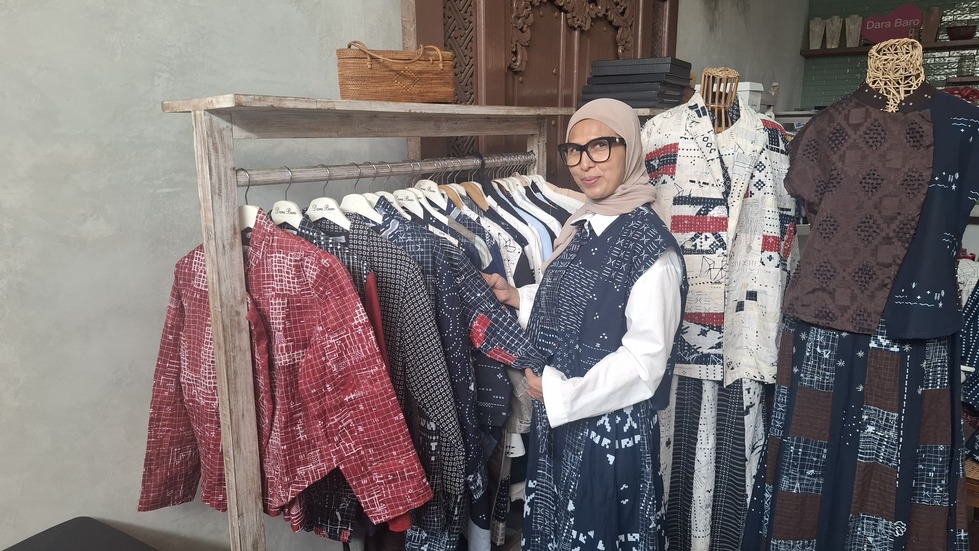
Starting from the experience of losing her job due to layoffs in 1998, Dimita Agustin found a new path in the world of sustainable fashion through her brand Dara Baro. By utilising leftover fabric scraps often considered waste, she processes them into high-value wastra products capable of competing in the global market. “The founding of the Dara Baro brand was actually accidental. I was previously an employee at a private company, then in 1998 I was laid off,” said Dimita at the Dara Baro production house in Serpong, South Tangerang. At that time, she helped her mother’s rattan craft business in Palembang before moving to Jakarta. The experience in the craft business environment gradually shaped her interest in creative production. While unemployed, Dimita began trying to make simple fabric-based works. “At that time, I casually made cushion covers,” said the founder of Dara Baro. From that simple product, a business path began to open. The cushion covers she made sold well among her friends, encouraging her to continue production with limited capital. “I casually sold them to friends and they sold out,” she said. With initial capital of around Rp600,000, Dimita began reinvesting sales proceeds for subsequent production. She sold products simply, consigned goods to friends, and participated in small exhibitions. “I kept going because sales were decent. So I recouped capital, made more, recouped capital, made more,” she said. Initially, Dara Baro focused on household products made from batik, such as cushion covers and interior decorations. However, market demand shifted the business direction. “Then many people asked, ‘When will you make clothes or skirts?’” she added. From there, she began transitioning to apparel. Dimita started making simple kebaya, which then developed into clothing collections based on Indonesian wastra. “Since then until now, I have been making clothes, women’s clothing products from Indonesian wastra,” she said. The year 2005 became an important milestone when she began seriously making clothing and participating in major exhibitions like Gelar Batik and Kriyanusa. The positive market response made her more determined to develop the brand. Over time, Dara Baro not only used batik but also jumputan, tenun, and shibori, a traditional Japanese fabric dyeing technique. “Indonesian wastra refers to fabrics from all over Indonesia. Batik is a part of wastra,” said Dimita. She combines various techniques and fabrics from different regions such as Pekalongan, Yogyakarta, Solo, Cirebon, Garut, Palembang, and Makassar. To master these various techniques, Dimita continues to learn, including attending courses and training at the Balai Besar Batik Yogyakarta and the Balai Tekstil Jakarta. “I am still learning to this day. If there is a new technique, we learn it again because the market always wants something new,” she said. The name Dara Baro is taken from the Acehnese language, meaning ‘bride-to-be’. Dimita chose this name because her parents are from Aceh. The name also holds personal meaning as the business was started when she was in the phase of being a bride-to-be herself. “Dara Baro in Acehnese means bride-to-be. Coincidentally, when I started this business, I was in that phase, so the name felt very close and meaningful,” said Dimita. Another major transformation occurred when Dara Baro began implementing a sustainability concept by utilising production fabric scraps. In 2022, Dimita started seriously processing leftover production fabrics into value-added products. According to her, this step aligns with the sustainable fashion concept that is now the business focus. “Since 2022, we have been utilising that,” said Dimita. In its production process, Dara Baro also adopts a traditional Japanese sewing technique called Boro, which is a method of re-sewing small pieces of fabric or used cloth by layering several pieces of fabric and stitching them with hand stitching that is deliberately exposed as part of the product’s aesthetic value. Dimita explained that the fabric waste utilised comes from the remnants of ready-to-wear wastra-based clothing production, which has been Dara Baro’s main product. “From the beginning, our production has been ready-to-wear clothing based on wastra. There are always remnants,” she said. These fabric remnants are then reprocessed into new fabric sheets that can be used to make various fashion products. “The fabric scraps are made into fabric again to become clothes or skirts,” said Dimita. The idea of utilising fabric waste emerged during the Covid-19 pandemic. When business activity slowed, Dimita began tidying the storage warehouse and found a huge pile of leftover fabric. “The reason was that the warehouse was full. I had been storing the fabric scraps. If I wanted to buy more, I had samples. So I started tidying up during the pandemic. There were so many fabric scraps. If collected, they might fill this entire room,” she said. Previously, most of the leftover fabric was just stored in the warehouse and some was discarded. But during the pandemic, Dara Baro began looking for ways to ensure the waste still had economic value. In the initial stage, fabric pieces were used to make masks, pouches, and slippers. After that, very small fabric pieces were combined and re-sewn so they could be used as raw material for clothing. “These small pieces are very tiny. I just combine them. So even the small ones are not wasted. They can become material for clothes, skirts, trousers, shirts, and even outerwear,” said Dimita. Through this innovation, Dara Baro has successfully presented various sustainable fashion products with a diverse price range.