
Rising Consumer Mobility Drives Snack Industry to Target Urban Markets
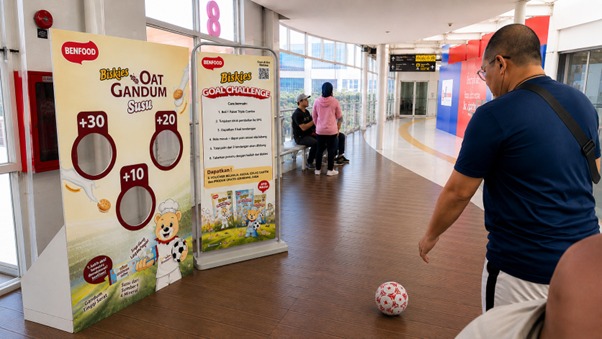
Changes in the lifestyles of urban populations are influencing how consumers choose food and snacks. Increasingly dynamic routines, high mobility, and activities spanning from morning to night have made products that are easy to consume a segment that continues to receive significant attention.
For food industry players, these shifts in activity patterns present opportunities to develop products that offer not only flavour but also adaptability to various consumption situations. This strategy is evident in the development of Biskies Oat Gandum Susu by Biskies, which combines oats, wheat, and milk to target consumers with high mobility.
This approach positions the product not merely as a snack, but as a companion for various consumption moments throughout the day, such as commutes to the office or campus, breakfast, work breaks, or energy boosts before continuing daily activities.
Adapting products to changing behaviours is a key consideration for the food industry. Consumers with busy schedules tend to require options that are easy to carry and can be enjoyed on various occasions. This makes consumption flexibility a core value proposition. Snacks that can be kept in a bag and consumed without lengthy preparation can reach more moments in a consumer’s daily life.
Biskies Oat Gandum Susu was developed with this approach, featuring 1.4 times more milk to provide a creamier taste. From a positioning perspective, this combination of ingredients is part of an effort to present a distinct product character amidst the various snack options available in the market.
“We observe that consumers’ daily lives are becoming increasingly active and dynamic. Therefore, we want to present Biskises Oat Gandum Susu as a practical and delicious snack choice to accompany various moments, from morning commutes to activities throughout the day,” said Janice K D, Marcomm Manager of Benfood.
Beyond practicality, the use of specific ingredients serves as a strategy to address increasing consumer attention to food composition. Oats and wheat, for instance, contain fibre, which is a key consideration in dietary patterns. The Harvard T.H. Chan School of Public Health explains that oats are a source of both soluble and insoluble fibre, including beta-glucan, which is researched for its role in digestion and satiety.
Furthermore, the World Health Organization (WHO) states that carbohydrates in a diet should primarily come from whole grains, vegetables, fruits, and pulses. Oats and wheat are examples of whole grains mentioned by the WHO. The WHO also recommends a daily intake of at least 25 grams of natural dietary fibre for individuals over the age of 10 as part of a healthy diet.
For the food industry, selecting these ingredients can be a vital part of product communication. However, the consumption of any single snack must still be placed within the context of an overall balanced diet.
Another visible strategy is the expansion of consumption moments. Biskies Oat Gandum Susu is not directed at a single specific time but can be consumed in various situations, such as during commutes, as a breakfast supplement, or during work breaks. This approach allows a product to integrate into more parts of a consumer’s routine, helping the industry build product relevance amidst changing societal lifestyles.
Source: jawawa.id (https://jawawa.id/newsitem/rising-consumer-mobility-drives-snack-industry-to-target-urban-markets-1788558722)
Originally published by Media Indonesia (https://mediaindonesia.com/kuliner/929972/mobilitas-konsumen-meningkat-industri-camilan-bidik-pasar-urban), translated from Indonesian