
Rise in Demolition of Muslim Buildings in India: The Facts
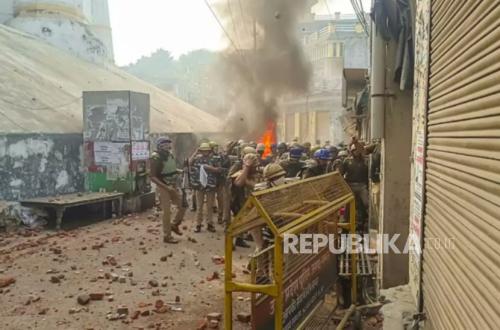
The plan to demolish part of the Shahi Mosque in Ujjain, Madhya Pradesh, India, on Monday (26/09/2025), highlights the increasing frequency of demolitions involving buildings related to the Muslim community in the country. These demolitions have become more common following the rise to power of Prime Minister Narendra Modi, supported by the Bharatiya Janata Party (BJP), a party promoting Hindu nationalism.
To date, there is no official Indian government database that nationally records all mosque demolitions by year, location, legal reason, or case status. However, partial data exists from human rights agencies, civil society organisations, media, and court documents. This data indicates a series of demolitions of mosques and Islamic places of worship in recent years, primarily under the justifications of illegal land occupation, unauthorised construction, infrastructure projects, and urban planning enforcement. Simultaneously, several researchers and human rights organisations view this phenomenon within the context of the strengthening of Hindu nationalist politics, or Hindutva.
For instance, the Indian media outlet The Quint noted 20 demolition actions against buildings or areas related to Muslims between June 2024 and February 2026. Of these, 11 cases originated from complaints or Public Interest Litigation (PIL) alleging that the buildings were illegal.
Other data cited by The Quint from the Association for Protection of Civil Rights (APCR) states that 69 Islamic religious sites were bulldozed or declared illegal in 2025. Mosques specifically reported as demolished include Akhoondji, Haldwani, Kushinagar, Meerut, Sambhal, and several other locations.
Amnesty International, in a report regarding ‘bulldozer justice’ practices, documented 128 property demolitions in Assam, Delhi, Gujarat, Madhya Pradesh, and Uttar Pradesh during April–June 2022, affecting at least 617 people. This figure includes homes and businesses, not just mosques.
Although national figures are unavailable, several mosque cases can be verified individually. On 30 January 2024, the Delhi Development Authority (DDA) demolished the Akhoondji Mosque and a madrasah in the Mehrauli area of Delhi. The government stated the buildings were illegal and located within a protected forest area. However, the Indian Express noted that the existence of the Akhoondji Mosque has appeared in archaeological records since at least a 1922 publication.
In February 2024, a mosque and madrasah in Haldwani, Uttarakhand, were demolished in an enforcement operation described by the government as the removal of buildings on government land. The operation subsequently triggered major clashes, resulting in fatalities and hundreds of injuries. The local government maintained that the action was not communal, but rather the enforcement of regulations against buildings deemed illegal.
In February 2025, parts of the Madni Mosque in Kushinagar, Uttar Pradesh, were demolished because the government stated portions of the building stood on land deemed illegal. This case drew the attention of the Supreme Court of India due to allegations that the demolition took place while legal processes were still ongoing.
In the same year, a mosque in Meerut was demolished for the construction of the Regional Rapid Transit System (RRTS) corridor. According to officials and mosque administrators, the demolition was carried out following consultations and approval from the local Muslim community. This case is significant as it demonstrates that not all mosque demolitions are related to religious conflict or identity politics.
In Sambhal, Uttar Pradesh, several demolitions occurred in 2025. In June, the Raza-e-Mustafa Mosque in Chandausi was demolished after the government stated the building stood illegally on government land. In October, another mosque in Raya Buzurg was demolished along with a wedding hall.
As 2026 progressed, demolitions continued. In June, the Jaipur government demolished the Noorani Mosque on the grounds that the building fell within the boundaries of a road widening project. Mosque administrators denied the building was illegal, stating the mosque had existed since 1981.
In September 2026, a mosque within the Saharanpur district office complex was demolished after a local court upheld a decision stating the building was an unauthorised structure on government land. The government stated that legal procedures had been followed, while mosque administrators questioned the demolition process.
Source: jawawa.id (https://jawawa.id/newsitem/rise-in-demolition-of-muslim-buildings-in-india-the-facts-1790567868)
Originally published by Republika (https://news.republika.co.id/berita/tm1zul393/marak-pembongkaran-bangunan-muslim-di-india-ini-faktanya), translated from Indonesian