
RI's Neighbour Calls Iran Conflict a 'Simulation', US-China War More Terrifying
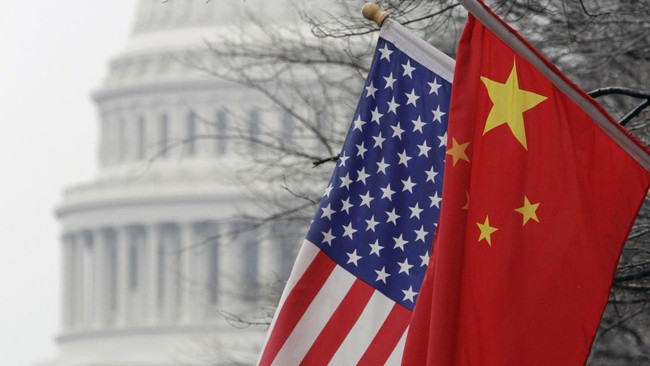
Singapore’s Foreign Minister Vivian Balakrishnan has issued a stark warning regarding the potential outbreak of armed conflict between China and the United States in the Pacific region. This comes amid heightened tensions between the two Pacific giants.
Citing CNBC International, Balakrishnan assessed that the current tensions in the Strait of Hormuz are merely a small simulation compared to the impacts that would arise if the two global powers truly engaged in open war. The statement was delivered by Balakrishnan at the CNBC CONVERGE LIVE event in Singapore in response to questions about whether the city-state faces pressure from Washington or Beijing to side with one or the other.
Singapore has long been known for its close relations with both countries and occupies a unique position to capitalise on economic developments from both the US and China. The US is recorded as Singapore’s largest foreign investor with around 6,000 companies based there, while China has become Singapore’s largest trading partner, and the Lion City is China’s biggest foreign investor.
“What you see in the Strait of Hormuz will be a simulation (dry run),” said Balakrishnan, quoted on Wednesday (22/4/2026).
Balakrishnan also affirmed that Singapore would refuse to choose sides in that geopolitical rivalry. He stated that Singapore’s foreign policy is based on long-term national interests without fear of external pressure.
“The way we conduct our affairs is by assessing what constitutes Singapore’s long-term national interests, and if I have to say no to Washington or Beijing or anyone else, we will not waver from that,” Balakrishnan asserted firmly.
Balakrishnan added that Singapore would not allow itself to be used as a political tool by any country. His nation only wishes to be a cooperative partner.
“We act in our own long-term national interests. We will be useful, but we will not be exploited,” he added.
In addition to the issue of great power rivalry, Balakrishnan highlighted the conflict in the Middle East, which has demonstrated the importance of maritime chokepoints. He reminded that Singapore is also located at one of the world’s most critical trade arteries, the Strait of Malacca.
Regarding reports of Iran’s attempts to impose tolls on ships passing through the Strait of Hormuz, Balakrishnan emphasised that countries along the Strait of Malacca—Singapore, Malaysia, and Indonesia—have a strategic interest in keeping that route open without tolls. Regarding relations with the US and China, he said he has informed both that Singapore operates based on the United Nations Convention on the Law of the Sea (UNCLOS).
“Regarding the US and China, we have informed both of them that we operate based on UNCLOS,” Balakrishnan said.
In accordance with UNCLOS, states bordering straits must not impede transit and there must be no suspension of transit passage rights. Balakrishnan reaffirmed Singapore’s commitment to maintaining that international freedom of navigation.
“Transit passage rights are guaranteed for all. We will not participate in any efforts to close or obstruct or impose tolls in our environment,” he said.
Amid the global crisis that has fostered distrust between nations, Balakrishnan also emphasised the importance of rebuilding international trust. According to him, trust has real economic value because it can reduce the complexity of global transactions.
“Trust is fundamentally a way to lower transaction costs. Being predictable, boring, reliable, and trustworthy has real value,” Balakrishnan explained.
In agreement, Singapore’s Deputy Prime Minister Gan Kim Yong, who delivered the keynote speech at the event, stated that trust can no longer be taken for granted in the current geopolitical situation. Trust, he added, can no longer be assumed and must be built and strengthened.
Singapore, which is currently a major global financial centre, according to Gan, will take further steps to build a broader ecosystem for trust-based services. Those services include risk management, cybersecurity, and AI governance.