
Riots Spread to Milan: What Sparked Them?
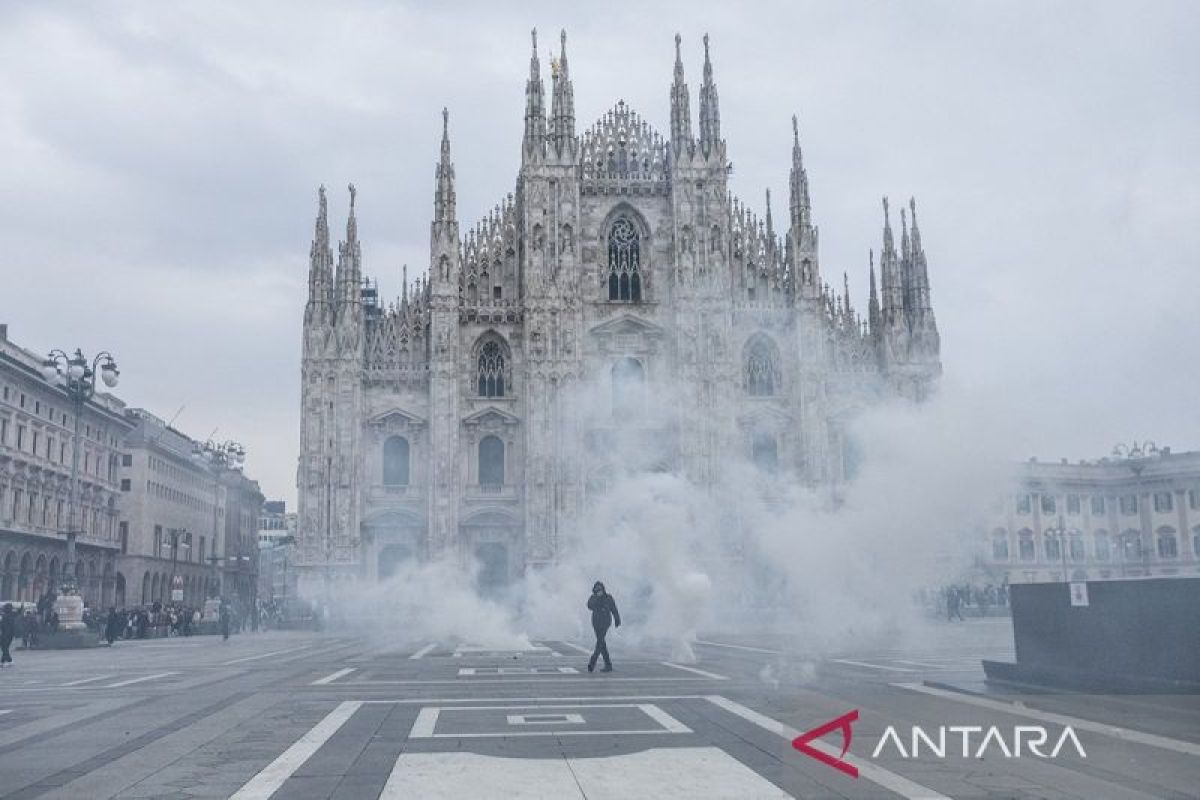
Jakarta (ANTARA) – Riots that swept through several French cities in mid-October 2026 formed part of a wave of demonstrations across Europe triggered by the cost of living and public dissatisfaction with public services. A similar situation unfolded in Milan, Italy, where protests against high living costs turned into clashes between demonstrators and security forces.
On Saturday (17 October), central Milan, including Piazza del Duomo, became the scene of rioting after masked demonstrators threw stones and other hard objects at police. Several shops were looted, vehicles were damaged, and barricades made from tables and chairs were set alight.
Police used tear gas and water cannon to disperse the crowds. As a result, the city centre, normally busy with tourists and local residents, was temporarily cleared.
The Associated Press reported on 17 October that around 50 demonstrators had been detained, including several minors. At least two police officers were also reported injured in the clashes.
The unrest continued on Sunday (18 October). Reuters reported that police again confronted demonstrators throwing stones and damaging shops around Piazza del Duomo. More than 60 people were taken to police stations for questioning.
The events drew public attention because they took place almost simultaneously with large-scale demonstrations in France. What caused the unrest in Milan, and was it directly connected to the wave of protests in its neighbouring country?
One of the main triggers for the demonstrations in Milan was the economic pressure felt by the public, particularly the high cost of everyday necessities and wage growth that has lagged behind the cost of living.
The problem is especially acute in Italy’s major cities, including Milan, known as a centre for business, fashion and finance. High housing costs, rents, transport costs and the price of basic goods have made it difficult for some residents to meet their day-to-day needs.
Wages considered insufficient to keep pace with rising expenses have also fuelled discontent. For some young workers and low-income groups, having a job in a major city does not necessarily guarantee a decent standard of living.
These conditions have prompted people to take to the streets to make demands concerning welfare, purchasing power and the government’s economic policies.
However, it is important to understand that not all demonstrators shared the same demands. Some focused on economic issues, while other groups raised broader social and political concerns.
Demonstrations in Milan also included demands relating to war and the international political situation. According to the Associated Press, Saturday’s (17 October) protest focused not only on the high cost of living but also voiced opposition to war.
The combination of economic and political issues brought together people from different backgrounds and with differing interests.
For some demonstrators, the rising cost of living cannot be separated from global economic conditions and government political decisions. They called on the government to pay greater attention to public welfare and to the impact of domestic and foreign policy on everyday life.
Nevertheless, the fact that demonstrations raised a range of demands does not mean that all participants supported violence. Rioting broke out when some groups engaged in vandalism and clashed with security forces.
This distinction matters: protests as a means of expressing views should not be conflated with looting or attacks on other people.
The demonstrations in Milan initially took the form of a public expression of grievances. The situation changed when some masked demonstrators began throwing stones, pieces of paving and other objects at police.
Some members of the crowd also set fire to barricades made from tables and chairs, smashed shop windows and looted several stores in the city centre.
Police then used tear gas and water cannon to disperse groups involved in the clashes. Security was tightened around Piazza del Duomo and the shopping district, including the Galleria Vittorio Emanuele II shopping arcade.
According to Euronews on 18 October, the rioting left 25 people injured and taken to hospitals across Milan. Ten of them were police personnel. Around 50 people were also detained after the protest.
The situation grew tense again on Sunday (18 October), when hundreds of young people gathered around Piazza del Duomo. Some groups resumed vandalism, overturned bins, damaged street infrastructure and attacked security personnel.
Police again moved to disperse the crowd. The incident showed that the unrest did not end when the first day’s demonstrations were over.
It should be emphasised that violence was carried out by some groups; this does not mean that all demonstrators voicing economic demands were involved in the destruction.
Were the Milan riots connected to the demonstrations in France?
The fact that the unrest in Milan occurred close in time to large-scale demonstrations in France made the two events appear connected.
In France, hundreds of thousands of people took to the streets on Saturday (17 October) to express dissatisfaction with rising living costs, conditions in education and deteriorating public services. The demonstrations, involving students, trade unions and other groups, were later marked by clashes, looting and arson.
Reuters reported on 18 October that more than 2,400 people had been arrested in France, while nearly 1,000 police personnel had been injured. One demonstrator also died after suffering cardiac arrest during a protest in Paris.
In Italy, similar demonstrations took place in Milan and several other cities, including Turin and Bologna. These protests were also driven by the cost of living and public welfare, but had their own domestic political context.
Al Jazeera reported on 17 October that cost-of-living demonstrations were taking place in several European countries, including France, Italy, Belgium and Portugal. The wave of action showed that economic pressure and affordability had become concerns across a number of countries.
Although the events occurred at almost the same time, there is not yet sufficient evidence to conclude that the Milan riots were a direct result of the unrest in France or that both were controlled by the same group.
The timing and similarity of the demands are better understood as reflecting social discontent emerging simultaneously in several European countries.
Italian Prime Minister Giorgia Meloni condemned the violence during the demonstrations. She said people had the right to express their views, but that setting public facilities alight, looting shops and attacking police could not be justified.
Milan Mayor Giuseppe Sala also said the reasons behind the protests were understandable, but that violence against officers and serious damage to the city could not be justified.
The Italian government faces the challenge of maintaining public order without ignoring the economic issues underlying the demonstrations. Action against those responsible for violence needs to be distinguished from efforts to address demands made peacefully by residents.
Reuters reported on 18 October that Meloni planned to hold a government meeting on Monday (19 October) to discuss the security situation and unrest in several cities.
The meeting will be important in determining the government’s measures to prevent further clashes, protect public facilities and address damage caused by the rioting.
The unrest in Milan shows how demonstrations driven by economic concerns can develop into a security problem when some groups resort to violence.
Clashes were also reported in Turin and Bologna over the same weekend. Meanwhile, France was still working to recover from unrest that caused damage to public buildings, shop looting and thousands of arrests.
It remains unclear whether these events will develop into a prolonged wave of unrest across Europe. The situation will depend on government responses, economic conditions and the authorities’ ability to maintain security without worsening tensions with the public.
The government also needs to address the underlying issues, including the high cost of living, housing affordability, wages and the quality of public services.