
Rimini Street CEO: Companies Must Fix Business Processes Before Investing in AI
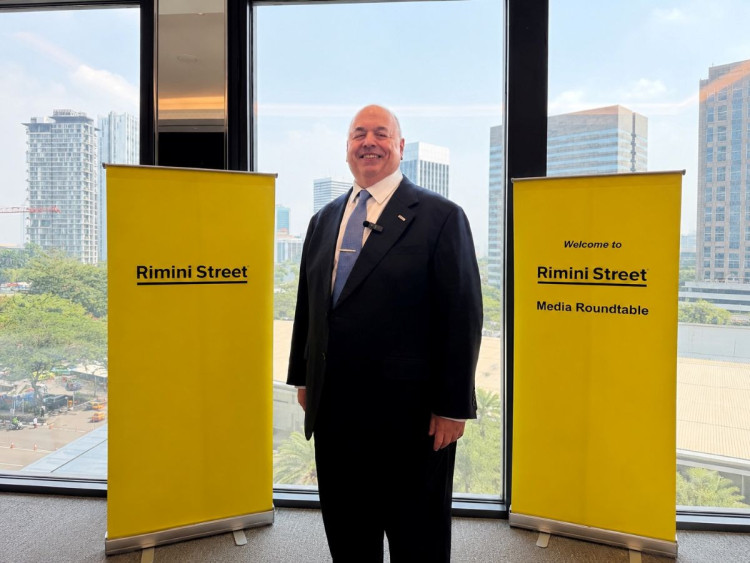
Amid the rapid development of artificial intelligence (AI) and various digital technologies, many companies are racing to accelerate digital transformation. However, behind this euphoria, there is a notion that innovation can only be achieved by replacing long-used technology systems. This view is rejected by Rimini Street CEO Seth Ravin. According to him, not all systems that have been in use for years deserve to be called obsolete. He argues that many companies are trapped in a narrative built by software vendors that legacy systems must be immediately replaced with the latest versions. In reality, such replacements often fail to deliver business value commensurate with the cost.
For Ravin, digital transformation should not start with a decision to replace technology, but with a clear understanding of the business objectives to be achieved. Organisations need to first determine the expected outcomes before deciding on the necessary technology investments. Within this framework, AI is merely a tool to achieve business goals, not a universal solution for every problem. Not all processes require AI, and not all business challenges can be solved by this technology. Therefore, organisations must first build a foundation of efficient business processes, then automate routine tasks, and only then leverage AI in areas that can truly create added value.
‘Upgrade software is not a business goal. The goal is to solve business problems and create value,’ Ravin stated during an exclusive media roundtable. This perspective is increasingly relevant as businesses face mounting economic pressures. Labour costs continue to rise, raw material prices are increasing, and geopolitical conflicts are disrupting global supply chains and driving up logistics costs. At the same time, intensifying competition makes it difficult for many companies to raise product or service prices for customers. These pressures directly impact corporate profitability. Ironically, while boards demand accelerated innovation through AI, cloud computing, and other digital technologies, IT budgets are simultaneously being cut to protect profit margins.
Ravin noted that this paradox is now confronting many chief information officers and chief financial officers. To address this challenge, Rimini Street has spent more than two decades developing an approach called Smart Path. The core idea is for organisations to stop wasting budgets on activities that do not deliver real business impact and instead redirect those funds to investments that genuinely drive innovation. According to Ravin, one of the biggest sources of waste is the habit of replacing systems that are still functioning well. He likened it to someone who owns a car that still works perfectly; as long as the vehicle meets their needs, there is no reason to replace it just because the manufacturer launched a new model. The same logic applies to enterprise software systems.
Consequently, the ‘rip and replace’ strategy of completely discarding legacy systems for new platforms should be critically examined. Ravin believes this approach often benefits software vendors more than customers, whether they are private companies or government agencies. Instead, organisations can retain stable systems for as long as they support business needs, even up to 10 to 15 years. Funds originally allocated for large-scale migration projects can then be redirected to more productive investments, such as AI development, data analytics, process automation, or customer service innovation. ‘If a company can significantly reduce operational costs, the funds previously spent on maintaining systems can be used to create new innovations,’ he said.
For Ravin, the success of digital transformation is not measured by how much technology is replaced, but by an organisation’s ability to allocate investments precisely to generate new business value. He believes this approach has significant potential in Indonesia, where many national companies are accelerating digital transformation while facing demands for efficiency amid global economic uncertainty. By optimising systems that still deliver value and directing investment towards innovations that truly make an impact, companies can enhance their competitiveness without being burdened by unnecessary technology projects. He added that the same principle is equally relevant for the government sector, where efficiency in technology spending can free up resources for more productive investments, support job creation, boost productivity, strengthen industrial competitiveness, and ultimately contribute to Indonesia’s sustainable economic growth.
Source: jawawa.id (https://jawawa.id/newsitem/rimini-street-ceo-companies-must-fix-business-processes-before-investing-in-ai-1784616620)
Originally published by swa.co.id (https://swa.co.id/read/475113/ceo-rimini-street-perusahaan-perlu-benahi-proses-bisnis-sebelum-berinvestasi-di-ai), translated from Indonesian