
Right-Wing Surge: German Churches Speak Out
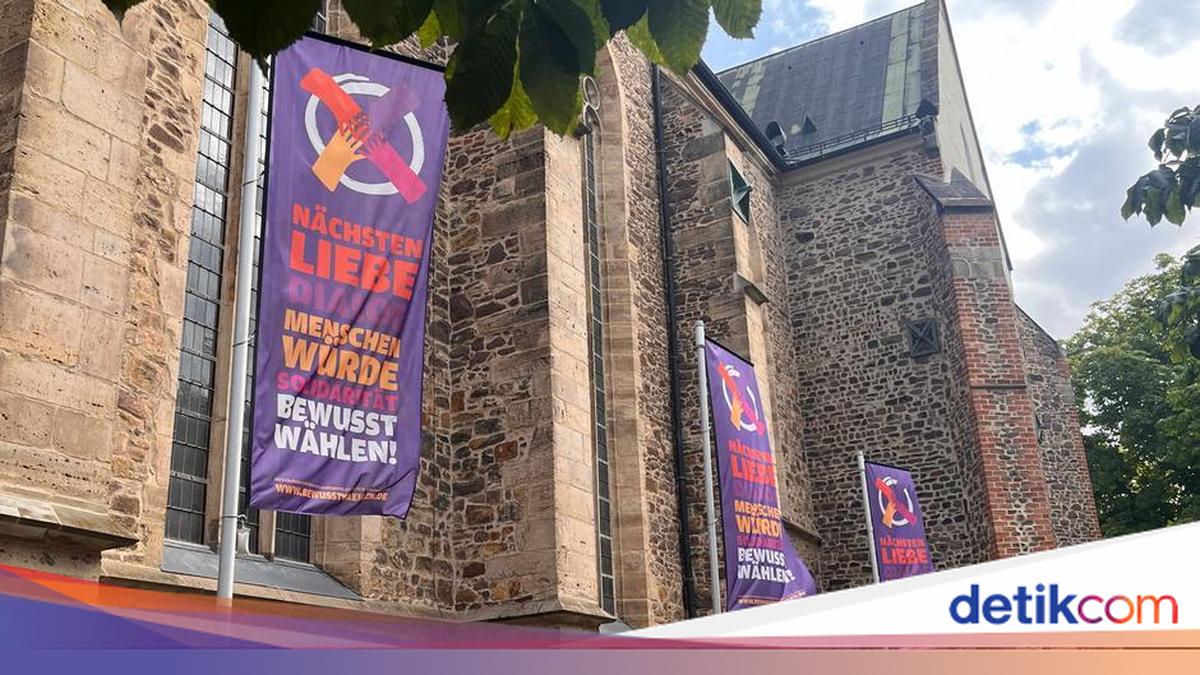
Flags are fluttering in front of the Catholic Cathedral in Magdeburg, the capital of the state of Saxony-Anhalt, with one reading: “Love your neighbour, engage in dialogue, uphold human dignity, and solidarity. VOTE CONSCIENTIOUSLY!”
Not far from there, a banner at the Protestant Cathedral congregation building reads, “Diversity is a God’s gift.” Other Protestant churches in the region have also displayed banners stating, “Prioritise love, not hatred.”
For months, churches in Saxony-Anhalt have repeatedly warned of the dangers posed by the AfD, which enjoys strong support in the state. During a sermon at a pilgrimage event in September 2025, Bishop of Magdeburg Gerhard Feige briefly suggested that pilgrims of hope should not vote recklessly or “towards the blue,” referring to the signature colour of the AfD. His remarks were met with prolonged applause.
The AfD is currently leading in polls ahead of the state elections on 6 September. The possibility of the party forming its own government is becoming increasingly likely. Germany’s domestic intelligence agency has also designated the Saxony-Anhalt branch of the AfD as a confirmed “right-wing extremist” organisation.
Churches Speak Out Against the AfD
Approximately 10% of the population in Saxony-Anhalt is Protestant and 3% is Catholic. Only a few thousand residents are Muslim or Jewish. More than 85% of the state’s 2.1 million inhabitants are unaffiliated with any religion, far above the national average of 47%. Nevertheless, churches continue to play a vital role in defending democracy, a stance that appears to be a point of contention for the AfD.
In its government programme approved in April, the AfD launched harsh criticism of both Protestant and Catholic churches. The party called for an end to all state payments to churches and the abolition of church tax collection by the government. The AfD also wants churches to be financially responsible for ‘church asylum’ programmes, where refugees seek shelter in church precincts due to fears of persecution if returned to their home countries.
The Protestant Academy of Saxony-Anlamhalt is also deemed unworthy of receiving state funds. The AfD accuses the institution of engaging in “political agitation” regarding issues such as climate change, gender ideology, and sexual diversity, as well as supporting “uncontrolled mass immigration.”
From Dispute to Confrontation
Criticism from the AfD in Saxony-Anhalt is far more severe than that typically issued by AfD branches in other states or the party’s national leadership. The era when AfD politicians complained about not being invited to church congresses or Catholic meetings has passed.
In February 2024, the German Bishops’ Conference unanimously adopted a declaration titled “Ethnic Nationalism and Christianity Cannot Be Separated.” The bishops identified a pattern of ethnic-nationalist thinking within the AfD, describing it as a form of “clear right-wing extremism.”
This declaration emerged ahead of elections in the eastern German states of Thuringia, Saxony, and Brandenburg. In September 202 moving towards elections in Saxony-Anhalt, Mecklenburg-Vorpommern, and Berlin.
Currently, tensions between the AfD and the churches are most palpable in Saxony-Anhalt. For Bishop Feige, the current political direction of the AfD “undoubtedly” reflects ethnic nationalism. “For a long time, the motto of Saxony-Anhalt has been ‘Think Modern’. The AfD wants to replace it with ‘Think German’,” Feige told DW.
He cited AfD campaign posters such as “Save your country,” “Take back your country,” and “Deportation from day one.” According to him, these slogans clearly demonstrate ethnic nationalism. The 74-year-old bishop admitted he never imagined so many people would be so easily influenced by political provocateurs. He also highlighted the AfD’s plan to revive flag-raising ceremonies in schools, including the singing of the national anthem. “This existed during the Nazi era and was later implemented in East Germany. Now they want to revive it? I cannot imagine it,” he said.
Both of Germany’s largest Christian churches emphasise that their stance is not aimed at attacking any specific party, but rather at defending the Christian view of human dignity. Bishop Friedrich Kramer of the Central German Protestant Church stated that the church’s position on climate protection, the environment, and the treatment of foreigners is “not a political message, but a Christian message” and should not be viewed as support for any particular party.
Religious Freedom According to the AfD
Interestingly, the AfD’s programme does not mention the Jewish people or Jewish community life. Conversely, Islam is mentioned several times. The AfD states it will “restore religious freedom to its proper limits.” The party also describes Islam as “a religion foreign to our culture.”
The AfD maintains that religious freedom does not mean German citizens must “meet every demand of the Islamic lobby.”
Representatives of Jewish associations in the state, including the Halle Jewish community—which was the target of right-wing extremist attacks in 2019—as well as representatives from the largest mosque community in Saxony-Anhalt, declined to comment when approached.
The AfD programme also mentions a “Christian mission” which, according to the party, is no longer being fulfilled by churches that receive church tax. This echoes the support received by US President Donald Trump from evangelical and conservative Christian groups in the United States. However, religious groups of a similar character are relatively limited in Saxony-Anhalt.
Why are Bishops Wary of an AfD Victory?
“A government involving the AfD would bring devastating consequences,” said Bishop Kramer. According to him, cultural institutions and civil society groups are now uniting to warn the public about the dangers of the AfD.
Bishop Feige also called on the public to remain vigilant.