
Rieke Diah stresses transparency in implementing Asset Forfeiture Bill
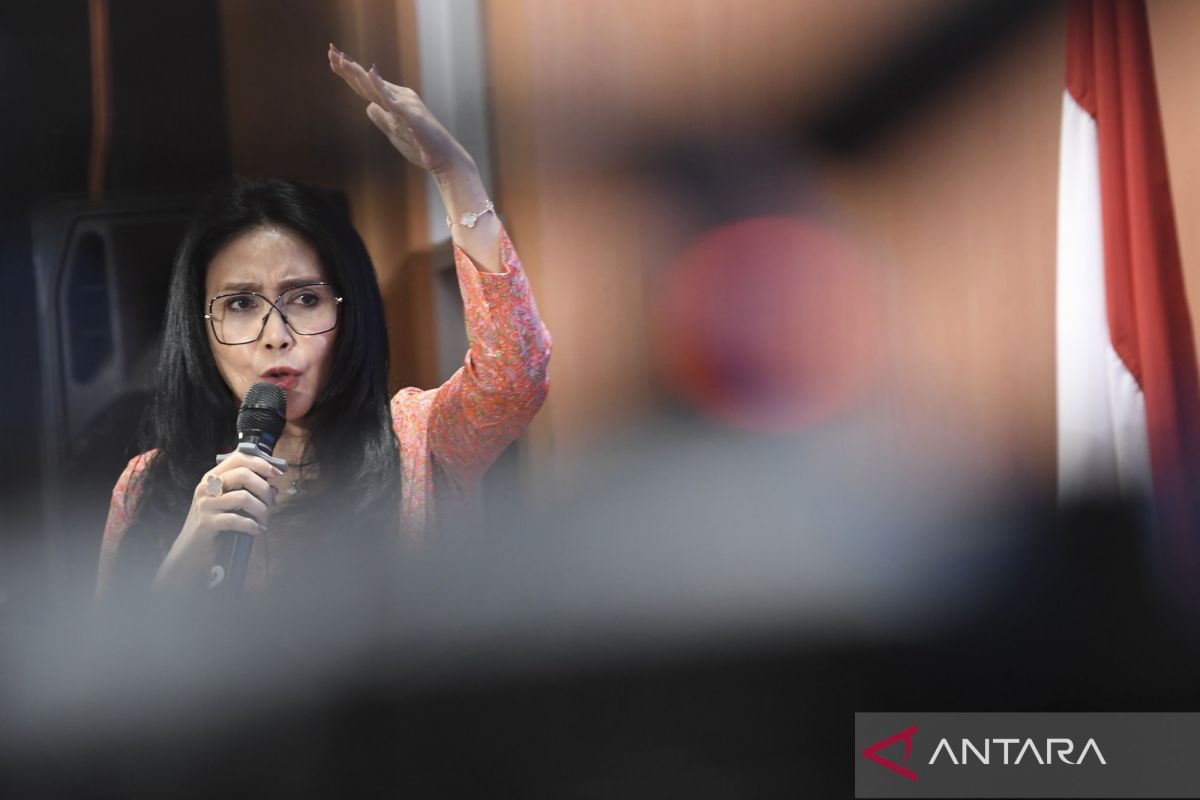
House of Representatives Commission XIII member Rieke Diah Pitaloka has stressed the importance of transparency, clear evidentiary standards and judicial oversight in the application of the non-conviction based (NCB) mechanism under the Asset Forfeiture Bill.
According to Rieke, the NCB mechanism, or civil action against assets, is necessary so that assets suspected of originating from criminal acts can still be recovered even if the perpetrator has died or fled.
“This Asset Forfeiture Bill is not merely a technical regulation, but an important instrument to ensure the state does not lose to criminals. Assets derived from crime must be able to be seized, even if the perpetrator has died or fled. However, evidentiary standards and judicial control must still be maintained so as not to create injustice,” Rieke said in a statement in Jakarta on Friday.
She said the application of NCB needs to be accompanied by measurable evidentiary standards, the right of objection for parties whose assets are seized, and protection for bona fide third parties.
“The state must be strong in seizing the proceeds of crime, the law must be strong in protecting citizens’ rights, and the system must ensure that every recovered asset can be traced until it ultimately returns to the state, victims, or parties who are legally entitled,” she said.
Rieke also stressed that third-party protection is important to prevent legitimate asset owners from suffering losses as a result of the application of the rule.
“We must ensure that members of the public who own legitimate assets are not disadvantaged. Protection of third parties is an absolute requirement for this bill to be fair and not create new fears,” she said.
Previously, Deputy Speaker of the House of Representatives Sufmi Dasco Ahmad stated that the House is committed to completing deliberations on the Asset Forfeiture Bill and is targeting its passage on 15 December 2026.
“We are committed to completing the deliberations and passing this bill according to schedule. We will safeguard the aspirations of the public,” Dasco said.
The bill offers an asset forfeiture mechanism through civil proceedings or NCB so that legal process can be directed at the assets, rather than solely at the perpetrator of the criminal act.
The approach is one of the instruments being discussed to close the gap when assets derived from crime cannot be seized through criminal mechanisms, including in circumstances where the perpetrator has died or fled.
Rieke added that strengthening the asset recovery mechanism must go hand in hand with protecting citizens’ rights.
In this way, the eradication of crime and the recovery of state and victim losses can be carried out without disregarding the principles of justice and legal certainty.