
'Ridiculous mindset': Why some fatal road accidents in Malaysia spark racial undertones
‘Ridiculous mindset’: Why some fatal road accidents in Malaysia spark racial undertones
The racialisation of road accidents can deepen divisions in a society that is already sensitive to issues of race and religion, experts say.
KUALA LUMPUR: Browsing through social media comments on road traffic accidents in Malaysia, content creator Vikneswaran Veerasundar notices a “frustrating” trend.
If the perpetrator was found to be drink driving, some netizens would jump to conclusions about the individual’s race, even if authorities had not identified the person.
Then come the comments about how drink driving seems to be prevalent in a particular race, and calls for harsher punishment. If the victim dies and is from a majority race, the backlash is often amplified.
“It’s always the same narrative and the same stereotypes being repeated over and over again,” Vikneswaran, 33, told CNA.
Deciding to satirise the phenomenon, Vikneswaran made a video that he posted on Instagram on Apr 6.
In the video, Vikneswaran is shown watching the news at home. When a report of a fatal road accident comes up, he wishes to himself for the perpetrator to not “be an Indian”. When the news presenter confirms that the accused is Indian, he then hopes the man was not drunk.
When it is revealed that the accused was driving under the influence of alcohol, Vikneswaran’s last hope is for the victim who died to be Indian too, so “no one will care”. The presenter then identifies the deceased as a Malay, and the triple whammy causes Vikneswaran to throw his hands up in the air in the video.
“I got sick and tired of reading the comments on road accident videos,” Vikneswaran told CNA. “So, I thought I might as well use my platform to send a message and highlight how ridiculous that mindset is.”
His video attracted more than 2.6 million views, 150,000 likes and 4,000 comments. Some commented they experienced the same as Chinese too, while others added this applied to Malays in cases involving drugs or sex crimes.
“I think the surprising part was realising every race feels the same way,” said Vikneswaran. “All this while I thought only Indian people felt that way. I never knew the Malays and Chinese go through the same thing.”
Experts told CNA the racialisation of high-profile traffic accidents – including one that occurred last Sunday (Jun 7) in Sungai Petani in Kedah – exists in Malaysia because race remains a powerful lens through which many people in the country interpret public events.
But the phenomenon poses risks because of its potential to inflame communal tensions, reinforce prejudices, and undermine confidence in the justice system, they said.
To confront the problem, various parties including schools, enforcement agencies and social media platforms play a role in educating the public, carrying out the law consistently and curbing the spread of false information and racial hatred, they said.
RACIALISATION RISKS
Race-based politics as well as social media trends are factors behind the racialisation of traffic accidents in Malaysia, observers said.
“Decades of race-based politics have conditioned people to view incidents not simply as individual acts but as matters involving entire communities,” said Siti Kasim, a human rights lawyer and activist.
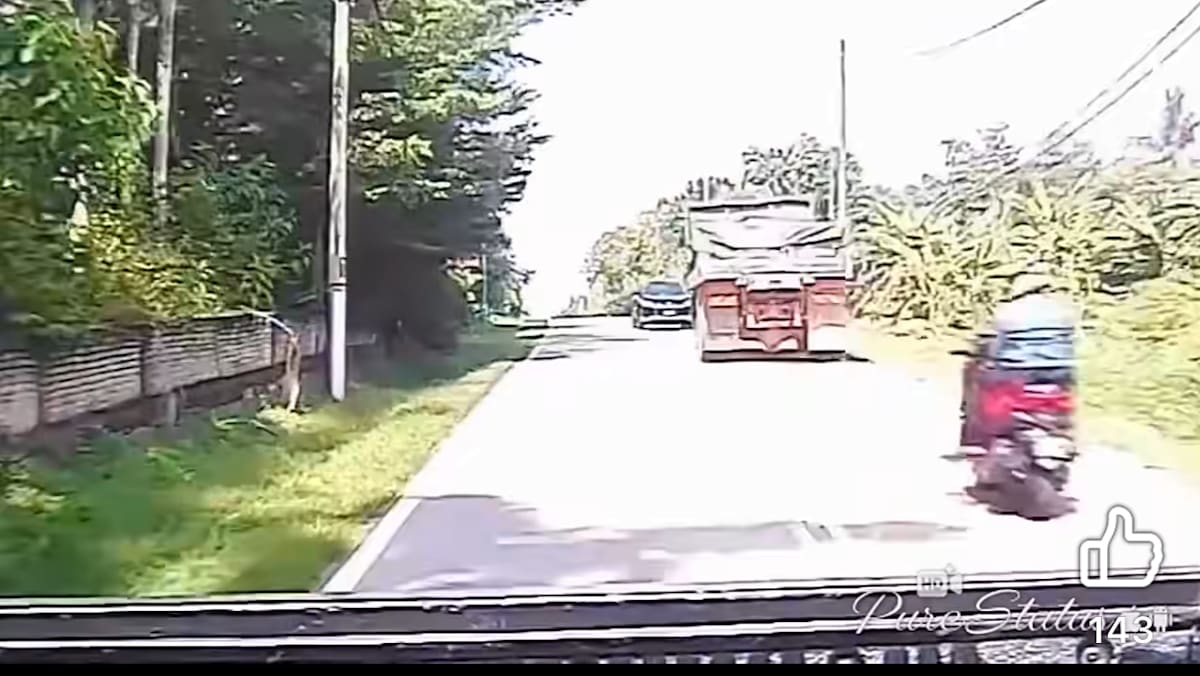
In the Sungai Petani accident on Jun 7, a crash involving a lorry and sport utility vehicle (SUV) that killed six family members travelling in the latter led to even Kedah police chief Adzli Abu Shah receiving WhatsApp messages containing falsehoods.
“Some people told me that the lorry driver was drunk and also brought up the driver’s race,” said Adzli, as reported by local news agency Bernama.
Such messages circulated despite a dashcam video showing the SUV veering into oncoming traffic on a single-lane, two-way road before crashing into the lorry.
Adzli criticised “irresponsible speculation” and said: “Here, I would like to inform that the victims are Malay and the lorry driver is also a Malay, so such actions are highly irresponsible.”
Two earlier fatal accidents also sparked conversations about race.
On Mar 29, a horrific crash in Klang, Selangor left a motorcyclist dead after he collided head-on with an allegedly speeding car that overtook several vehicles and crossed into the opposite lane.
The rider, Amirul Hafiz Omar, was flung onto another car and died at the scene. The car driver, Saktygaanapathy Ravichandran, tested positive for alcohol and drugs. He was charged with murder on Apr 2.
The circumstances of the accident quickly touched Malaysia’s ethnic fault lines, with some netizens questioning why it was “always the same group of people” drink driving. Others pushed back on the need to bring up race.
On Jun 5, a 19‑year‑old man was arrested after a five‑vehicle crash in Kluang, Johor killed five people, including a family of four.
Videos of the accident showed the man and his 22-year-old brother purportedly racing each other in a Mercedes and BMW before the elder brother’s BMW lost control, collided with several cars and plunged into a ravine.
The elder brother died along with the family of four, with the tragedy taking a racial turn online.
Some netizens framed the crash as a Chinese versus Malay issue amid calls for harsher penalties.
Experts said some members of the public try to interpret cause and assign blame to parties stereotyped as being more susceptible to certain activities such as drink driving.
They try to associate certain crimes with members of a certain race or religion, said Haezreena Begum Abdul Hamid, a criminologist from Universiti Malaya.
“They just feel that if you are from my faith and my race, the possibility of doing such things is slim,” she said, calling it an “unfair” generalisation as anyone is capable of such crimes regardless of their race or faith.
Racialising accidents can be “extremely damaging”, Siti said.
It can shift the focus away from victims, facts and the need for accountability by blaming entire communities for the actions of