
Ride-Hail Union Says Drivers Are Not a Uniform Population, Demands Platform Protection
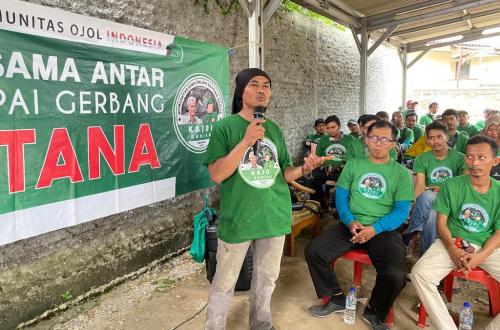
JAKARTA – The Confederation of South Sulawesi Ride-Hail Drivers’ Unions (KSOS) has reminded that ojek online (ride-hail) drivers cannot be categorised as labourers merely because they work through digital platforms. KSOS Chairman Hairun H said a driver’s status must be assessed based on their actual working conditions, not solely on the existence of an app or the terms used in a contract.
“Platforms cannot escape responsibility simply because their contracts use the term ‘partner’. But at the same time, we as ride-hail drivers cannot automatically be called labourers just because the platform sets service standards, matches us with customers, or processes payments,” Hairun said at a joint meeting of KSOS officials in a press release in Jakarta on Monday (15/9/2026).
According to him, determining an employment relationship must take several elements into account, including the platform’s degree of control, the driver’s freedom to set their working hours, and the pattern and structure of the compensation received.
KSOS also referred to labour provisions that define an employment relationship as one between an employer and a worker or labourer based on a work agreement comprising elements of work, wages, and command. According to Hairun, these provisions do not automatically make all app-based work a conventional employment relationship.
“Drivers are not a uniform population. Some are highly dependent on a single platform, while others use several apps at once. Some only work at certain hours, and others combine ride-hail work with trading, permanent jobs, or local services,” he said.
For that reason, Hairun said, KSOS rejects an approach that treats all ride-hail drivers as having one uniform legal status. He said the diversity of work patterns actually shows that drivers have the character of independent workers or transaction-based business operators.
“A uniform classification could turn the diversity of drivers’ economic conditions into a single legal relationship that does not necessarily reflect reality on the ground,” Hairun said.