
Rice seller in Banjarmasin earns Rp1 million daily after joining Baznas microfinance programme
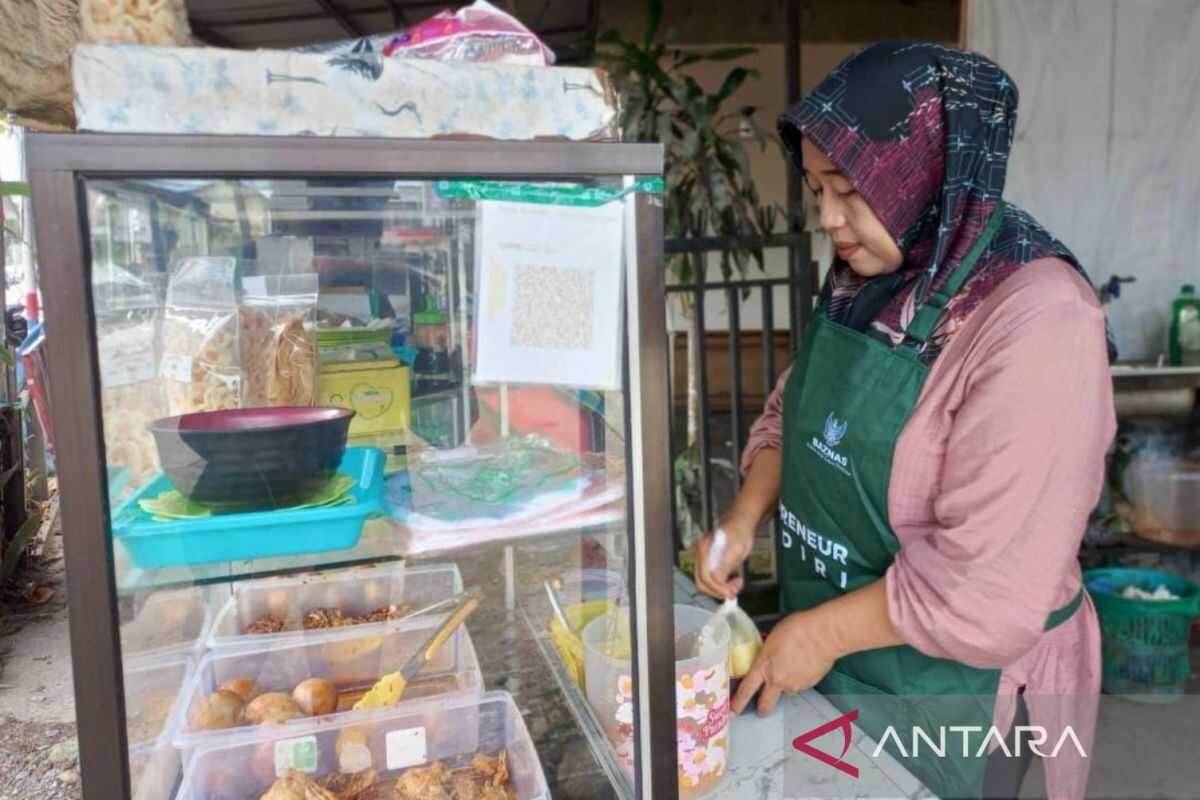
Jakarta (ANTARA) — The National Zakat Agency (Baznas), through its Baznas Microfinance Desa (BMD) programme, has successfully empowered Rabiyatul Adawiyah, a seller of nasi kuning and lontong in Banjarmasin, who now generates a daily turnover of Rp1 million.
In a statement issued in Jakarta on Friday, Rabiyatul said she had directly felt the positive impact of the programme on her business. She expressed gratitude for the financing assistance she received, which had enabled her enterprise to grow significantly.
“Before Baznas helped me, my daily turnover was only Rp800,000. Now, thankfully, it has increased to Rp1 million per day, in line with improvements to business facilities and increased production capacity,” she said.
Rabiyatul said the Baznas financing programme was extremely helpful for small traders like herself because it was not burdensome. The interest-free scheme allows business operators to continue growing without the pressure of additional costs.
She expressed hope that similar programmes would continue so that more small traders could benefit.
“This Baznas programme is tremendously helpful. There is no interest — only infak [voluntary charitable contributions] — and that infak also gives us the opportunity to give in charity,” said Rabiyatul Adawiyah.
Responding to these achievements, Baznas Deputy Chairperson for Distribution and Utilisation Saidah Sakwan expressed her gratitude and pride at the business development of mustahik (zakat recipients) under Baznas’s guidance.
She said this success was proof that zakat management carried out by Baznas in a well-targeted manner could deliver a sustainable impact on the economic independence of mustahik.
“Rabiyatul’s success demonstrates that productively managed zakat can drive economic self-sufficiency. Baznas wants to ensure that mustahik do not merely receive assistance but also grow and develop through sustainable enterprises,” said Saidah.
Saidah explained that the BMD programme did not only provide business capital financing but also intensive mentoring to ensure that the enterprises of mustahik could develop sustainably. She noted that one of the programme’s key advantages was its interest-free financing scheme, which did not burden small business operators.
Looking ahead, Saidah affirmed Baznas’s commitment to continuing to expand the reach of the BMD programme so that more mustahik could improve their businesses and ultimately transform into muzaki (zakat payers).
“Zakat beneficiaries can become zakat givers. If that is realised, it is entirely possible for Baznas to make an even greater contribution to eradicating poverty in Indonesia,” said Saidah Sakwan.