
Rice Self-Sufficiency Is Not the Same as Food Self-Sufficiency
Food is different from rice, and rice is not food. According to Law No. 18 of 2012 concerning Food, food is defined as everything originating from biological sources and water, whether processed or unprocessed, intended as food or drink for human consumption, including food additives, food raw materials, and other materials used in the preparation, processing, and/or manufacture of food or drink.
So, what is called rice? Rice is the grain of the paddy plant that has been separated from its husk. Rice is the staple food for the majority of people in Indonesia and many other Asian countries. The process of turning paddy into rice involves several stages, namely drying, milling, and separating the husk from the grain. Rice can be processed into various types of food, such as cooked rice, porridge, and others.
Rice and food have a very close relationship. Rice is one of the most important types of food and is a staple for the majority of people in Indonesia and many other Asian countries. In the context of food security, rice is often considered a symbol of food because of its crucial role in meeting the nutritional and energy needs of the community. Therefore, the sufficient and stable availability of rice is very important for maintaining national food security.
In Law No. 18 of 2012 concerning Food, rice is included in the category of staple food, which is food that is a basic human need that must be fulfilled by the government and the community together. Meanwhile, in the life of the nation, state, and society, rice has been designated as a political and strategic commodity. It is rice that can sustain the lives of the majority of the Indonesian people.
President Prabowo Subianto, along with the Red and White Cabinet, has established various policies that are prioritised in running his administration. One of them is achieving food self-sufficiency. The Prabowo administration is optimistic that the target of achieving food self-sufficiency can be reached as soon as possible, provided that all the nation’s people can work hard and smartly.
Food self-sufficiency is often defined as a country’s ability to meet its own staple food needs without depending on imports from other countries. This means the country can produce enough food to meet the needs of its people, so it does not need to rely on supplies from abroad. In the Indonesian context, food self-sufficiency is often associated with rice self-sufficiency, which is Indonesia’s ability to produce enough rice to meet the needs of its people without needing to import rice from other countries.
The idea that rice self-sufficiency is the same as food self-sufficiency arises because rice is the main staple food for the majority of Indonesian people. Therefore, the availability of rice is often considered an indicator of national food security. However, as experts often remind, rice self-sufficiency is not the same as food self-sufficiency.
Food self-sufficiency has a broader scope, namely the country’s ability to meet the overall food needs of its people, including the need for protein, vitamins, and minerals. Rice is only one type of food, and there are many other types of food that are also important for meeting the nutritional needs of the community. Therefore, rice self-sufficiency is only one aspect of food self-sufficiency and cannot be considered the sole indicator of national food security. This thinking may arise from historical and cultural factors, where rice has been the staple food in Indonesia for centuries, so the availability of rice is often considered the main priority in national food policy.
On 31 December 2025, at exactly 00:00, President Prabowo declared that Indonesia had achieved rice self-sufficiency. Although at the beginning of his administration, President Prabowo set a target of four years to realise food self-sufficiency, within just one year, the government’s food team managed to achieve rice self-sufficiency. The success in achieving rice self-sufficiency at the end of 2025 is clearly a proud achievement. The next question is, what is the government’s strategy and policy to achieve self-sufficiency in other food commodities such as corn, soybeans, beef, garlic, sugar, and others?
Along with that, the government is also asked not to forget the rice commodity that has achieved self-sufficiency. The government needs to have a strong determination that the 2025 rice self-sufficiency must be different from previous rice self-sufficiencies. The 2025 rice self-sufficiency must be sustainable, not just a passing trend.
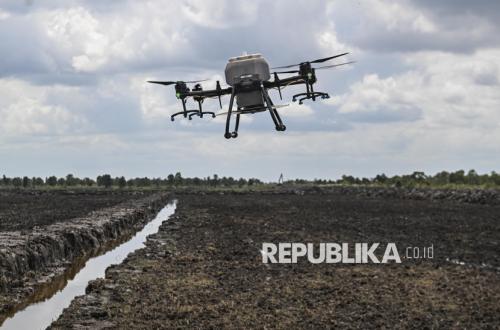
To achieve this, several strategies and steps can be taken, including: agricultural intensification by increasing agricultural productivity using superior seeds, proper fertilisation, and adequate irrigation; land extensification by creating new rice fields and optimising existing land to increase rice production; increasing the Planting Index (IP) by increasing the frequency of rice planting on the same land to increase production; using modern agricultural technology, such as drones and automatic irrigation systems, to increase efficiency and productivity; strengthening the Government Food Reserve (CPP) by increasing the government’s rice reserves to maintain price and supply stability; improving farmer welfare by providing access to credit, technology, and markets; and collaborating with the private sector, meaning working with private companies to increase rice production and distribution. With these strategies, the government is asked to increase rice production, improve farmer welfare, and realise sustainable rice self-sufficiency.