
Rice Scarcity Persists in Several Regions, Bapanas Guarantees Stability
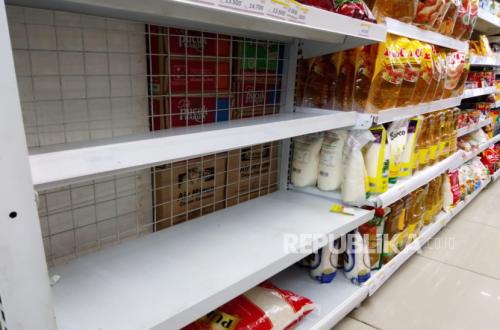
The Mayor of Bandung, Muhammad Farhan, has revealed that shortages of certain types of rice are still occurring within the Bandung City area. He noted that the Ministry of Agriculture (Kementan) is currently conducting enforcement measures to resolve the issue.
“Previously, the issue with rice was that, quantitatively, there was enough overall without looking at specific types. However, when divided by type, medium-grade rice has disappeared from the market,” he stated on Monday (05/10/2026).
He explained that the Ministry of Agriculture is conducting inspections to address this problem, and his administration is awaiting the results. “That is why there is enforcement from the Ministry of Agriculture. We are waiting for the outcome of these measures,” he said.
His administration will also encourage distributors to once again meet the demand for medium-grade rice, whereas Bulog’s SPHP (Stabilisation of Food Supply and Price) rice remains abundant. “As for SPHP from Bulog, there is plenty. Super rice is also sufficient. It is this medium-grade class that has the highest demand,” he added.
Amidst the scarcity of certain rice varieties, he mentioned that his office cannot intervene as the situation is driven by market mechanisms. He also noted that distributors cannot be blamed. “When discussing distribution, everyone tends to blame one another, citing high costs and difficulties,” he remarked.
In Cimahi, the Department of Trade, Cooperatives, SMEs, and Industry (Disdagkoperind) revealed that stocks of premium rice in modern retail outlets in the city have begun to dwindle, following recent inspections.
“It is true that there is a decrease in the supply of premium rice. We have just checked two modern retailers and the supply is indeed down,” said Indra Bagjana, Head of the Trade Division at Disdagkoperind Cimahi, when confirmed on Monday.
However, the department has yet to identify the cause of the reduced supply of packaged premium rice in Cimahi’s modern retail outlets. This is despite data from the National Food Agency (Bapanas) indicating that overall premium rice stocks are sufficiently secure.
“This is what we are currently investigating. Based on national data, stocks should be sufficient,” Indra said.
Regarding the stock and supply of bulk rice—sold unpackaged and without specific brands in traditional markets—he ensured that supplies remain abundant. “In traditional markets, it is safe because they buy in bulk, without packaging. For example, if they purchase 100 kilograms, they will resell it,” Indra explained.
Furthermore, stocks of medium-grade rice in both modern retail and traditional markets are confirmed to be plentiful, especially since Bapanas has reopened and increased the allocation for the Stabilisation of Food Supply and Price (SPHP) programme.
Indra continued, stating that this month they will relaunch the ‘SiBesti’ programme (Preparing Rice for the People of Cimahi). The programme aims to stabilise the prices of basic commodities and assist low-income residents. “We will anticipate the end of the month with SiBesti. Additionally, the SPHP from Bapanas has been reopened and its quota increased,” Indra concluded.