
Rice Production Reaches 6.69 Million Tonnes, Governor Optimistic Central Java Will Meet Target
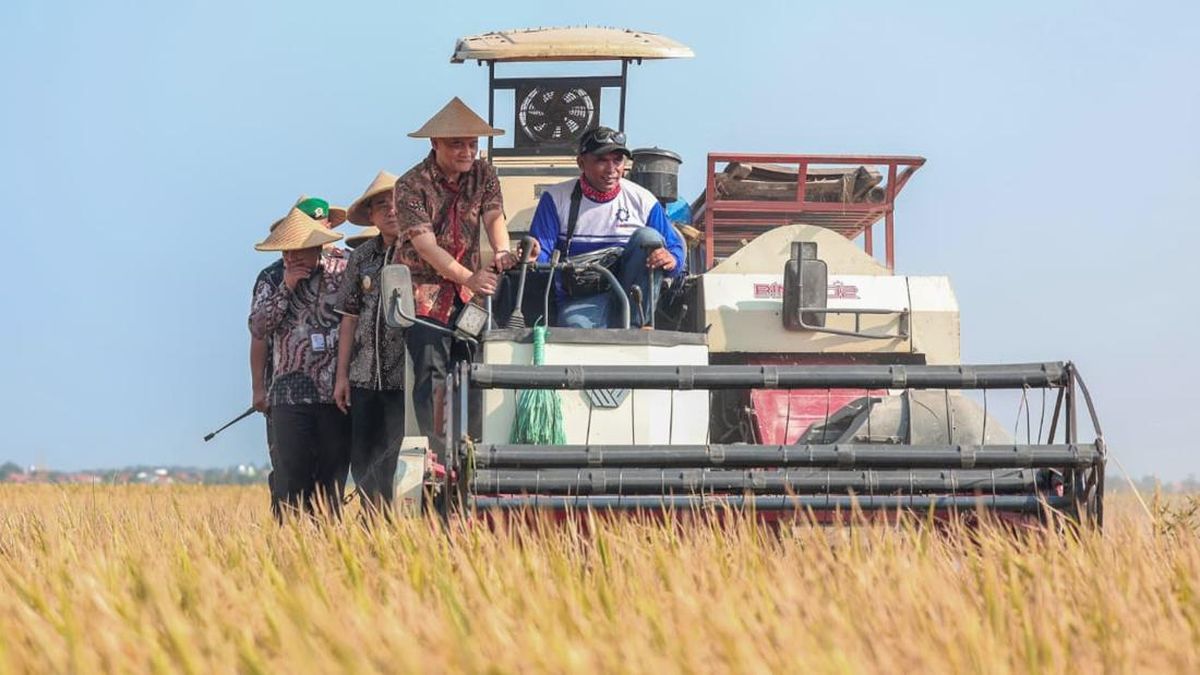
The Governor of Central Java, Ahmad Luthfi, has expressed optimism regarding reaching a production target of 10.5 million tonnes by the end of this year. This optimism stems from Central Java’s rice productivity records for the January-August period, which reached 6.69 million tonnes, or approximately 63 per cent of the target, following a second major harvest season that is nearing its peak.
Luthfi shared these remarks during a large-scale rice harvest event in Kedungbanjar Village, Taman District, Pemalang Regency. He noted that a third harvest season is still expected to take place in several areas.
“From January to August, we have already reached 6.69 million tonnes. Today we are harvesting rice in Pemalang, and other regencies are also conducting harvests. If this can be maintained, the target will be met,” Luthfi said on Thursday (3/9).
To encourage farmer productivity, the Central Java Provincial Government is reportedly distributing agricultural aid in the form of tractors, combine harvesters, water pumps, and seeds to farmers. This assistance is being provided not only in Pemalang but also in other regions across Central Java.
“We are deploying agricultural tools and pumps here. We also have two mechanisms for managing agricultural land: rain-fed rice fields using pumping and piping systems, and irrigated rice fields through the optimisation of tertiary irrigation networks,” Luthfi explained.
Meanwhile, the Head of the Central Java Agriculture and Livestock Office, Defransisco Dasilva Tavares, stated that several regions possess local wisdom regarding agriculture. In the northern coastal area (Pantura), for example, Kedungbanjar experiences two rice harvest seasons interspersed with other agricultural commodities.
He added that some areas even manage three planting and harvesting seasons. “However, all farmers essentially depend on water; if water is available, they will certainly plant rice. But with the PMAS or Modern Agriculture Advance System method, two planting seasons are sufficient because the yield is high,” he said.
To further drive rice productivity, the Central Java Provincial Government has implemented the ‘Pilar Jateng’ programme. This programme provides a mapping system for land infrastructure, irrigation, and agricultural machinery, including their current conditions. All data is recorded to ensure that agricultural development planning is precisely targeted.
“From there, we can determine the interventions or assistance to be provided to farmer groups,” said Defransisco.
As agricultural modernisation in Pemalang Regency is not yet comprehensive, the provision of agricultural machinery and tools is recognised as being highly beneficial to farmers. The provision of combine harvesters also helps reduce production costs. The Chairperson of the Sri Berkah 1 Tegalbati Farmer Group in Petarukan revealed that farmers previously incurred high costs to bring machinery from other regions.
“Thank you for this combine harvester assistance. Usually, we have to bring them from other areas. During the first planting season, we are sometimes late for harvest because we are waiting for machines from other regions, which also affects the price of unhusked rice (gabah),” he concluded.