
Rice Prices Surge Again: Are Farmers Truly Benefiting?
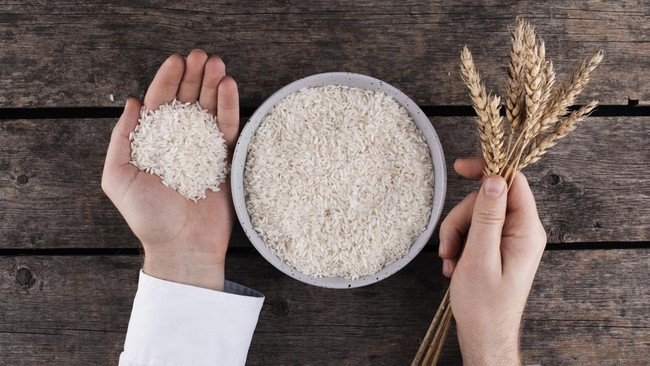
Rice prices rose again in May 2026, with increases observed from upstream to downstream. At the milling level, the average price of rice reached Rp13,765 per kilogram. Wholesale prices stood at Rp14,574 per kilogram, while retail prices touched Rp15,358 per kilogram. These figures represent the highest levels recorded in recent years.
Statistics Indonesia (BPS) reported that rice prices at the milling level rose by 0.58% compared to April 2026. Wholesale prices increased by 0.68%, while retail prices grew by 0.38%. On an annual basis, the growth rate was even more significant: milling prices surged by 8.10% compared to May last year, wholesale prices rose by 6.11%, and retail prices increased by 4.55%.
For consumers, this news is undoubtedly unwelcome, as rice remains the staple food for the majority of Indonesian households. Rising rice prices invariably impact family expenditures, particularly for low-income groups whose food budgets are dominated by basic necessities.
However, the story is different for producers. As rice prices move upwards, the economic condition of farmers is actually improving. The national Farmer Terms of Trade (NTP) in May 2026 was recorded at 127.73, an increase of 1.99% compared to the previous month. The NTP is an indicator used to measure the exchange capacity of farmers’ production outputs against the goods and services they consume or use in production processes.
The increase in NTP occurred because the growth in farmers’ income outpaced the rise in their expenditures. The Farmer’s Receiving Price Index (It) rose by 2.53% to 163.16, while the Farmer’s Paying Price Index (Ib) only rose by 0.53% to 127.74. In other words, the value of agricultural sales increased more significantly than the rise in costs incurred by farmers.
This condition was clearly visible in the food crop group. The NTP for the food crop subsector reached 113.79, up 1.34% from April. A primary driver was the rise in unhusked rice (gabah) prices. As gabah prices improved, the income of paddy farmers was boosted, meaning part of the impact of rising market rice prices resulted in additional revenue at the farmer level.
This phenomenon is noteworthy because, in recent years, rising rice prices have not always correlated directly with farmer welfare. There have been many instances where market prices surged, yet the largest profits were enjoyed by the distribution and trading chains. The May 2026 data presents a different picture, as higher rice prices were accompanied by an increase in national farmer welfare indicators.
Nevertheless, this improvement is not uniform across all agricultural sectors. The horticulture subsector was the standout performer in May, with the NTP reaching 140.58 after a 7.08% monthly surge. The smallholder plantation subsector remained the highest in absolute terms with an index of 164.24, supported by commodity prices such as rubber and cocoa. Meanwhile, the livestock sector recorded only a slight increase to 103.86.
Attention is instead focused on the fisheries sector. While most subsectors enjoyed improved purchasing power, the Fisheries Farmer Terms of Trade fell by 0.64% to 107.01. The Fisherman’s Terms of Trade was recorded at 107.48, down 0.47%, while the Fish Farmer’s Terms of Trade fell more deeply by 0.90% to 106.25. This indicates that the profits enjoyed by farmers from the rise in certain commodities have not yet been felt by those in the fisheries business.