
Rice Prices Experience Slight Increase in Cirebon Regency
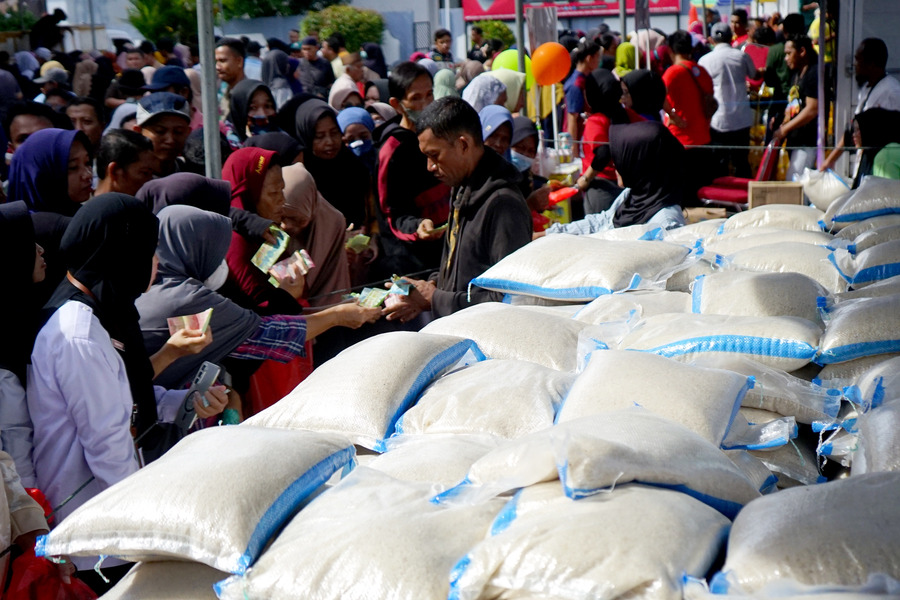
Rice prices have begun to experience an increase, while horticultural products have already seen price drops.
Based on information gathered from Sumber Market in Cirebon Regency, food commodities that have risen are basic necessities such as rice, sugar, and cooking oil. The price of low-quality rice I is recorded at around Rp14,150 per kilogram, while low-quality rice II is Rp13,550 per kilogram. For medium-quality rice, prices range from Rp14,750 to Rp15,350 per kilogram.
Premium rice is now sold for Rp16,000 to Rp17,100 per kilogram. “But the supply of rice is still smooth. During the recent Eid, rice demand was quite high,” said Rani, 46, a rice trader at the market, on Wednesday (1/4). Rani explained that the price increase has occurred gradually since the end of March.
In addition to rice, sugar commodities have also risen. Premium granulated sugar is sold for around Rp19,350 per kilogram, while local sugar is Rp18,650 per kilogram. Loose cooking oil is now sold for Rp23,500 per kilogram, and packaged cooking oil ranges from Rp22,250 to Rp22,850 per litre. The increases in sugar and cooking oil are suspected to be triggered by distribution factors and raw material prices at the producer level.
Meanwhile, onion prices have declined. Red onions are recorded at Rp44,000 per kilogram and garlic at Rp39,000 per kilogram. Both onion commodities have experienced a slight drop compared to the previous day.
In addition to onions, chilli prices have also fallen by more than 20 percent. Large red chillies are now sold for around Rp45,000 per kilogram, curly red chillies Rp43,000 per kilogram, green bird’s eye chillies Rp49,000 per kilogram, and red bird’s eye chillies Rp85,000 per kilogram. “The drop in chilli prices is due to the abundance of supply from farmers. The simultaneous harvest has increased stock in the market. Meanwhile, demand has started to decrease after the peak consumption,” said Ahmad, a trader at the market.