
Rice Fields Are More Than a Tourist Backdrop
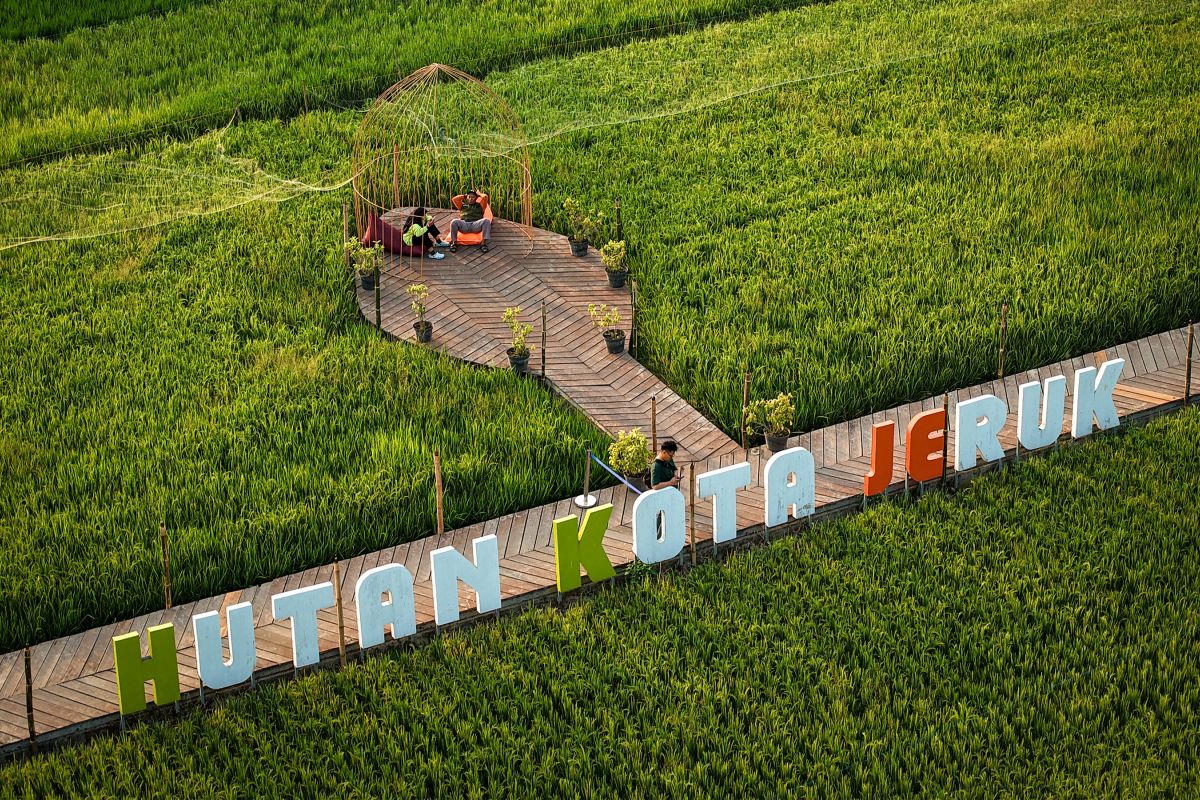
Surabaya (ANTARA) - Green rice fields, trees shading the land and the fading light of dusk create an atmosphere rarely found amid urban life.
The scene can be enjoyed at Hutan Kota Jeruk in Lakarsantri subdistrict, Surabaya, an open space that brings a rural feel together with the pulse of the city.
As the lights come on, the area offers more than simply a chance to enjoy the view: it also provides an opportunity to learn about the relationship between people and nature.
The Surabaya City Government is showcasing this potential once again through Garden Fest, held on 17–18 October 2026. The event combines a garden-party atmosphere with agricultural education, sport and the involvement of micro, small and medium-sized enterprises (MSMEs), while also serving as a trial of extended opening hours into the evening.
The initiative creates new possibilities for green open spaces to develop as places for recreation and learning, as well as drivers of the local economy.
The success of Hutan Kota Jeruk should not be measured solely by visitor numbers or the appeal of its evening atmosphere. The more important challenge is to ensure the area develops without losing its ecological functions, agricultural value and social benefits.
Good tourism does more than attract people: it also builds knowledge, protects the environment and delivers economic benefits fairly to the surrounding community.
A public asset
Hutan Kota Jeruk is important to Surabaya’s development because green open spaces are increasingly needed amid rapid urban growth.
The area is not merely a place for recreation; it is also part of the environmental infrastructure that supports residents’ quality of life.
On 8 September 2026, the Surabaya City Government and the East Java High Prosecutor’s Office successfully recovered 96,932 square metres of land in Jeruk urban village, Lakarsantri subdistrict, valued at around Rp124.07 billion.
The land includes Taman Hutan Raya Jeruk, a community health centre and a reservoir. The recovery gives the government legal certainty to manage the assets in the public interest.
Certainty of ownership must be matched by certainty of public benefit. Development of the area should prioritise environmental protection, sustainable agriculture, visitor services and residents’ welfare.
Trees, rice fields and water-absorption land have ecological value that cannot always be measured in economic returns.
The development plan should align with Surabaya City Regional Regulation No. 1 of 2026 on the 2025–2055 Environmental Protection and Management Plan. Accordingly, planning for Hutan Kota Jeruk should not focus solely on adding tourist facilities.
The government needs to maintain the productivity of the rice fields, preserve the land’s water-absorption function and limit construction so it does not damage the environmental balance. This will allow the public asset to develop productively without losing its ecological and social benefits.