
Rice Fields: An Investment in Life
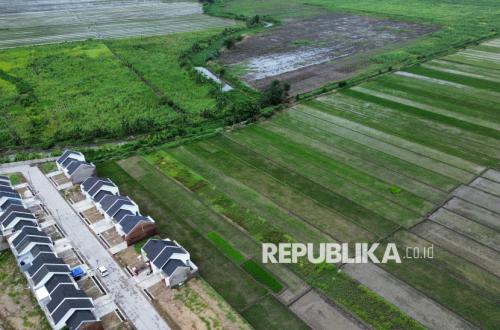
Sawah is agricultural land used for planting rice or other crops that require a lot of water. Typically, sawah is located in lowland or valley areas and is irrigated by rivers or irrigation systems. Sawah is crucial for rice production, a staple food in many Asian countries, including Indonesia.
So, what is meant by an investment in life? Much literature states that an investment in life is the effort or resources we use to improve the quality of life, both now and in the future. This can include education, health, relationships, finances, and land. Cultivating land for food production or as a source of income is a key part of this. An investment in life helps us achieve our life goals, improve well-being, and leave a positive legacy. That is why it is natural for us to always protect and preserve things related to this investment in life.
Sawah is often called an ‘investment in life’ for several reasons. First, it relates to food security; sawah provides a primary food source, namely rice, which guarantees food availability for families and communities. Second, it provides income; sawah can be a source of income for farmers and their families through the sale of harvests. Third, it is an inheritance; sawah can be passed down to the next generation, becoming a valuable asset for the family. Fourth, it offers economic stability; sawah can provide economic stability for families, especially in rural areas. So, sawah is not just agricultural land, but also a long-term investment for a better life. It is this sawah that will feed future generations.
Imagine if there were no more sawah in the homeland; the question then is, where will future generations fulfil their staple food needs? Indeed, there has been a shrinkage of sawah area in Indonesia. According to data from the Central Statistics Agency (BPS), the area of raw sawah land in Indonesia decreased from 7.75 million hectares in 2013 to 7.1 million hectares in 2018, a loss of around 650,000 hectares. The latest data from the Ministry of Agrarian Affairs and Spatial Planning/National Land Agency (ATR/BPN) records that the conversion of agricultural land reaches approximately 554,000 hectares per year. This is very worrying because it has the potential to significantly erode the national food production base.
The phenomenon of sawah conversion is truly alarming. This shrinkage is caused by the conversion of agricultural land to non-agricultural uses, such as housing, industry, and other infrastructure. Referring to this situation, a smart breakthrough in policy is urgently needed to firmly stop the ongoing conversion of sawah. Faced with this situation, the Minister of Agriculture has often stated that the conversion of agricultural land is a serious threat to national food security. Because of this, the government has taken a number of steps to protect agricultural land, such as establishing Regional Regulations for Sustainable Food Agricultural Land (LP2B) in several provinces.
Unfortunately, in practice, a slew of these regulations seem to have lost their power. The process of sawah conversion continues despite the existing regulations. A number of factors are the cause, such as a lack of coordination. Government agencies often lack synchronisation in spatial planning, making regulations ineffective. Furthermore, law enforcement is weak. Violations of spatial planning rules are often not strictly acted upon, so there is no deterrent effect. Then, there is the economic value of the land. Agricultural land converted into housing or industry has a higher economic value, so landowners are tempted to sell. Also, changes in the local economic structure force farmers to change professions, so they tend to sell their land. It could also be due to limited resources. The government still has limited resources to supervise and implement regulations.
To overcome this, a serious effort is needed from the government and the community to improve law enforcement, coordination between agencies, and provide incentives for farmers to maintain their agricultural land. This is important to pursue, considering that sawah is an investment in life.