
Rice Crops in Majalengka Fail to Harvest and Burn During Dry Season
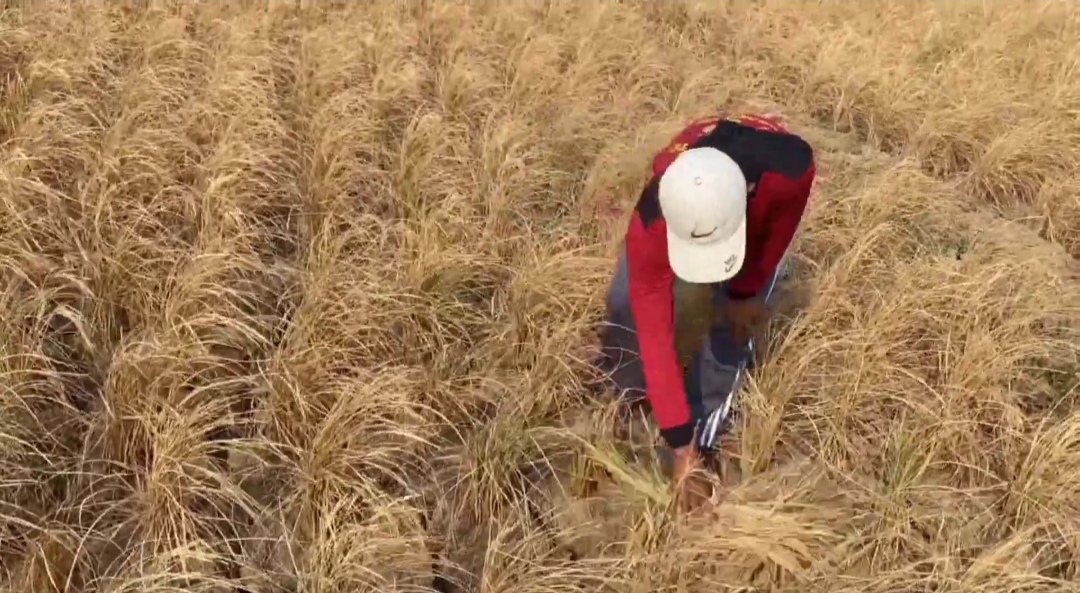
Farmers in Mekarjaya Village, Kertajati District, Majalengka Regency, are experiencing crop failures. The lack of water has prevented rice plants that were already maturing from being harvested.
“It has not rained here for almost one and a half months, so the conditions are very dry,” said Casmita, a farmer in Mekarjaya Village, on Sunday (2/8).
Casmita explained that many farmers in their village should have been harvesting by now. Unfortunately, as the rice grains filled, a drought occurred and the paddy fields no longer received water supplies. The water, Casmita continued, is no longer flowing through the irrigation channels. A similar situation is occurring at Situ Cijingga, where water levels have dried up, despite the fact that agriculture in Mekarjaya Village relies on the water supply from Situ Cijingga.
“Incidents like this happen frequently in our village, almost every year, but there has been no solution from the government,” Casmita said.
Farmers are now hoping that the Majalengka Regency Government will provide a solution to address the recurring water shortage during the dry season. “There is the Situ Cijingga reservoir here, which is also currently dry. I hope there is a real solution, such as the construction of a diversion from the Cipanas River or other schemes, so that the reservoir can hold water for our agricultural needs,” Casmita expressed.
In addition to causing the rice crops to wither, the dry and hot weather has caused ready-to-harvest crops in the same village to catch fire.
“I did not realise there was fire over there. Suddenly, while I was harvesting and standing, I saw smoke ahead and the fire grew very quickly,” said Dede, another farmer in Mekarjaya Village.
Dede admitted he panicked and attempted to extinguish the flames using a long wooden pole. However, as the blaze continued to intensify, his efforts were unsuccessful. The fire eventually consumed his entire crop that was ready for harvest.
“Because the fire grew larger, I could only surrender to the situation,” said Dede.
Dede’s burnt paddy field covered approximately 100 ‘bata’ (about 1,400 square metres). “It was meant to be significant for our daily sustenance,” Dede added. He also stated that he was unsure of the exact cause of the fire in his field.