
Rice Breaks Through Isolation and Vulnerability in Papua
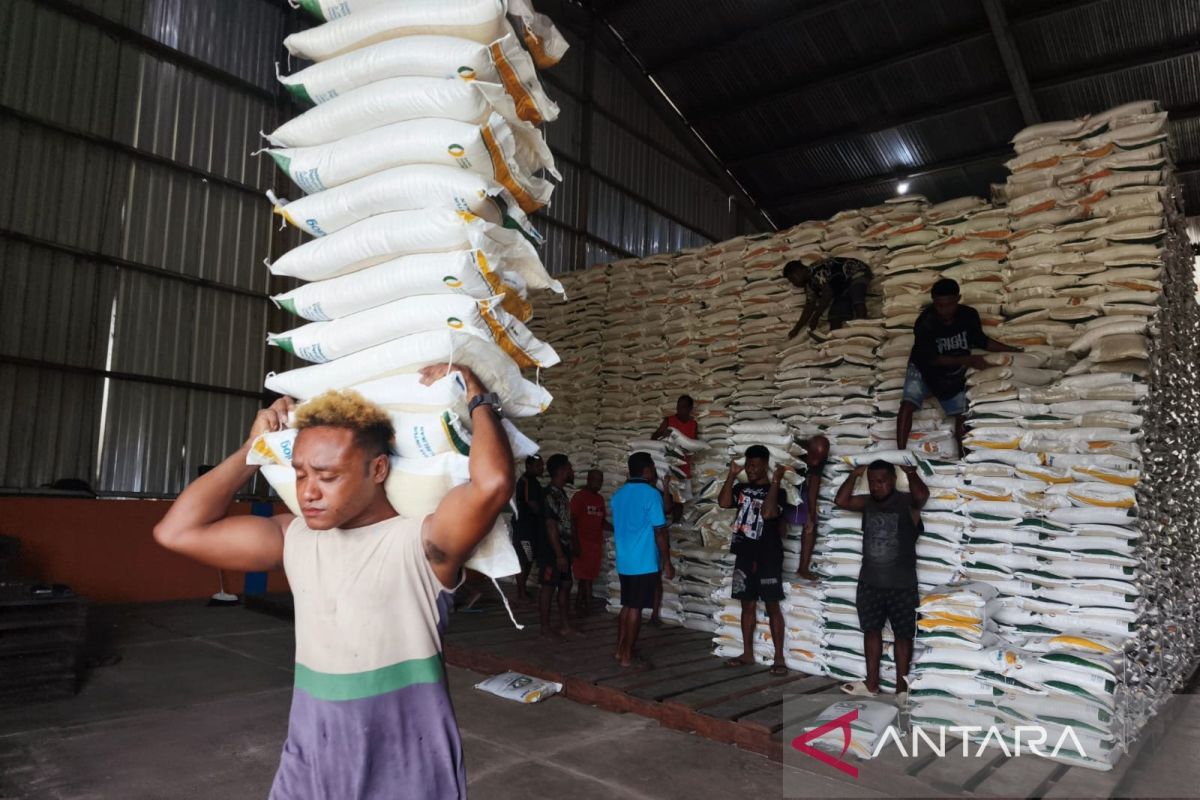
Nabire — A fleet of yellow and blue trucks sat parked around the Perum Bulog warehouse in Nabire on Thursday afternoon, 14 May 2026. Some truck beds were tightly covered with tarpaulins, while others remained busy with labourers loading sacks of rice into the rear of the vehicles.
The sun in Nabire, the capital of Central Papua Province, was scorching that afternoon, yet the atmosphere in the warehouse was far from calm. The day marked the final distribution of food aid for the February–March 2026 period for the Nabire Regency area.
For most, food aid might appear as mere figures in a distribution report: a certain tonnage of rice, a certain volume of cooking oil, and thousands of beneficiaries. However, in Central Papua, food aid is a story of long journeys, fear, silent mountains, and people risking their safety to ensure rice reaches the hands of the people.
Tobias, one of the truck drivers transporting the aid, vividly remembers his fear when delivering rice to a district in Dogiyai Regency. The journey to Dogiyly is exhausting; from Nabire, vehicles must endure a six to seven-hour trip via the Trans Nabire–Paniai route. Convoys of dozens of trucks must navigate mountain roads filled with steep climbs, sharp descents, and long, winding turns through Papua’s tropical rainforest. In many areas, mobile signals vanish entirely, leaving only the sound of engines and the silent forest. Yet, the difficult terrain is not what frightened Tobias most.
“What makes you afraid is when you enter high-risk areas,” he said quietly. On that occasion, only one aid truck entered the target district, as others had dispersed to different locations. Food aid is typically unloaded at district offices with the help of local residents. However, that day, the district head informed them that they were being monitored by more than just the locals; members of the Free Papua Movement (OPM) were present to oversee the unloading. While they did not carry open firearms, some were carrying machetes.
Tobias admitted to feeling tense. In regions that are not yet fully secure, fear comes naturally. Nevertheless, he endeavoured to remain calm. For him, the rice and cooking oil being carried were not for any political interest. “It is for the community. People need to eat,” he said.
Similar stories are familiar to Arif R. Effendi, the coordinator for third-party transporters for the food aid distribution. From the warehouse office terrace, he explained that the working area for Bulog Nabire faces challenges far different from other regions in Indonesia. Bulog Nabire serves five regencies in Central Papua: Nabire, Dogiyai, Deiyai, Paniai, and Intan Jaya, each presenting its own difficulties.
In Nabire, the challenge lies in distance and the archipelago geography. Several districts, such as Wapoga, Moora, Teluk Umar, and Yaur, can only be reached by boat via sea routes. However, the greatest challenge remains in Dogiyai. As the coordinator managing all food aid shipments, Arif understands that security must be the top priority. “When passing through Dogiyai City, especially from Ugida to Uga Puga, we are required to request security escorts from the authorities,” he said.
Dogiyai is indeed one of the high-risk areas in Central Papua. Recent security conflicts have left the situation in the region unstable. In late March 2026, a police officer, identified by the initials JE, was found dead in the Kamuu District. The incident triggered an escalation of conflict, leading to residents fleeing, reports of houses and vehicles being burned, paralysed economic activity, and the closure of schools.