
Riau Police's Green Policing to Become Centre for Police and Environmental Studies
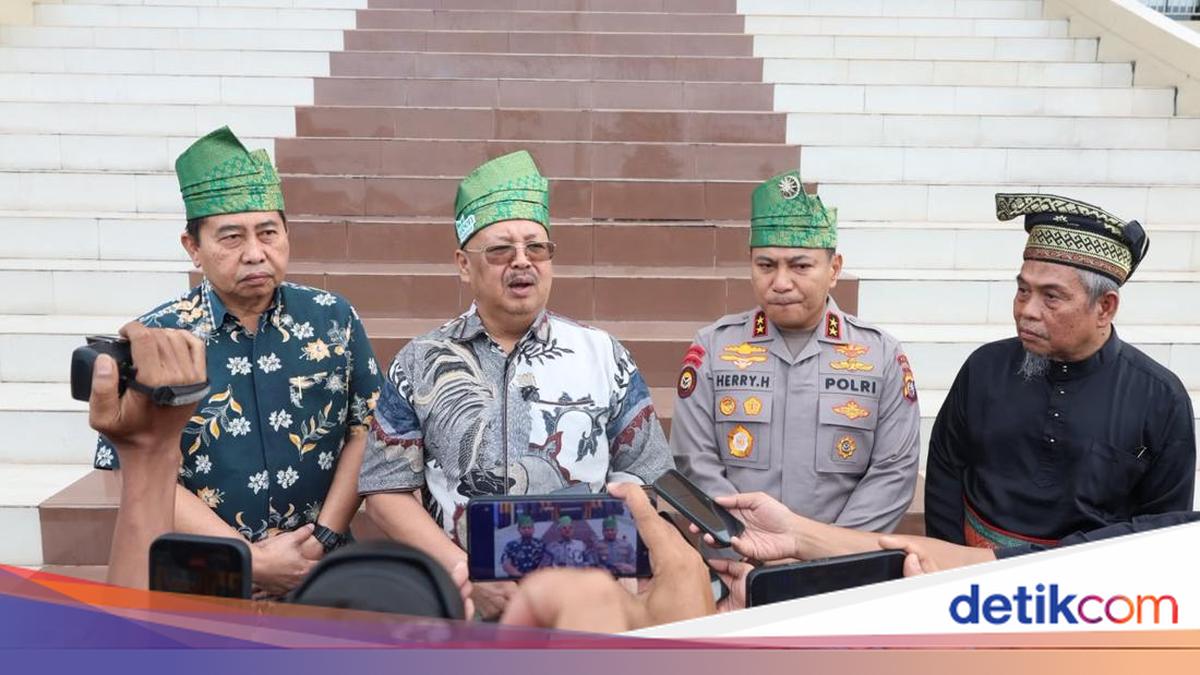
The Green Policing programme championed by Riau Regional Police Chief (Kapolda) Inspector General Herry Heryawan has received positive appreciation from various parties. This time, full support has come from the Police Studies Centre.
On Thursday morning (23/7/2026), the Kapolda of Riau received a visit from the Senior Tier I Police Lecturer at the Police Staff College (STIK), Commissioner General Professor Dr Chrysnanda Dwilaksana, MSi. Professor Chrysnanda and his delegation came to Riau Regional Police Headquarters (Polda Riau) in preparation for the establishment of a police studies centre and an environmental studies centre.
Professor Chrysnanda believes Green Policing is not merely an ordinary programme, but a fundamental movement in the effort to preserve the living environment.
“Here we see that the Kapolda has a Green Policing programme which is an effort to preserve, care for and instil a love for the environment,” said Professor Chrysnanda.
He affirmed that under the new paradigm, the police’s duties are not limited to formal law enforcement, but also encompass the maintenance of humanitarian values and the sustainability of civilisation.
“Because like it or not, we must care for this environment, because it is where we live and we must also instil this in the younger generation. In carrying out their policing duties, the police protect not only humanity but also social order and civilisation,” he asserted.
Therefore, the Police Studies Centre considers the Green Policing programme promoted by Polda Riau worthy of serving as a centre for police and environmental studies. As a follow-up, the Police Studies Centre plans to partner with Polda Riau to hold joint activities involving academics, environmental experts and parties with a concern for ecological issues.
“Green Policing is also part of police studies, and we are here to hold joint activities involving academics, experts and people who are sensitive to and care about the environment,” he continued.
The former Head of the National Police Education and Training Institution (Kalemdiklat Polri) said Green Policing is also a form of art policing — changing society’s paradigm towards the environment.
“I see Green Policing here as an art, an art of policing — how to view humanity through caring for the environment, instilling a love for nature,” he said.
Chrysnanda said Green Policing is not only about planting trees, but also about nurturing diversity. He is optimistic the programme can inspire other regions.
“Green Policing also nurtures our diversity. From Riau, we can provide inspiration and motivation for instilling patriotism. As children of the nation, we must love our homeland as Indonesians,” he concluded.
On that occasion, Professor Chrysnanda also planted a gaharu (agarwood) tree in front of the Riau Regional Police Headquarters. Professor Chrysnanda and his delegation were then taken on a tour of the RADAR Command Centre at Polda Riau.
There, Professor CDL also received a presentation on the Green Policing programme, as well as the RADAR, JALUR and other flagship programmes of Polda Riau.
Meanwhile, Riau Regional Police Chief Inspector General Herry Heryawan said the establishment of the two study centres is an important milestone for Polda Riau in building a learning organisation — one that uses field experience and research as the basis for developing police policy.
“On behalf of the extended family of Polda Riau, I express my appreciation to Professor Chrysnanda Dwilaksana, my teacher and mentor, who has taught me many things, including the Green Policing we are currently implementing at Polda Riau,” said Herry.
According to Herry, climate change, environmental degradation, natural resource crises and rising environmental crime have transformed the concept of modern security.
As such, Green Policing has emerged as a new paradigm that places environmental protection as part of maintaining public security and order.
“Humans, society, the state and nature exist in a mutually shaping relationship. The environment is not an object outside human life, but part of the web of life in which security, welfare and justice derive their meaning,” he said.
The Kapolda explained that Green Policing at Polda Riau is built on three main pillars: prevention, law enforcement and restoration. This approach is then internalised into the organisational culture through Green Habit, Green Thinking and Green Culture, so that every member of the National Police cares about environmental sustainability.
According to him, Riau is the right laboratory for developing this concept, as it is a centre of national economic growth while also facing challenges from forest and land fires, peatland degradation, unlicensed mining, illegal logging and various other forms of environmental crime.
“Environmental security cannot be separated from human security, economic security and national security. That is why Green Policing is relevant to Riau’s needs and aligns with sustainable national development,” he said.
Herry hopes the establishment of the Police Studies Centre and the Environmental Studies Centre will bring together field experience with academic study, producing recommendations that can enrich the Green Policing concept and serve as a reference for education and training within the National Police.
“Field experience provides facts. Research provides explanations. Theory provides direction. When all three come together, an organisation will have a solid foundation to keep growing,” he asserted.