
RI strengthens countermeasures against tuberculosis
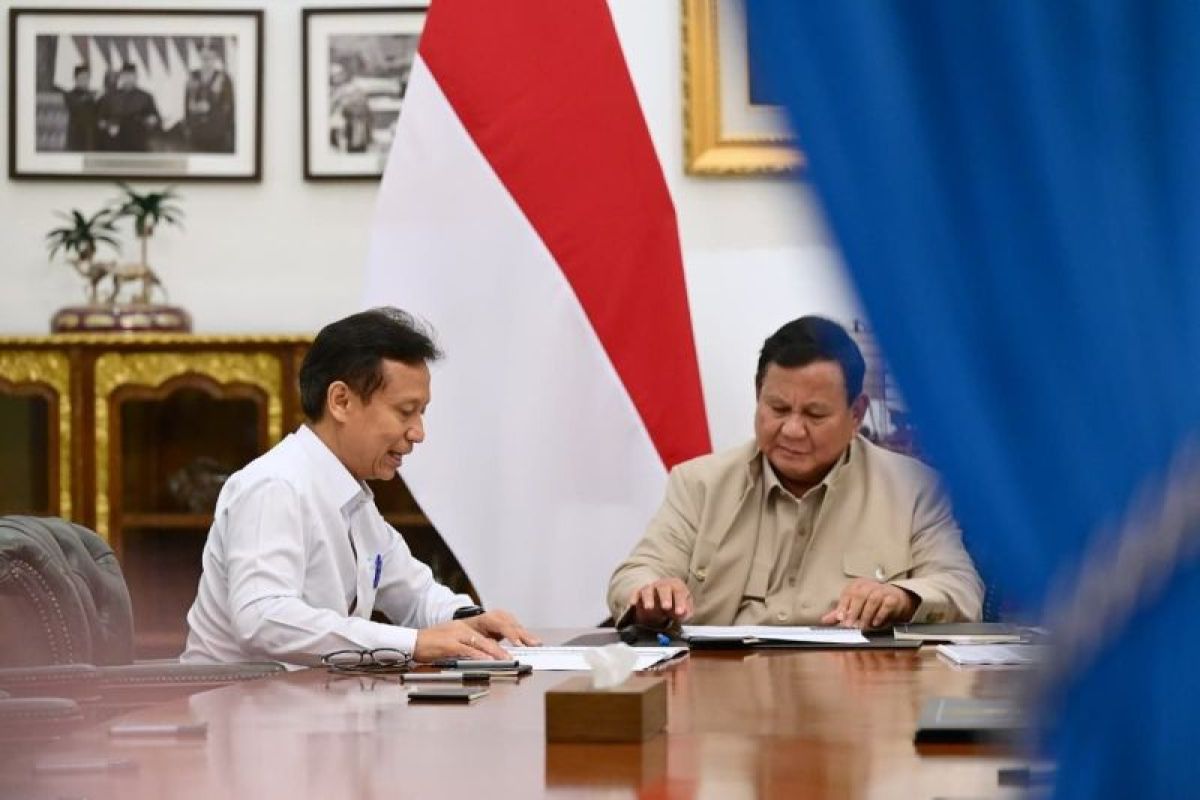
The policy was decided by Subianto after receiving a report from Health Minister Budi Gunadi Sadikin regarding the progress of quick win programmes and several flagship healthcare initiatives during a meeting at the Merdeka Palace in Jakarta on Tuesday (June 9).
“Rather than stopping at early detection, the CKG programme which was started this year prioritises treatment and recovery efforts,” Cabinet Secretary Teddy Indra Wijaya said in a written statement quoted here on Wednesday.
According to Indra Wijaya, the free health screening programme recorded health screenings for more than 70 million people throughout 2025. Meanwhile, in 2026, the programme has reached over 42.3 million participants across Indonesia’s 38 provinces.
Related news: Healthier homes, shorter cures: Inside Indonesia’s TB control efforts
In addition to expanding the scope of health screenings, the Indonesian government is strengthening treatment for non-communicable diseases frequently detected through free screening, particularly hypertension and diabetes, by providing free treatment and monitoring services through community health centers (puskesmas).
Teddy noted the countermeasures of TB continue to be reinforced through more intensive case detection. He mentioned the number of identified TB cases this year reached approximately 1.08 million, following increased tracing and screening efforts.
“This year’s innovations in TB control include integrating screening with the CKG programme, alongside a one-stop service model where screening, diagnosis, and treatment are all provided at a single puskesmas on the same day,” he explained.
Related news: Indonesia intensifies tuberculosis treatment amid rising cases
Furthermore, in regional healthcare services, the government is currently in the process of upgrading 66 regional public hospitals in underdeveloped, outermost, and remote areas. In 2025, 20 of the 22 planned hospitals were completed, with 10 currently operational.
“In 2026, construction has begun on 14 out of 20 hospitals, while another 24 remain in the planning phase for 2027,” Teddy added.
Meanwhile, Minister Sadikin reported that 905 major medical devices have been distributed across 258 districts and cities. Those include Chateterisation Laboratory (Cath Lab), CT scan, and MRI equipments, alongside mammography machines and linear accelerators (LINAC), which all aimed at strengthening diagnostic and treatment services.
Furthermore, the Indonesian government also seeks to revitalise regional public hospitals in 514 districts and cities, as well as 10,000 puskesmas and laboratories to bolster the national health system.
Related news: Indonesia boosts TB detection in Papua with X-ray, housing renovations
Translator: Aditya Ramadhan, Raka Adji