
RI Govt cuts farm supply chain through village cooperatives
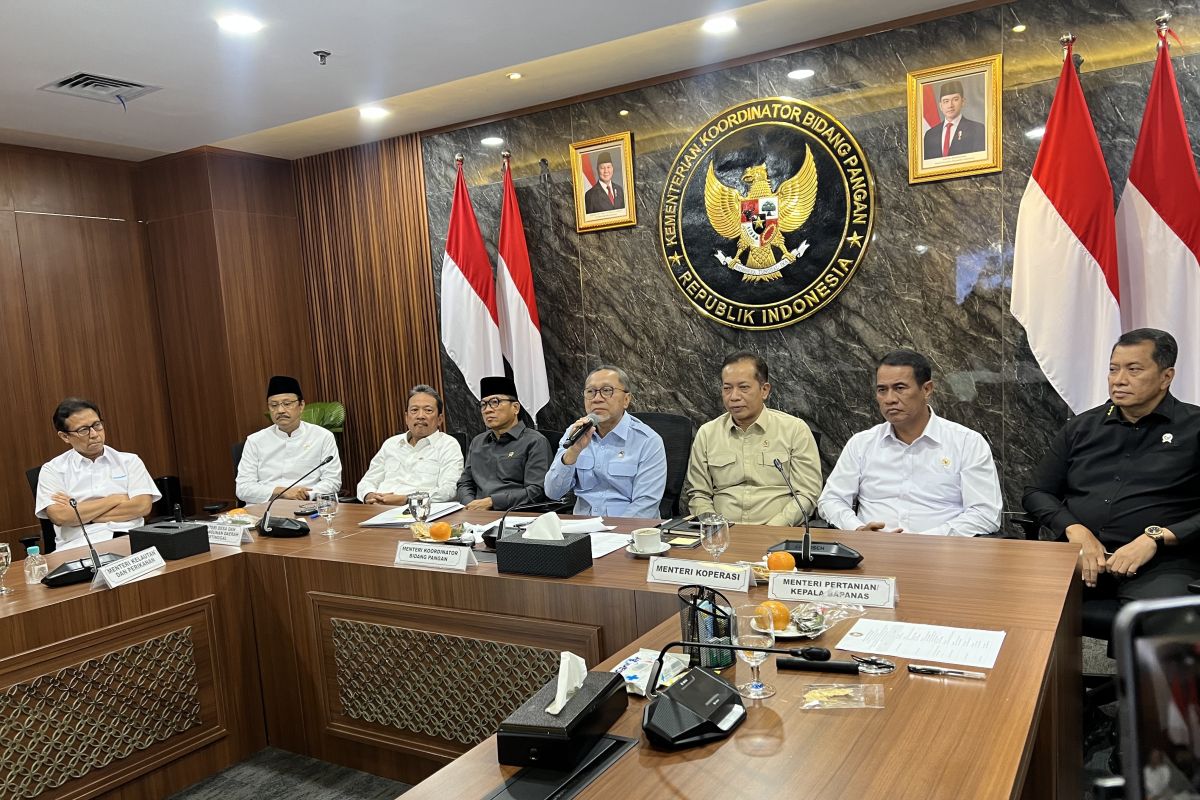
“The agricultural sector’s main function is to shorten the supply chain. We are reducing it from eight stages to three,” Amran said Tuesday.
Under the new scheme, the supply chain will connect farmers, cooperatives and consumers, he said.
Government calculations covering nine agricultural commodities show middlemen currently earn about Rp313 trillion, or roughly US$17.3 billion, from the supply chain, Amran said.
“If cooperatives capture only Rp50 trillion, or about US$2.8 billion, Rp263 trillion, or US$14.6 billion, could instead go to farmers,” he said.
The Rp263 trillion, or about US$14.6 billion, would circulate in rural areas and strengthen local economies, Amran said.
The KDKMP program will also improve farmers’ access to subsidized fertilizer by bringing distribution points closer to villages, alongside efforts to shorten supply chains.
“Fertilizer will no longer be far from our farmers because it will be available through village cooperatives,” Amran said.
Amran said establishing Red and White Cooperatives in every village would boost rural money circulation, shorten supply chains, improve farmers’ welfare and increase purchasing power.
The government aims to have about 25,000 Red and White Village Cooperatives operating between August and September 2026.
The number is expected to reach 35,862 cooperatives by the end of 2026.
Coordinating Minister for Food Affairs Zulkifli Hasan said he hoped the presidential regulation governing the cooperatives would be finalized this week.
“Hopefully, the governance regulation will be completed this week so that everyone has the same guideline,” Hasan said.
Related news: Govt bolsters village cooperatives’ role in fertilizer distribution
Related news: Village co-ops must run at least 8 essential businesses: minister
Translator: Bayu Prasetyo