
Revolution Needed in National Social Programme Financing to Avoid Burdening the State Budget
Indonesia is considered to be entering a new phase of national development. After decades of focusing on physical development, infrastructure, and economic growth, the nation’s attention is now directed towards human development as the primary foundation for ‘Indonesia Emas 2045’.
Amidst this spirit, the Free Nutritious Meal (MBG) programme stands as one of the most ambitious policies in the history of the Republic of Indonesia. This programme is not merely about providing food to schoolchildren or vulnerable groups, but about long-term investment in building a healthy, intelligent, productive, and globally competitive generation.
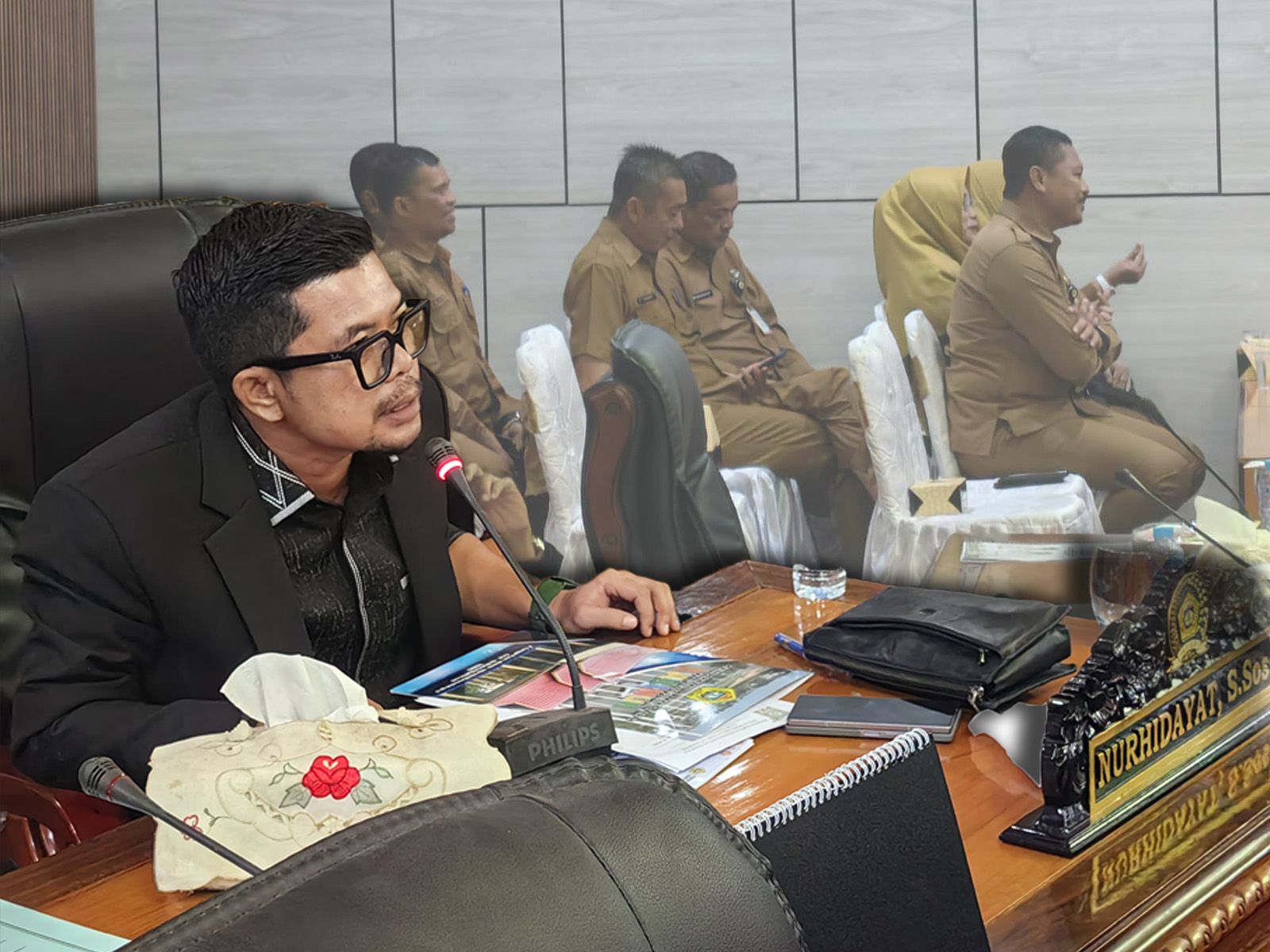
“Various studies show that nutritional quality has a direct correlation with intelligence levels, health, work productivity, and a nation’s economic capability. Developed nations that are currently global economic powers generally began human development through nutritional interventions from an early age,” said Nurhidayat, a member of the PKB Faction of the Karimun Regency Regional Legislative Council, Riau Islands, in a statement on Tuesday (23/6).
Therefore, he stated, the MBG programme is not a consumptive programme as perceived by some circles. This programme is a strategic state investment in building the quality of Indonesia’s human resources. However, behind this grand idea, there remains a fundamental question that continues to be a subject of public debate.
One of these, according to Nurhidayat, concerns the long-term financing source for the MBG. This is highly relevant given that the budget requirements for the MBG are estimated to reach hundreds of trillions of rupiah annually if implemented fully across Indonesia.
“If all financing is burdened onto the State Budget (APBN), there is a risk of significant fiscal pressure in the future. The state must continue to fund education, health, defence, infrastructure, energy subsidies, social protection, and regional development,” he explained.
Under such conditions, he continued, breakthroughs in innovative, sustainable financing are required that do not rely solely on the APBN. This is where the idea of optimising national Corporate Social Responsibility (CSR) funds through the state’s strategic investment holding, Danantara, becomes interesting to examine.
According to him, many parties still view CSR as a form of voluntary social assistance or ceremonial corporate activities manifested in the form of distributing basic food supplies, aid for places of worship, orphans’ donations, or other social activities.
Nurhidayat stated that this view is no longer relevant to the development of modern corporate governance. At a global level, CSR has evolved into part of the Environmental, Social, and Governance (ESG) concept, which serves as the primary standard for corporate sustainability.
Companies are no longer judged solely by the magnitude of the profits they obtain, but also by their contribution to society and the environment. From a modern perspective, a company is not merely an economic entity, but a corporate citizen that holds social responsibility towards national development.
“This concept gives rise to a new paradigm that national development is not only the duty of the government, but is a shared responsibility between the state, the business world, and society,” he explained.
If corporate profits are obtained from economic activities that utilise the nation’s resources, then it is only fair that part of those economic benefits is returned to the community through measurable and sustainable social investment.
Nurhidayat added that Indonesia actually possesses enormous CSR potential. Thousands of national and multinational companies allocate significant CSR funds every year. Assuming total national corporate profits reach Rp2,000 trillion per year with an average CSR allocation of 2 per cent, the potential for national CSR funds could reach approximately Rp40 trillion annually.
That figure even exceeds the regional budgets (APBD) of many provinces in Indonesia. Unfortunately, this vast potential has not yet produced an optimal social impact. The main problem with Indonesian CSR lies not in a lack of funds, but in weak integration and coordination.
CSR implementation remains partial, fragmented, unmeasurable, overlapping, and uneven across regions. Large industrial areas enjoy an abundance of CSR programmes, while underdeveloped regions often do not receive adequate benefits.
“Many companies run similar programmes in the same location, while other areas are not touched at all. As a result, the great potential of national CSR has not yet been able to become a strategic instrument for community welfare development,” Nurhidayat explained.
According to Nurhidayat, the presence of Danantara opens the door for a new paradigm in financing Indonesia’s social development. As a sovereign strategic holding, Danantara possesses capacities that no other institution has.
“Danantara has the potential to become a national coordination node that connects investment, economic development, SOE governance, and social welfare agendas. In this context, Danantara can be developed as a National Coordinating Holding for the integration of national CSR funds,” he asserted.
The roles that can be performed include building a national CSR database; integrating social programme planning; mapping community needs; supervising the distribution of aid digitally; providing a public transparency dashboard; and measuring social impact on a national scale.
This model does not mean taking all of a company’s CSR funds and turning them into a new tax. On the contrary, companies will still have the space to conduct their CSR programmes independently.