
Reviving West Sumatra’s Railway Glory
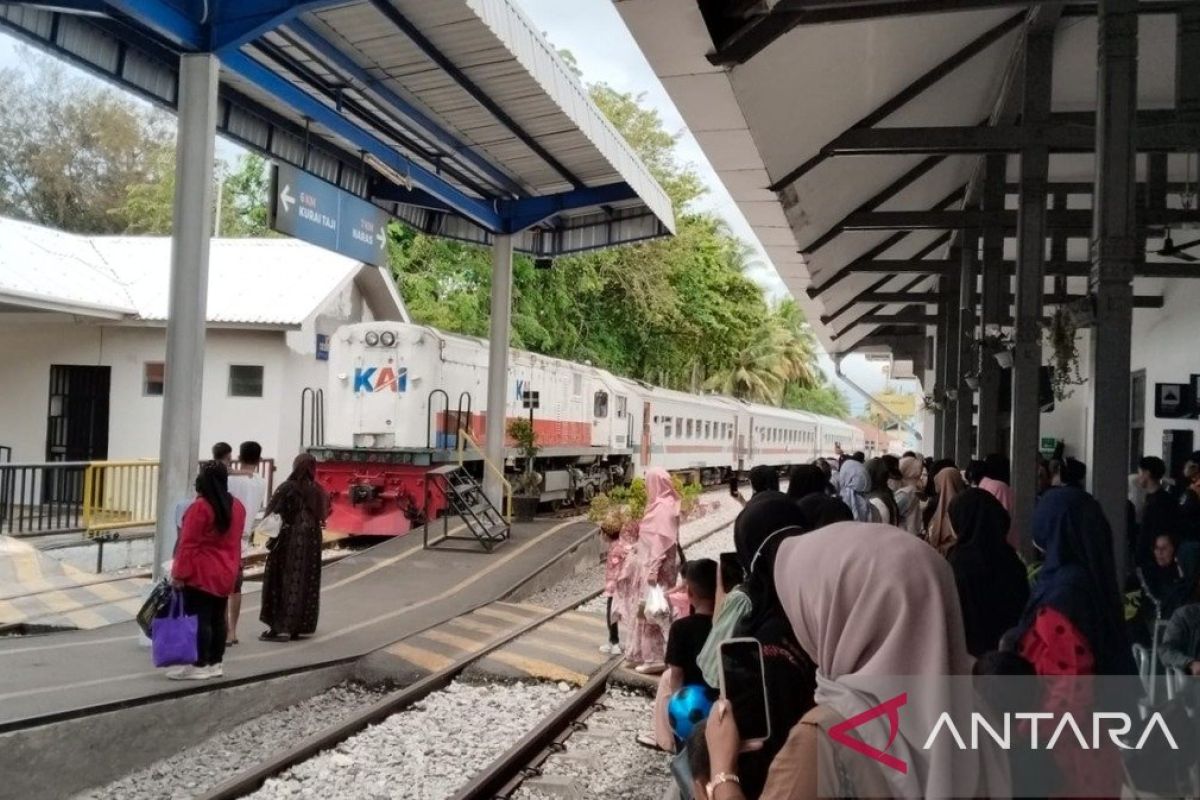
Padang (ANTARA) — In the Minangkabau region, old railway tracks still tell the story of a time when trains connected the interior to the coast and carried natural resources to trading centres.
Most of the 280 kilometres of railway in West Sumatra lie dormant, awaiting reactivation to help drive the province’s economy. The rails, laid during the Dutch East Indies colonial period, are waiting to be put back in service—not merely to recall how far trains once travelled into the region, but to consider the benefits they could bring to present and future generations.
The Dutch East Indies began building railway lines in the Minangkabau region in 1887, on the route from Pulau Air to Padang Panjang. The line was later extended to Bukittinggi and began operating in 1891. It carried agricultural and plantation products grown under the forced-cultivation system to Padang for export to Europe.
The discovery of coal in Sawahlunto by WH De Grave in 1871 further strengthened the Dutch East Indies’ interest in developing railways in West Sumatra.
A 56-kilometre railway from Padang Panjang to Muaro Kalaban was built and completed in October 1892. The line was extended to Sawahlunto in 1896. The province’s railway was also Asia’s oldest mining railway, giving it considerable historical significance.
The railway’s heyday began to fade in the 1970s. Most lines were eventually closed in 1973, as rail lost ground to other forms of land transport and coal production at PT Bukit Asam Tbk’s (PTBA) Ombilin mine in Sawahlunto declined. Services on that route were also suspended in 2003.
The only lines left in operation served Padang city, Padang Pariaman Regency and Pariaman city, and were subsequently focused on tourism.
West Sumatra’s current terminus is in the 2x11 Kayu Tanam subdistrict of Padang Pariaman. In the past, however, the province’s most distant station was in Sawahlunto.
PT Kereta Api Indonesia President Director Bobby Rasyidin said that only 84 kilometres of railway are currently active in West Sumatra.
Despite the limited network, annual passenger numbers have continued to rise significantly. In 2024, the province carried about 1.8 million rail passengers, up 5.9 per cent on the previous year.
In 2025, the number reached about two million, an increase of 8.9 per cent year on year. In the first half of 2026, passenger numbers rose by 22 per cent compared with the same period a year earlier.
“So the people of Minangkabau are already familiar with travelling by train,” Bobby Rasyidin said.
He said the growth in passenger numbers demonstrated the potential for railway development in the Minangkabau region. There are also plans to reopen the Ombilin coal mine in Sawahlunto.
The government, through the state-owned enterprise, has therefore scheduled the reactivation of West Sumatra’s railway lines for 27 October. The initiative is also intended to extend rail services more evenly beyond Java.
Balanced service provision