
Reviving two cultural heritages on the slopes of Rinjani
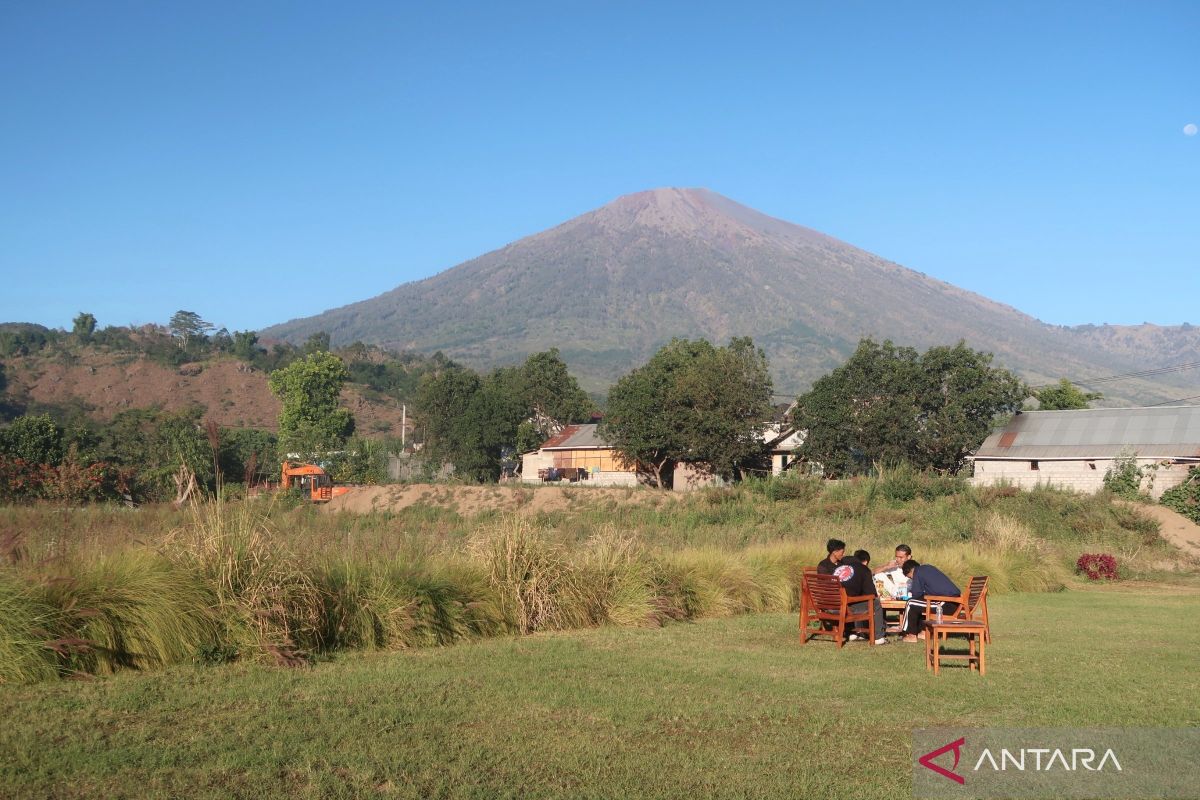
On the slopes of Rinjani, nature is not merely a backdrop for the lives of the local community.
Lombok Timur (ANTARA) - The peak of the dry season made the cold air feel biting in Sajang Village, Sembalun District, East Lombok Regency, West Nusa Tenggara (NTB) Province in early August.
In the yard of a simple house blanketed by elephant grass turned brownish by the dry season, Hajrul Azmi sat before a wooden table. Around him stretched agricultural land, not monotonous hard concrete walls.
That afternoon, Azmi was in no hurry. From the coffee bar area adjoining the house terrace, the sound of the grinder rang out loudly like a mantra enchanting the eardrums.
Arabica coffee beans roasted two days earlier broke into coarse powder. The distinctive aroma immediately surged sharply and slapped the cold mountain air.
Manual brewing equipment was arranged on the wooden table coated in black paint. A gooseneck kettle holding water at 93 degrees Celsius guided the flow so it fell gently onto the paper dripper holding the coarse Arabica coffee powder.
When the first water wet the powder, the coffee seemed to breathe, swelling and blooming as it released carbon dioxide left over from the roasting process. Then slowly, drop by drop, the dark brown liquid fell into the glass vessel below.
Sembalun Arabica is not merely coffee grown on the volcanic soil of Mount Rinjani. There is a character of flavour and natural aroma of palm sugar, caramel, and tamarind that blend in every sip.
Coffee preserves the landscape
Source: jawawa.id (https://jawawa.id/newsitem/reviving-two-cultural-heritages-on-the-slopes-of-rinjani-1787554439)
Originally published by Antara (Indonesian) (https://www.antaranews.com/berita/5708621/menghidupkan-kembali-dua-warisan-budaya-di-lereng-rinjani), translated from Indonesian