
Reviving the Discourse on Pancasila
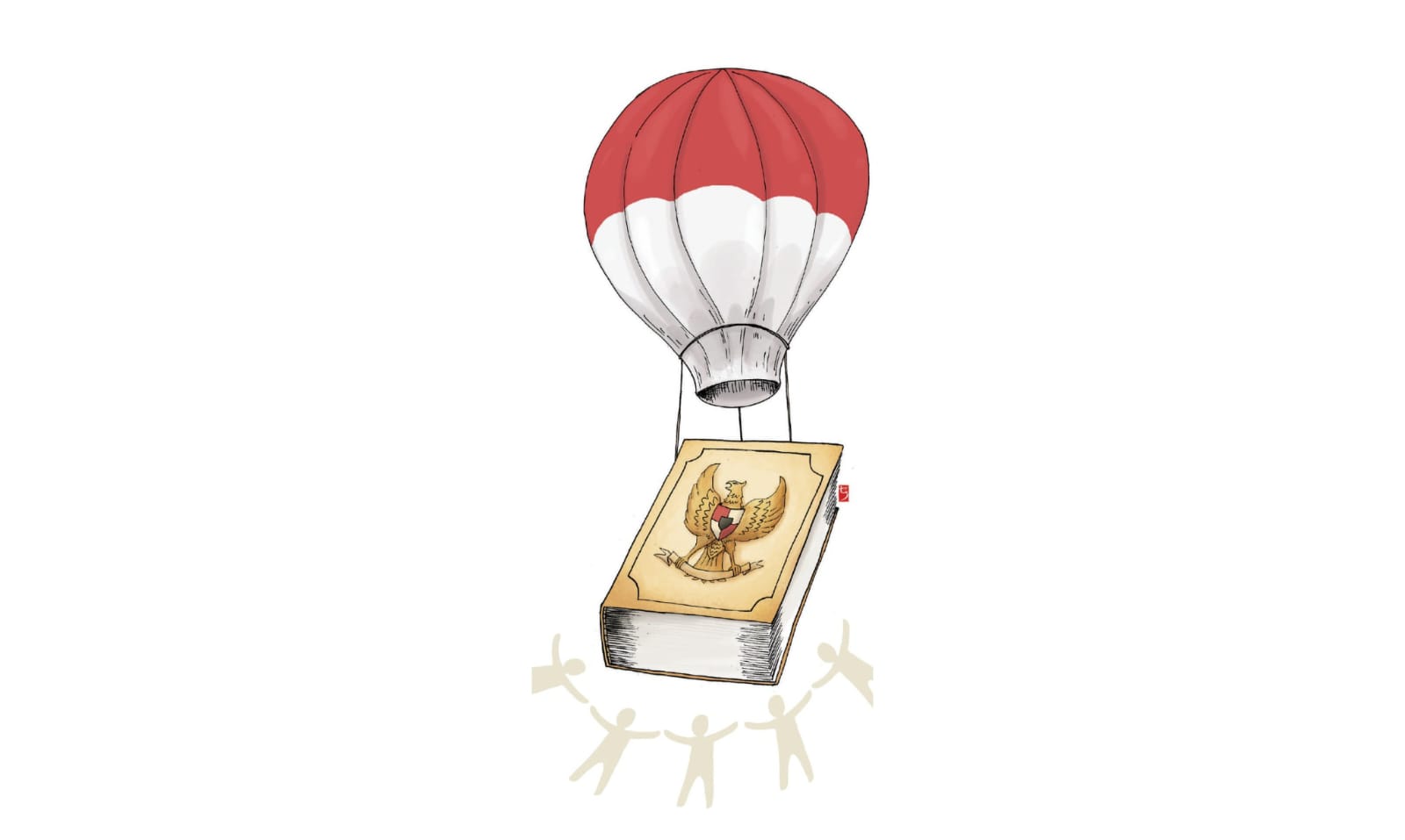
There is encouraging news from a survey by the Indonesian Survey Institute (LSI), reported in a national daily on 2 June 2026. The survey indicates that Generation Z’s memorisation of Pancasila is remarkably high, exceeding 90 per cent. This figure even surpasses the two preceding generations, Generation Y and Generation X. Although it is merely memorisation, this data is an asset we should be grateful for and celebrate together.
This asset is no small matter. In a national landscape often coloured by anxieties about the erosion of fundamental values, the fact that our younger generation still knows Pancasila by heart is a heartening signal. It shows that the nation’s children have not lost their regard for Pancasila. As a shared value, Pancasila is still preserved, still alive, albeit perhaps in silence.
However, this reality is not the end of the story. This is where our real homework begins. If we are honest, the public discourse on Pancasila is not yet truly alive. Pancasila is memorised, but it is not sufficiently understood, discussed, and lived freely by its citizens. The existing understanding is often shallow; not because citizens are incapable, but because the space for such engagement has simply not been adequately available.
The interpretation of Pancasila has been monopolised by the state for too long: delivered through uniform curricula, one-way lectures, and training sessions that offer no room for deeper interpretation. Citizens are invited to memorise, not to understand; to accept, not to engage in dialogue. Alternatively, the discourse on Pancasila takes place in an ‘ivory tower’, where intellectuals grapple with their lofty ideas.
Yet, as we know, Pancasila was born from a very different tradition. History records that it did not descend from the heavens in a finished form. It was formulated through debate, compromise, and tension among the nation’s founders, who came from diverse backgrounds: nationalists, religious figures, socialists, and so on. They argued, negotiated, and engaged in dialectics, and from that process, an agreement was born that was broad enough to accommodate Indonesia’s diversity. Pancasila is the fruit of discourse. It is time that spirit was returned to its citizens.
This is what we must do together: enliven the discourse on Pancasila. Not from the top down, but the opposite. It is not the state that defines Pancasila for its citizens, but rather citizens who together discover, discuss, and interpret it freely, drawing from their own experiences, struggles, and lives. Interpretations that come from citizens are not a threat to Pancasila. They are precisely a sign that Pancasila is truly alive. One way to enliven this discourse is through comics.
Comics are not a trivial medium. They are light without losing depth, entertaining without abandoning substance, and reach readers who might never open a philosophy textbook. They speak through images, movement, and expression, which are far more intuitive than dense paragraphs. They require no academic background to be enjoyed, and precisely because of that, they are democratic: everyone can enter through their door.
In many countries, grand ideas are first sown through panels of images because they linger in the reader’s mind. Comics have their own way of making the abstract feel real and close. They invite the reader to be active, to follow the plot, interpret the images, and feel the story. Unlike one-way lectures or textbooks, comics open up a space for imagination. Imagination is the gateway to a deeper and more personal understanding.
As far as is known, there has yet to be a comic that seriously invites young Indonesians to get acquainted with Pancasila. This void prompted the birth of ‘Pancasila for Beginners’: a comic intended for all circles, especially for Indonesia’s youth.
Its presence is certainly not part of a doctrine, but rather an invitation. It is not meant to replace serious discussions about Pancasila, but to open the door wider. It is one of many free interpretations born from a citizen’s initiative; part of a discourse that should indeed be rolling more vibrantly.
With comics, the hope is that Pancasila will no longer be a heavy and exclusive discourse. It will become a conversation that can happen anywhere: in a bedroom, on public transport, at a food stall, or during spare time. It is from such realities that genuine understanding grows. An understanding that is not forced, but comes from one’s own awareness.
The further hope is the growth of a Pancasila culture. A culture that enlivens Pancasila, and at the same time, a culture born from Pancasila itself. Between the two, a continuously moving dialectic occurs: a vibrant discourse from below that gives birth to thoughts on how Pancasila is understood, interpreted, and operationalised, and that operationalisation in turn gives birth to new discourse. And so on. It is precisely this never-ending dialectic that is the true form of a Pancasila culture.
That is the ultimate aim of all this. A vibrant discourse on Pancasila is not the final goal. It is the path towards the growth of a true citizenry, because a strong Pancasila is not one that is merely memorised, but one that is operational, that ‘sounds’ in the reality of national and state life.
An operational Pancasila is not something that comes from a decree or instruction. It grows from below; from citizens who understand their rights and obligations. Who know that Pancasila is not just a symbol on paper, but also a real framework for building.