
Reviving Seagrass: Sowing the Seeds of a Blue Economy
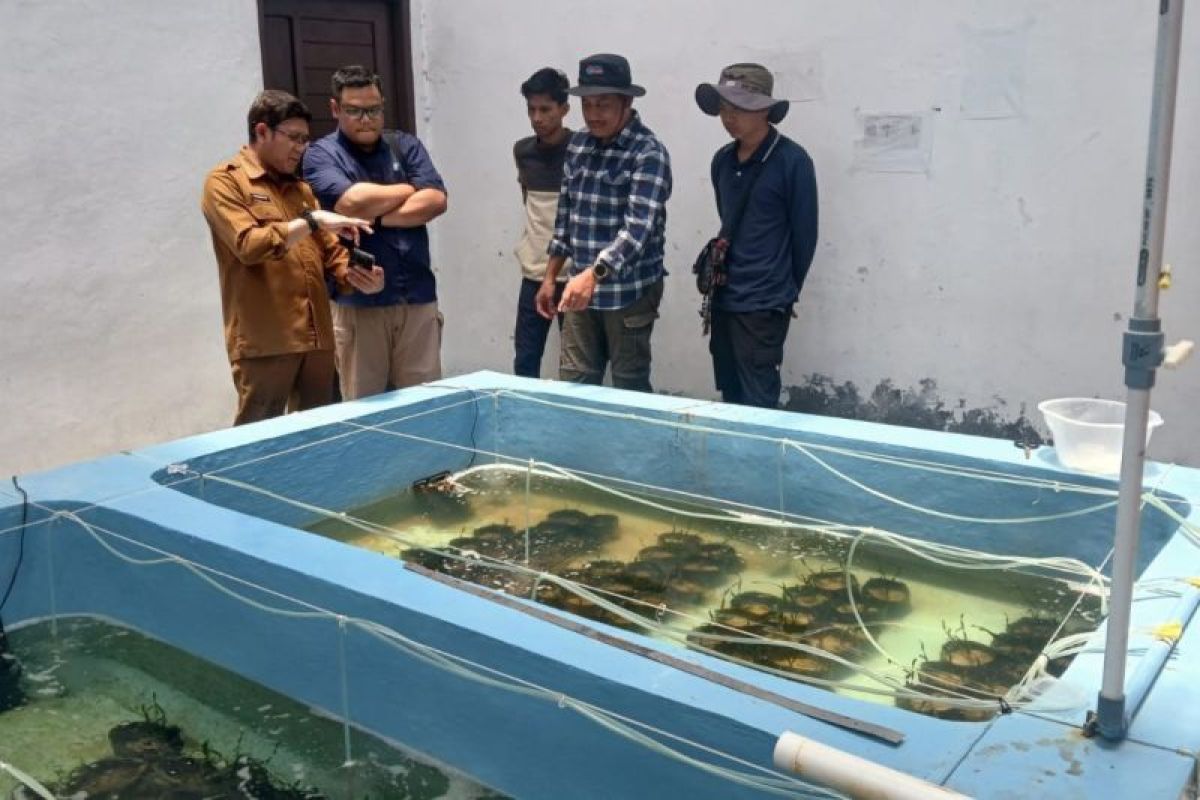
We are not merely planting. We study the location, the method, and the conditions, to ensure that what we plant grows, flourishes, and survives.
Samarinda (ANTARA) - Along the coast of East Kalimantan, where mangrove forests meet the vast expanse of the sea, lies a wealth that often escapes notice. These are the seagrass meadows, shimmering softly beneath the water’s surface.
Far more than mere seaweed, these seagrass meadows act as coastal lungs, wave buffers, fish breeding grounds, and carbon warehouses far more powerful than terrestrial forests.
Amidst the gradual shrinking of these meadows, and amidst both concern and hope, a major effort is being undertaken to revive seagrass beds. This endeavour is not only for the environment but for the future of East Kalimantan’s sustainable blue economy.
‘Bumi Etam’, the nickname for East Kalimantan, possesses extraordinary seagrass wealth. The area spans 7,225.56 hectares, distributed across five regencies and cities: Berau, East Kutai, Bontang, Kutai Kartanegara, and Balikpapan.
In these waters, 10 of the 13 seagrass species found in the world grow, ranging from the broad-leaved Enhalus acoroides and dense Thalassia hemprichii to finer species growing on the seabed.
Seagrass meadows absorb and store massive amounts of carbon, both within the plants themselves and in the sediment beneath them. This makes them the most powerful nature-based solution for facing climate change. They work silently and invisibly, yet their role is irreplaceable.
The Head of the Regional Research and Innovation Agency (Brida) of East Kalimantan Province, Fitriansyah, emphasised that seagrass is not just marine vegetation, but a solid foundation for the blue economy.
“Caring for seagrass means caring for our future,” said Fitrians_yah.
Research conducted by Brida East Kalimantan, in collaboration with the Indonesian Marine Biodiversity Economy Foundation (Yekhali) and the Faculty of Fisheries and Marine Sciences at Mulawarman University, Samarinda, demonstrates the immense potential contained within these areas.
Carbon stocks in the plant biomass were highest on Malahing Island, recorded at 4.19 tonnes of carbon per hectare (C/ha), followed by Kedindingan at 3.81 t C/ha, and Miang Kecil Island at 2.18 t C/ha.
Even more remarkable is the carbon storage in the sediment layers beneath the seagrass meadows, which reaches hundreds of tonnes per hectare. Miang Kecil Island stores 383.78 t C/ha, Biduk 382.42 t C/ha, and the Kutai Kartanegara region holds 381.13 t C/ha.
These figures serve as a reminder that beneath the waves, there is treasure far more valuable than what is visible on the surface.
Damage and hope
Source: jawawa.id (https://jawawa.id/newsitem/reviving-seagrass-sowing-the-seeds-of-a-blue-economy-1790777027)
Originally published by Antara (Indonesian) (https://www.antaranews.com/berita/5765241/menghidupkan-kembali-lamun-menabur-harapan-ekonomi-biru), translated from Indonesian