
Revitalising the Sea to Strengthen Coastal Communities
Indonesia’s seas hold enormous economic potential, but this has not yet translated fully into prosperity for coastal communities. The government views this as both an opportunity and a major task: to develop a more productive, modern national fisheries sector capable of creating added value domestically.
President Prabowo Subianto has paid close attention to this potential. In his state address on 14 August 2026, he said Indonesia’s fisheries were worth around US$34 billion a year.
However, Indonesia has yet to make the most of that potential. The government is therefore seeking to strengthen the national fishing fleet and plans to build 1,582 modern fishing vessels from 2027.
The President’s focus on capture fisheries is also reflected in Indonesia’s relations with partner countries. During President Prabowo’s working visit to the People’s Republic of China in November 2024, the two countries agreed on several strategic areas of cooperation. One agreement concerned the maritime and fisheries sector, through the Technical Cooperation Guidelines (TCG).
The commitment was subsequently translated into technical cooperation between the Ministry of Marine Affairs and Fisheries and the Chinese government. Marine Affairs and Fisheries Minister Sakti Wahyu Trenggono signed the TCG as part of efforts to strengthen fisheries cooperation between the two countries.
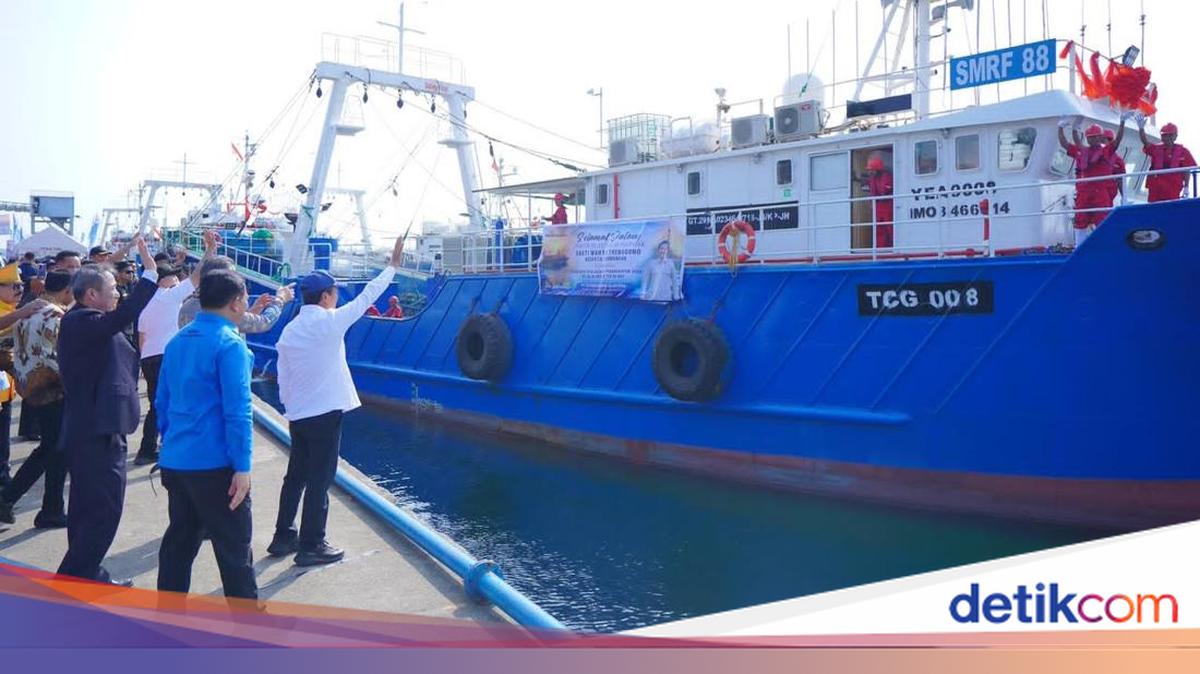
Nearly two years later, the commitment has entered the implementation stage. On 24 September 2026, the ministry began implementing the TCG in Tual, Maluku. A total of 33 Indonesian-flagged fishing vessels are being prepared to operate in Fisheries Management Area of the Republic of Indonesia 718, or the Arafura Sea.
The implementation offers an indication of the cooperation’s initial benefits. The fleet of 33 vessels is projected to produce around 9,500 tonnes of fish a year, in line with the established quota. The operation involves 669 workers and is expected to contribute around Rp65 billion in non-tax state revenue.
But the benefits will not end with production and government revenue figures. The government needs to ensure fishing activity creates longer economic value chains and strengthens national capacity.
That is why the TCG’s scope extends beyond fishing. The cooperation also covers the development of onshore fisheries facilities, including ports and fish processing, as well as skills exchange, training, data and the welfare of fisheries workers.
These activities offer the prospect of developing a fisheries ecosystem from upstream to downstream. Vessels need ports, supplies, maintenance and support services. Catches require landing, storage, processing and distribution facilities. Each of these needs creates economic opportunities for Indonesian businesses and workers.
Tual has an important role in this process. Fleet operations in Fisheries Management Area 718 could strengthen the area’s position as a fisheries hub in eastern Indonesia. Fish landings can boost port activity, the availability of raw materials can support processing industries, and demand for supporting services can create opportunities for local businesses.
The TCG also brings significant benefits in terms of human resources. A total of 669 workers are involved in operating the 33 vessels. Crew members receive wages, bonuses or catch-based premiums, as well as health and employment protection.
Beyond providing jobs, this experience could help improve the skills of Indonesia’s fisheries workforce. Expertise in vessel operations, workplace safety, technology and catch management can help develop a new generation of national fishing crews.
The development of people and industry must go hand in hand with sound management of fish resources. The TCG’s implementation is therefore part of the Measured Fishing policy. Operating vessels must comply with established quotas and meet requirements on permits, record-keeping, landings and monitoring.
This approach places productivity and sustainability within a single framework. Indonesia needs a fleet capable of making optimal use of its fish resources, but exploitation must not undermine their ability to sustain people’s livelihoods in the future.
Traceability is an important part of this framework. The government needs to ensure that every catch has a clear provenance and that fishing activity can be monitored. The system also gives businesses certainty about the rules they must follow.
Small-scale fishers must enjoy the same certainty. Modernising capture fisheries must not create competition that removes opportunities for small-scale operators. Management of fishing grounds and resources must clearly accommodate industrial fleets while ensuring small-scale fishers can continue fishing and earning a living.
This is where the Directorate General of Marine and Fisheries Resources Surveillance (PSDKP) has an important role. It must ensure all fishing takes place in accordance with permits, designated operating areas, quotas and applicable regulations. Monitoring must also prevent practices that harm small-scale fishers or disrupt the balanced use of fish resources.
Regulatory certainty will foster a healthy relationship between investment, industry and coastal communities. Industrial fleets can operate within clear parameters, national businesses can develop, and small-scale fishers can have confidence in their ability to continue fishing.
This framework is consistent with the government’s intended direction for national fisheries development. Modernisation means more than introducing better-equipped vessels: it also means developing human resources, strengthening industry, building infrastructure and increasing the economic value of marine products. Technology, experience, investment and market access from partner countries must be combined with Indonesia’s own workforce, businesses, infrastructure and industries.
The entire process must serve one goal: making the sea a source of prosperity for Indonesians while ensuring its wealth remains productive for future generations.
Source: jawawa.id (https://jawawa.id/newsitem/revitalising-the-sea-to-strengthen-coastal-communities-1791467603)
Originally published by detikcom (https://news.detik.com/kolom/d-8698659/menghidupkan-laut-untuk-menguatkan-pesisir), translated from Indonesian