
Revitalising the Old Town of Padang
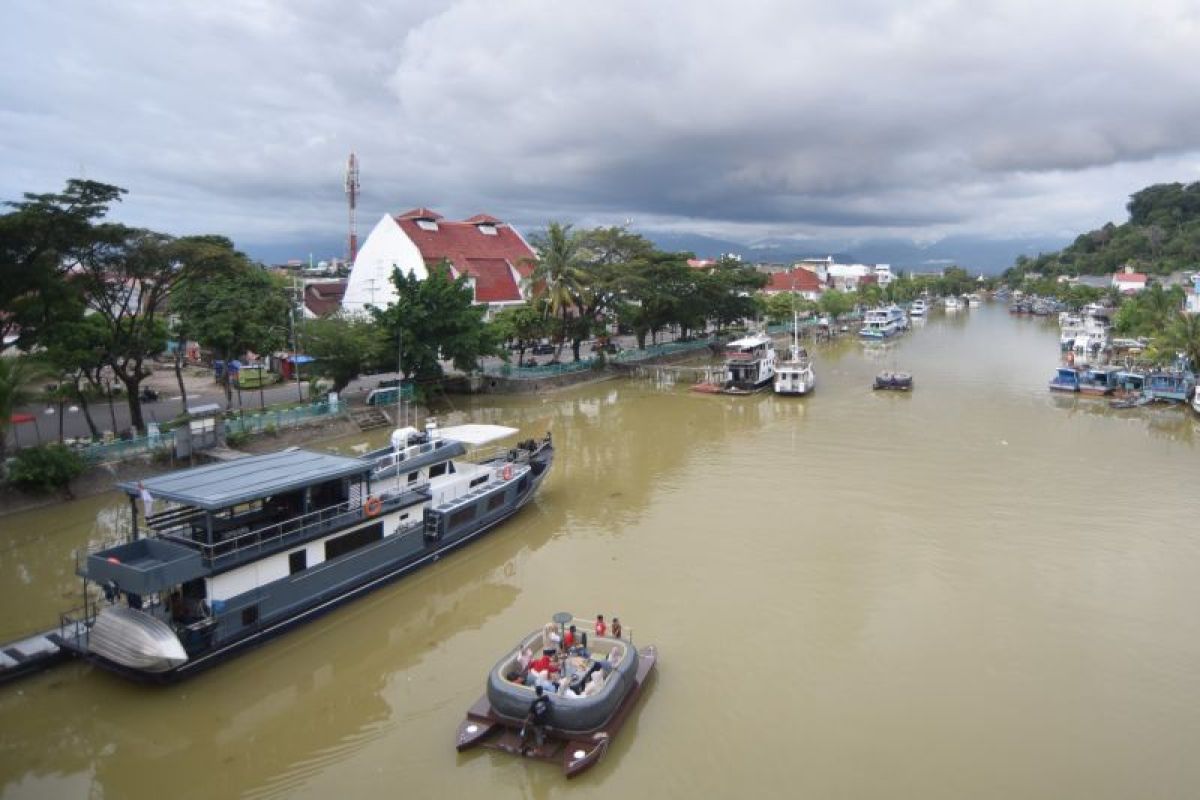
The revitalisation of the Old Town of Padang is not merely about physical improvements but about bringing the old town back to life as a centre of culture and economy.
Padang - (ANTARA) - That afternoon, a cloudy sky enveloped the city of Padang, creating a melancholic atmosphere.
From atop the Siti Nurbaya Bridge, sunlight appeared trapped by the clouds, casting a dim glow over the city. Below it, fishermen’s boats cut through the brownish currents of the Batang Arau River.
This melancholic vibe actually attracts visitors. They come to the riverbanks, stop at riverside cafes, or try culinary experiences while strolling along the legendary river.
One cafe offers a floating concept. Two square-shaped fibreglass boats are lit up, each equipped with circular sofas and a central table. On top, seven women enjoy food and drinks, while an operator controls the outboard motor, slowly guiding the boat upstream.
This floating cafe is increasingly popular as a new way to enjoy tourism in Padang, especially since not everyone can navigate the history-rich Batang Arau.
In the past, Batang Arau was a centre of trade and an important port on the West Coast of Sumatra. This river witnessed the development of Padang, from a traditional trading town to a modern city.
Traces of that era are still visible through the row of old buildings left by the Vereenigde Oostindische Compagnie (VOC) that stretch to the Kampung Cina area.
The old town atmosphere persists, even though some buildings have been lost. This area includes Muaro Batang Arau, Pasar Gadang, Pasar Batipuh, Pasar Mudik, Palinggam, Kampung Pondok, Kampung Jawa, up to the coastal areas.
From the floating cafe, visitors can see old buildings along the river, including the former Guntzel & Schumacher office, now a nightclub. After passing the Siti Nurbaya Bridge, the GEO Wehry & Co building comes into view, a major colonial import-export company now functioning as a cafe and billiards hall.
However, the view is not entirely romantic. On both sides of the river, wooden docks stand haphazardly. When the tide is low, remnants of docks, shipwrecks, and thick mud deposits are visible. Plastic waste often floats, carried by currents from settlements, especially after heavy rain.
Along Batang Arau up to Jalan Klenteng, many old buildings are used as cafes, entertainment venues, or offices. However, not a few are abandoned, adding to the rundown impression. Entering Jalan Klenteng, the atmosphere feels gloomy because sunlight is blocked by tall buildings and poorly maintained warehouses.
The contrast is evident in the Pecinan area, specifically around the See Hin Kiong Old Temple. This area is brighter and more lively, filled with trendy cafes up to the Pasar Tanah Kongsi intersection. From there, visitors can continue their journey to the Indian descendant area in Pasar Batipuh up to Pulau Air, then return to Batang Arau to the Padangsche Spaarbank building, now a restaurant.