
Revitalising Education Units for Deep Learning
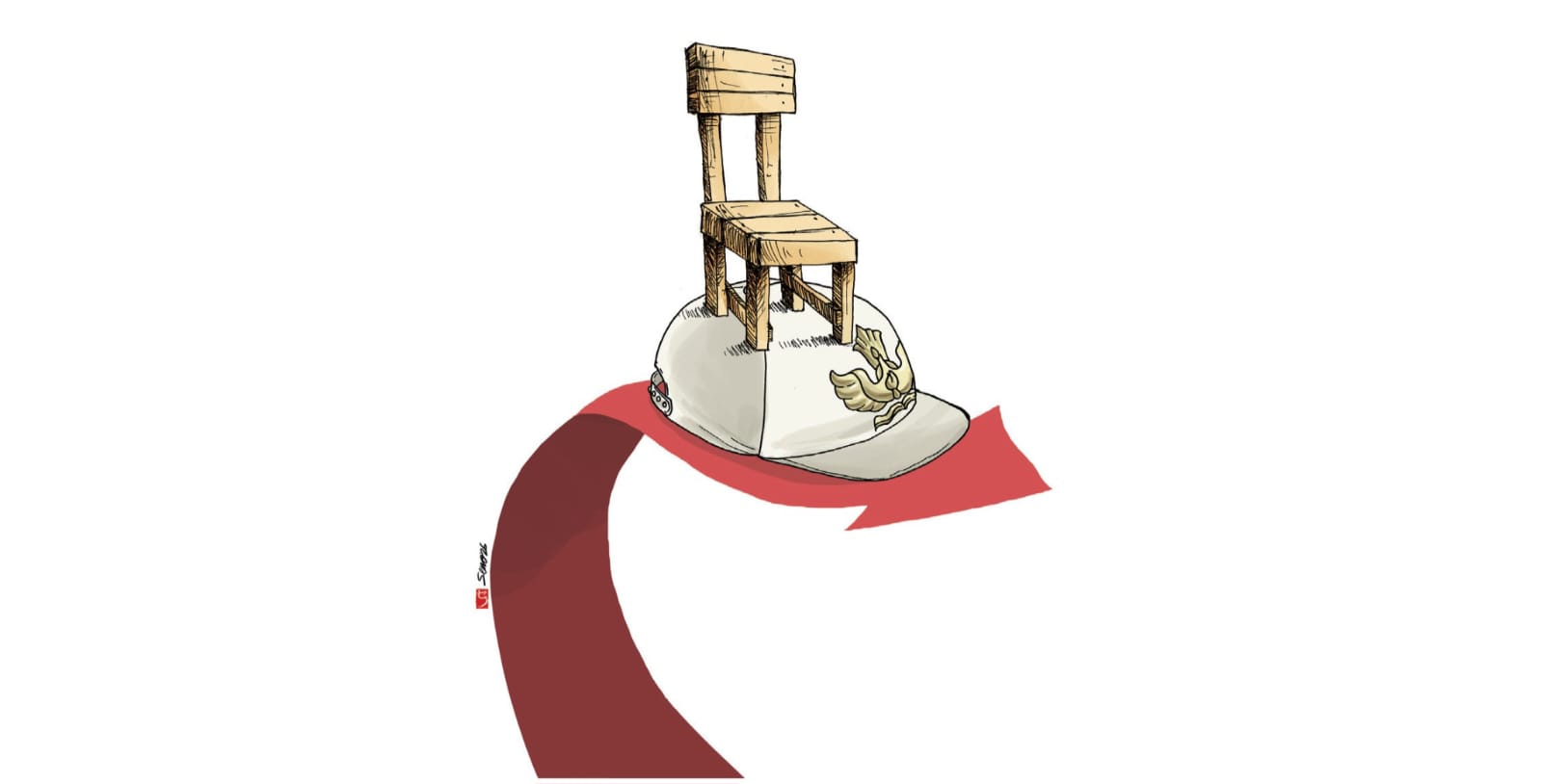
The school revitalisation programme currently being implemented by the Ministry of Primary and Secondary Education (Kemendikdasmen) deserves appreciation as a strategic step to improve the nation’s educational foundations. For years, various reports have shown that many schools in Indonesia still suffer from damaged classrooms, inadequate sanitation, limited laboratories, insufficient libraries, and learning environments far from ideal conditions. In this context, school revitalisation is not merely a physical construction project, but an integral part of the effort to provide quality education for all.
The programme has even expanded far beyond the government’s initial targets. As reported, in 2025, the original revitalisation target of around 10,440 education units has increased to more than 16,000 units, supported by a budget of approximately Rp16.9 trillion. The programme includes the rehabilitation of classrooms, construction of new learning spaces, building of supporting facilities, and the establishment of new school units in various regions.
However, the revitalisation of education units must not stop at building rehabilitation. It must be understood as a renewal of the educational ecosystem that enables quality learning to occur. In this regard, revitalisation is closely linked to the implementation of the deep learning framework, which is the ministry’s strategic approach. Deep learning positions education not just as a process of delivering material, but as a process of building conscious, meaningful, and joyful learning experiences. Students are expected not only to remember information but also to understand, apply, reflect, and connect knowledge to real life, while developing character and competence holistically.
Such goals naturally require a supportive learning environment. It is difficult to imagine meaningful and joyful learning taking place in damaged, hot, leaky, or unhealthy classrooms. It is equally difficult to develop creativity, collaboration, communication, and critical reasoning if learning facilities are severely limited. Therefore, school revitalisation can truly become a crucial foundation for implementing deep learning. The ministry’s deep learning framework emphasises the development of eight graduate profile dimensions: faith and devotion to God Almighty, global citizenship, critical reasoning, creativity, collaboration, communication, independence, and health. These eight dimensions cannot develop optimally through one-way learning in a passive classroom.
Developing communication and collaboration, for instance, requires interaction spaces that allow students to discuss, work together, and present ideas. Critical reasoning and creativity require learning environments that provide room for exploration, experimentation, inquiry, and reflection. Meanwhile, the health dimension demands a school environment that is clean, safe, comfortable, and supports the physical, psychological, and social well-being of students. Thus, school revitalisation should be seen as an effort to build a more holistic learning ecosystem.
From this perspective, school construction is not sufficiently understood merely as the building of structures. A school is essentially not just a collection of physical rooms, but also a social, cultural, and learning space. Therefore, revitalisation should not only produce new buildings but also foster a new learning culture.
A distinction must also be made between the renovation of old spaces and the construction of new rooms or buildings. Each offers different opportunities to support deep learning. Renovating old classrooms is often still constrained by past architectural designs that tend to support one-way teaching patterns: box-shaped rooms, chairs lined up facing the teacher, limited movement space, and minimal interaction areas. Physical improvements can make the room safer and more comfortable, but they do not automatically change learning patterns.
Conversely, constructing new learning spaces provides a much greater opportunity to create environments designed from the outset to meet the needs of deep learning. Learning spaces can be made flexible for group discussions, presentations, project-based learning, exploration, reflection, and cross-group collaboration. Libraries can be designed as centres for literacy and knowledge exploration, not just book storage rooms. Laboratories can become lively spaces for inquiry and experimentation. Even open school areas can be integrated as part of a more contextual and joyful learning experience.
Thus, revitalising education units is not just about repairing damaged buildings, but also an opportunity to revitalise the philosophy of learning spaces. School architecture is not neutral; it helps shape the learning culture. Classrooms designed to support communication, collaboration, creativity, and reflection will be far more aligned with the goal of developing the eight graduate profile dimensions within the deep learning framework.
Nevertheless, the biggest challenge of school revitalisation is not just physical construction, but cultural change in learning. New buildings do not automatically produce new learning methods. Modern classrooms do not automatically give birth to creativity and critical reasoning. Many schools have reasonably good facilities, yet their teaching practices are still dominated by rote memorisation, one-way instruction, and a narrow focus on examinations.