
Revitalisation of the Asian-African Conference Museum and Indonesia's Repositioning in a Multipolar Order
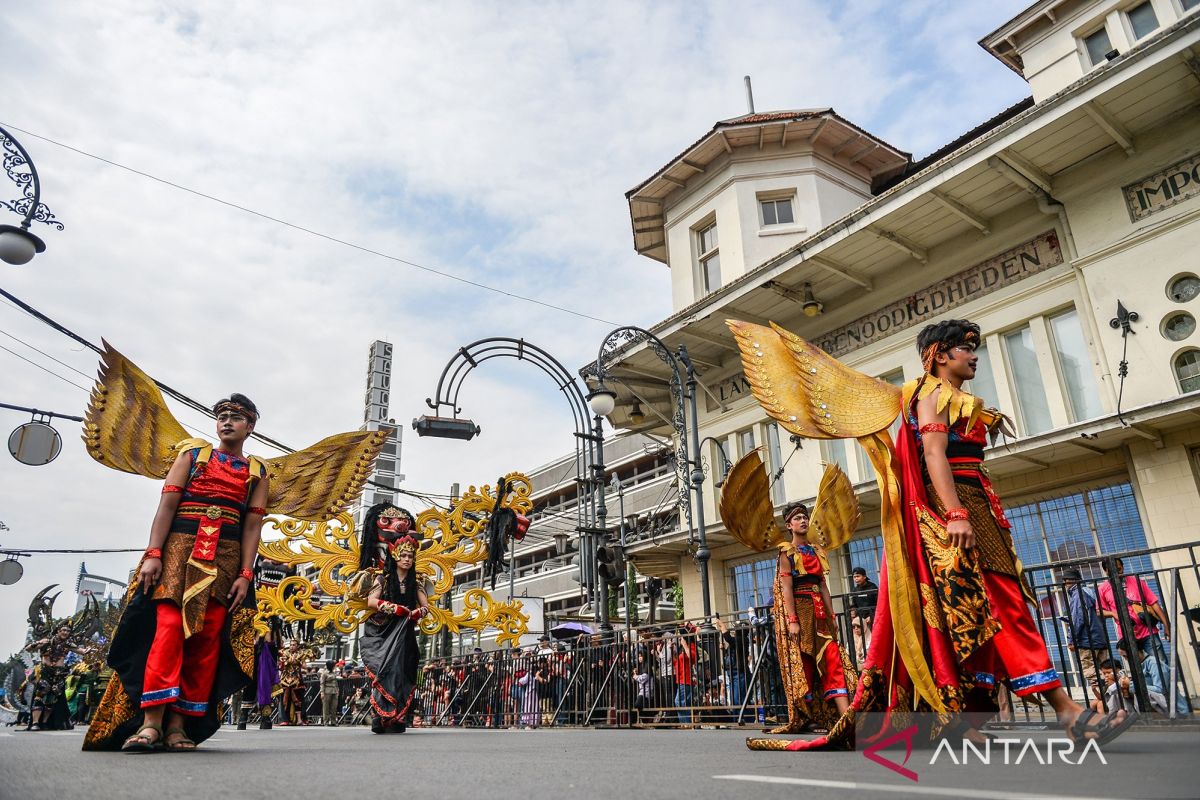
Jakarta (ANTARA) - Indonesia’s Ministry of Foreign Affairs (Kemlu RI) is preparing the revitalisation of the Museum of the Asian-African Conference (MKAA) as part of efforts to revive the historical legacy of the Bandung Ten Principles.
Ministry spokesperson Yvonne Mewengkang, quoted by ANTARA on Thursday (9 July 2026), said the government is currently drafting a masterplan for the development of the historic area of the 1955 Asian-African Conference. The approach taken is not merely physical, but also touches on the aspects of knowledge and historical interpretation.
The revitalisation programme encompasses the preservation of collections, the digitisation of archives, and optimising the use of information for the public and educational purposes. In addition, the development of the area is directed towards the key sites that formed part of the conference’s events.
More than a project
Certainly, the revitalisation of the MKAA is not merely a cultural project. The project arrives at a moment when the global landscape is undergoing a fundamental shift.
As we know, the world is currently moving from a unipolar configuration towards an increasingly multipolar one. In this context, the revitalisation of the MKAA deserves to be read as a political signal — not merely an effort at heritage preservation. In other words, the revitalisation becomes more than just a museum project.
History gives us a clear reference: at the 1955 Asian-African Conference, Indonesia was not only the host. It also played a role as the originator of norms that challenged the global power structures of the time. Principles such as anti-colonialism, sovereignty and non-alignment became part of international discourse.
However, today’s global context is far different. If the Cold War era was marked by two major blocs, the world today is characterised by many centres of power.
In reality, the United States, China, the European Union and other regional powers now interact in more flexible ways. This condition opens more opportunities for other countries to play a part and reap benefits, but on the other hand it also makes the situation more complicated.
In a multipolar order, the space for middle-power countries such as Indonesia is actually wider, because no single dominant power fully determines the rules of the game.
Even so, that space is also fraught with risk, as competition plays out on many levels. This is precisely where diplomacy becomes increasingly important.
Source: jawawa.id (https://jawawa.id/newsitem/revitalisation-of-the-asian-african-conference-museum-and-indonesias-repositioning-in-a-multipolar-order-1783918436)
Originally published by Antara (Indonesian) (https://www.antaranews.com/berita/5646837/revitalisasi-mkaa-dan-reposisi-indonesia-dalam-tatanan-multipolar), translated from Indonesian