
Revitalisation of Jl Rasuna Said Accelerated, Target Completion Before Jakarta Anniversary
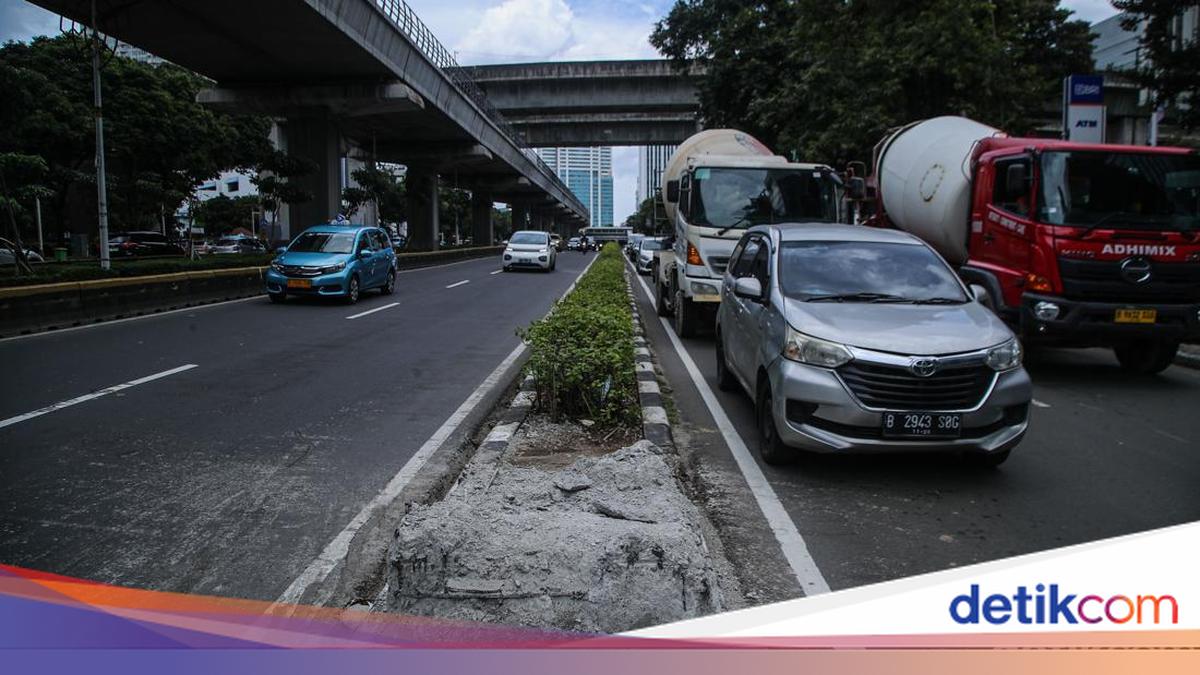
“In principle, we are optimistic that the arrangement will be completed before Jakarta’s Anniversary on 22 June. We also urge the public to remain cautious during the construction process,” said Siti Dinarwenny, Head of the Data and Information Centre of the DKI Jakarta Public Works Department, in her statement on Saturday (2/5/2026). The acceleration of the revitalisation is being carried out so that the public can soon experience improvements in comfort, safety, and accessibility on the road. Several works that are being rushed include widening footpaths, improving drainage channels, and arranging underground utilities. “The acceleration is being done so that the benefits of the arrangement of Jalan HR Rasuna Said, especially for the comfort, safety, and accessibility of road users, can be felt more quickly by the public,” she explained. In the revitalisation process, the pedestrian path on the eastern side will be widened to 4 to 7 metres, following the width of the road lanes. Previously, the footpath width in the area was only about 4 metres. In addition, improvements to drainage channels are also being carried out to prevent pooling during rain. “Meanwhile, the drainage channels, which previously averaged 80 centimetres in dimension, are now being enlarged to 120 centimetres. This step is an effort to keep Jalan HR Rasuna Said free from water pooling when rain falls,” she stated. She said that although the work is not fully complete, changes in the area’s condition are already starting to be visible. The road median, which previously served as supports for monorail poles, has now shifted function to become part of the road body. Then, pedestrian paths at several points are also starting to be better arranged, and the arrangement of underground utilities has begun. “Pedestrian paths are gradually starting to be arranged, not only safer but also more aesthetic. Under the pedestrian paths, utility networks have begun to be buried underground, so the city’s face becomes more orderly without overhead cables,” she added.