
Revitalisation of Education in 3T Regions and Inclusive Economic Growth
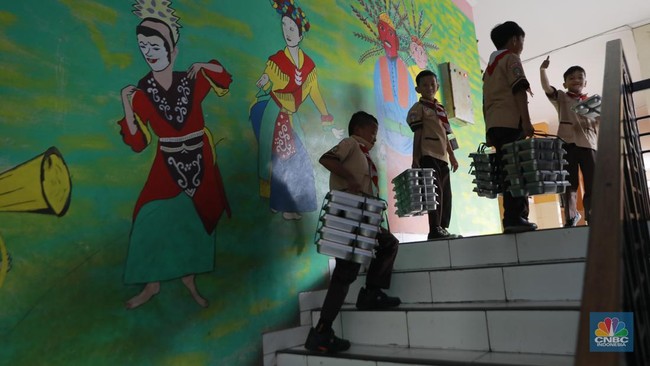
In a simple school in the remote reaches of East Nusa Tenggara, a child is now learning with facilities that were once unimaginable. The classroom has been revitalised, a digital board installed, and the teacher arrives with renewed enthusiasm. For some, this might just be a government programme. But for that child, it is a gateway to the future.
On the occasion of National Education Day, held every 2 May, in 2026 themed “Strengthening Universal Participation to Realise Quality Education for All.” A theme that is relevant when we see how the government, society, and various stakeholders are beginning to move together, especially in 3T (disadvantaged, frontier, and outermost) regions.
From an economic perspective, this universal participation is not just about mutual cooperation, as taught by the proclaimer of independence and first President of the Republic of Indonesia, Bung Karno, but also about building the foundation for inclusive growth.
In the framework of human capital, education is a long-term investment. Economist Gary Becker (1993) emphasised that improving education quality directly impacts productivity and economic growth. Thus, when the state strengthens education in 3T regions, it is essentially building the engine of the future economy.
From Budget to Real Impact
The revitalisation of schools in 62 3T districts with a budget exceeding Rp1.38 trillion in 2025 proves the active role of the state in improving education quality. This year, the state budget allocates Rp14 trillion, with a proposed additional Rp76 trillion awaiting approval from the Ministry of Finance, targeting 71,000 school units. However, beyond that, this spending also stimulates the local economy.
In John Maynard Keynes’s theory (1936), government spending has a multiplier effect that can broadly increase economic activity. When schools are built, labour is absorbed, local businesses thrive, and community purchasing power rises. This is the tangible form of the state’s participation in driving both the economy and education.
This view is reinforced by Joseph Stiglitz (2012), who states that public investment in education is a crucial instrument for promoting growth while reducing inequality.
Closing the Gap
The digital transformation that has reached 288,865 educational units with 100% achievement is evidence that participation comes not only from the state but also from technological advancements.
According to the World Bank (2023), integrating technology in education can improve learning quality and workforce readiness for the digital economy. Here, the meaning of “universal participation” becomes broader, with technology playing a key role in equitable education. For students in 3T regions, the presence of a smart board is not just a learning tool but a bridge to connect with a wider world.
Keeping Children in School
The Indonesia Pintar Programme (PIP) achieved 102.18% realisation in 2025 with a budget of Rp13.4 trillion for 19 million students, proving the state’s participation in ensuring no child is left behind. BPS data (2025) shows a decline in the number of out-of-school children compared to previous years. This is evidence that targeted interventions can sustain education.
Economist Amartya Sen (1999) calls education the primary means of expanding human capabilities. In this context, every child who stays in school is part of the nation’s collective investment.
There is no quality education without prosperous teachers. The distribution of Non-ASN Teacher Professional Allowances (TPG) exceeding Rp12.1 trillion, along with the Teacher Professional Education Programme (PPG) for over 800,000 educators, demonstrates the strengthening of the main actors in the classroom.
According to the OECD (2021), teacher quality is the most determining factor in educational success. When teacher welfare improves, learning quality enhances, and economically, household consumption in the regions is boosted.
Universal participation is also reflected in national leadership. Prabowo Subianto emphasised that education is the key to the nation’s revival and every Indonesian child deserves the best education. Meanwhile, Minister of Education Abdul Mu’ti stressed the focus on revitalising 3T regions and severely damaged schools so that all children learn in a decent environment.
Interestingly, these efforts have received positive public response. A 2025-2026 national survey places the Ministry of Education in the top 10 best-performing ministries. From an economic politics perspective, public trust is social capital that strengthens policy sustainability. Looking ahead, the transformation of 13-Year Compulsory Education and the expansion of PIP to early childhood from 2026 affirm that universal participation must start from an early age.
Economist James Heckman (2006) shows that early childhood education investment yields the highest economic returns. With broader participation from the start of life, Indonesia has great potential to maximise its demographic bonus.
When school participation rates for ages 7-12 reach 99.23% and for secondary level 89.53%, we are not just talking about educational achievements but also about future economic readiness.
Thus, the 2026 Hardiknas theme is not just a slogan. “Strengthening universal participation” is a reflection of what is happening: the state is present, technology is advancing, teachers are empowered, and society is keeping children in school.
From classrooms at the ends of the archipelago, we learn one important lesson: education is not just a school matter, but a collaborative effort by all elements of the nation, so that the constitutional mandate to enlighten the nation’s life can be realised.
When participation is real, quality education for all is no longer just an aspiration but a reality being built, while also
Source: jawawa.id (https://jawawa.id/newsitem/revitalisation-of-education-in-3t-regions-and-inclusive-economic-growth-1777694008)
Originally published by CNBC Indonesia (https://www.cnbcindonesia.com/opini/20260502095411-14-731661/revitalisasi-pendidikan-daerah-3t-pertumbuhan-ekonomi-inklusif), translated from Indonesian