
Revisiting the Desawarnana
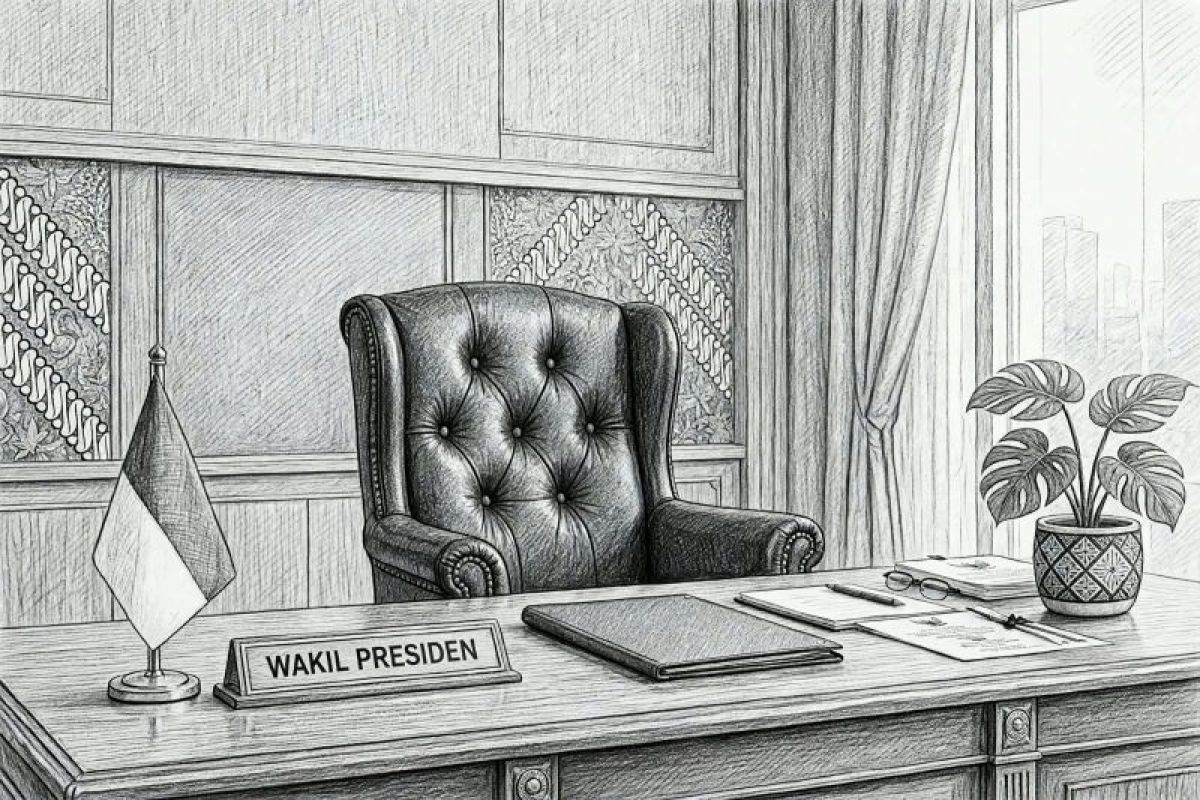
National unity must not be used as a reason to defer accountability or silence dissent.
Jakarta (ANTARA) - Andi Amran Sulaiman and Sugiono. The two names put forward by President Prabowo Subianto as candidates for vice-president to replace Gibran Rakabuming Raka have shifted the course of political discussion in Indonesia in recent days.
Speculation about who would be nominated has now given way to assessments of the two candidates: their abilities, track records and what they could do for the public.
Behind that discussion lies a question more enduring than any office: how can we sustain a shared life when those in power make choices that do not meet our expectations?
That question will not be settled in the MPR chamber. It arises in conversations among families and friends, and in debates on social media. Differences of opinion about a politician can develop into suspicion towards fellow citizens.
The political elite may resume working together while their supporters continue to harbour prejudice. In such circumstances, national identity is tested by our willingness to recognise the rights of those whose views we find hardest to accept.
The nomination of the two candidates gives the public reason to examine them more closely. We are entitled to compare Amran’s and Sugiono’s abilities, question the President’s reasoning and demand transparency in the process at the MPR.
Such scrutiny is part of civic life. The danger arises when support for an individual becomes a test of loyalty to Indonesia, as if the country could accommodate only people who share the same choices.
I was reminded of this issue when reading about the Desawarnana, a work created long before Indonesia came into being. The name means an account of regions or a country. It is better known as the Nagarakretagama, an Old Javanese kakawin composed by Mpu Prapanca in 1365.
It depicts Hayam Wuruk, the Majapahit royal court, the king’s travels, and religious life and relations of power.
The work centres on a ruler. Centuries later, nationalists found in it material with which to imagine a shared greatness. This transformation raises an intriguing question: how did the world of “the king” become part of “our” past?
The answer can help explain how national bonds are formed, and why sustaining them requires more than loyalty to a leader.
The Desawarnana is a panegyric, a work that extols Hayam Wuruk and Majapahit’s authority. As a historical source, it must be read with its purpose of praise in mind.
Prapanca chose what to recount and how to position the ruler within it. Details about places, journeys and ceremonies may be valuable, while claims of the kingdom’s grandeur still need to be checked against other sources.
For that reason, calling it “court propaganda” requires clear qualification. Its praise does not automatically prove that the work was commissioned by the royal court. Nor does the author’s partisanship erase all of its informational value.
For news readers, the issue is familiar: accurate reporting of events can coexist with a tendency to create a particular impression. A source can provide knowledge while also directing admiration.
Readers during the national movement had different needs. The image of Majapahit offered a source of pride to people living under colonial rule.
Muhammad Yamin used the Nagarakretagama as one reference in arguments about the territory of Indonesia. A text that had originally praised a king acquired a new purpose in discussions about the state that was to be established.
The political use of a source must, of course, be distinguished from historical proof. The mention of regions in a kakawin does not, in itself, explain the form or extent of Majapahit’s authority over each place.
Nor can the list be treated directly as a map of modern Indonesia. What is worth tracing is how later readers gave the kingdom’s depiction a national meaning.
Dynastic grandeur was translated into collective dignity. A world centred on a king was read as part of the history of a society struggling for independence.
Prapanca did not need to imagine Indonesia for his work to influence Indonesian nationalism. That influence grew out of the distance between the author’s intentions and the needs of later generations of readers.
The historian Benedict Anderson helps explain this process through the idea of imagined communities. A nation enables people, most of whom have never met, to feel that they belong to a shared community. “Imagined” does not mean unreal. The sense of connection is real, and can even prompt someone to help or sacrifice for a stranger.
In this framework, the Desawarnana can be understood as one of the materials that gave this shared identity historical depth. The greatness of “their king” became the greatness of “our ancestors”.
Anderson points to the paradox between the nation as a modern political form and nationalists’ belief that their nation is very ancient. Stories of the past provide emotional force for efforts to build the future.
Of course, the manuscript did not reach new readers by itself. It had to be copied, edited, translated, published and discussed.
The Dutch philologist Jan Laurens Andries Brandes published the Nagarakretagama in 1902, followed by transcription, translation and discussion. Its circulation allowed the old work to enter new intellectual circles and political debates.
The path to publication ran through colonial violence. The copy studied by Brandes was taken from the library of the Cakranegara palace during the Dutch military expedition’s assault on Lombok in 1894.
Brandes accompanied the expedition with the task of collecting cultural objects. His efforts to protect the manuscript from looting or burning took place in the context of a conquest that threatened the environment in which it had been kept.
That is why the story of its “rescue” needs to be read in full. In his critique of museum narratives, Panggah Ardiyansyah of the University of Sheffield cautions against separating Brandes’s role from the violence of the colonial attack. It is possible to recognise a philologist’s work while still questioning the removal of cultural objects within an unequal power relationship.
The Desawarnana’s survival did not begin with the arrival of the Dutch. The Lombok manuscript is an 18th-century copy, not Prapanca’s own handwriting. Another copy was later found in Bali. Before becoming widely known through modern scholarship, the work survived because people copied and cared for it. They kept the text available to generations they could not yet imagine.
This journey can be read through Anderson’s discussion in “Census, Map, Museum”. Colonial systems of knowledge helped shape how populations, territories and the past were understood; some of those frameworks were later inherited by the independent state.
In the case of the Desawarnana, knowledge developed within colonial relationships also became available to support a national imagination opposed to colonialism.
This layered history does not diminish Indonesia’s value. It shows that a shared identity can be built from different experiences. Majapahit can be studied as part of a shared heritage without requiring every region to have the same relationship with it. The story of Indonesia needs to make room for memories that inspire pride as well as experiences that unsettle us.
Such breadth is also necessary when confronting political choices today. The nomination of Amran and Sugiono does not require the public to hold uniform views. Both should be assessed on their track records and ability to fulfil public responsibilities. Whoever is eventually chosen must serve citizens who support them as well as those who have doubts about them.
Those in power also have a responsibility to safeguard national unity. Unity must not be used as a reason to defer accountability or silence dissent.
It is difficult to ask people to feel that they share a common fate if services, protection and opportunities are allocated according to political allegiance. A sense of belonging grows when citizens know their rights will still be recognised even when they criticise the government.
The Desawarnana shows how the world of a king acquired new meaning as part of a shared past. Our task now is to give substance to that shared identity through trustworthy laws, fair public services and space for disagreement.
When the MPR chooses one of the two vice-presidential candidates on 11 December 2026, its decision will fill an office. Indonesia will continue to belong to all its citizens, including those disappointed by the outcome.
Source: jawawa.id (https://jawawa.id/newsitem/revisiting-the-desawarnana-1795488887)
Originally published by Antara (Indonesian) (https://www.antaranews.com/berita/5874011/membaca-kembali-desawarnana), translated from Indonesian