
Revisiting 67,800-year-old cave paintings on Muna Island, older than Borobudur and Gunung Padang
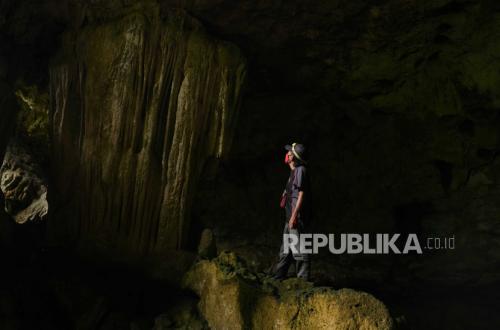
Indonesia’s archipelago is home to some of the world’s oldest known cave art. Recent research by an international team from the National Research and Innovation Agency (BRIN), Griffith University, and Southern Cross University (Australia) has uncovered human hand stencils dating back 67,800 years at Leang Metanduno on Muna Island, Southeast Sulawesi. The cave art discovery at Leang Metanduno was published in the international journal Nature under the title ‘Rock art from at least 67,800 years ago in Sulawesi’. The cave art has once again drawn international archaeological attention following a paper by Georges Sauvet titled ‘Uranium-thorium dating: the race towards the earliest rock art’, published in Aplomb Publication’s AOJ of Historarchaeology & Anthropological Exploration, Volume 2, Issue 1 (2026), on 20 May. Sauvet critiqued the dating methodology, stating it was biased, prone to error, and required cross-validation with other techniques. ‘The discovery of hand stencils at least 67,800 years old in this limestone cave positions Indonesia as one of the most significant centres in the early history of symbolic art and modern human maritime exploration globally,’ according to a BRIN release dated 22 January 2026. This finding represents the oldest reliably dated cave art, providing direct evidence that humans deliberately crossed the sea almost 70,000 years ago. In terms of age, the Muna cave paintings predate Cianjur’s Gunung Padang site, estimated to be around 14,000 years old (or 2,000 years old under different dating methods), as well as the 7th-century Borobudur Temple. Adhi Agus Oktaviana, a researcher at BRIN’s Archaeometry Research Centre, revealed that the Muna cave art is 16,600 years older than the previously discovered Maros-Pangkep artwork. This cave art is also 1,100 years older than hand stencils in Spain previously linked to Neanderthals, which were long considered the world’s oldest cave paintings. Adhi explained that the research team used laser-ablation uranium-series (LA-U-series) dating on microscopic calcite layers covering the cave paintings. Analysis revealed an age of 71,600 ± 3,800 years, establishing a minimum age of 67,800 years for the hand stencils at Leang Metanduno on Muna Island. The discovery confirms that Wallacea was not merely a route to Australia but a primary habitat for early modern humans. ‘It is highly likely that the artists were part of the population that later migrated eastward and eventually reached Australia,’ said Adhi. The finding also strengthens the long chronology model, which posits that humans reached Sahul (Australia-Papua) at least 65,000 years ago. ‘This discovery provides strong evidence that the ancestors of Australia’s Aboriginal people were present in Sahul by or before 65,000 years ago,’ added Dr Oktaviana.
Source: jawawa.id (https://jawawa.id/newsitem/revisiting-67-800-year-old-cave-paintings-on-muna-island-older-than-borobudur-and-gunung-padang-1780063457)
Originally published by Republika (https://news.republika.co.id/berita/tfsty5475/melihat-kembali-lukisan-gua-67800-tahun-di-pulau-muna-lebih-tua-dari-borobudur-dan-gunung-padang), translated from Indonesian