
Revision of Election Law Must Guarantee No Votes Are Wasted
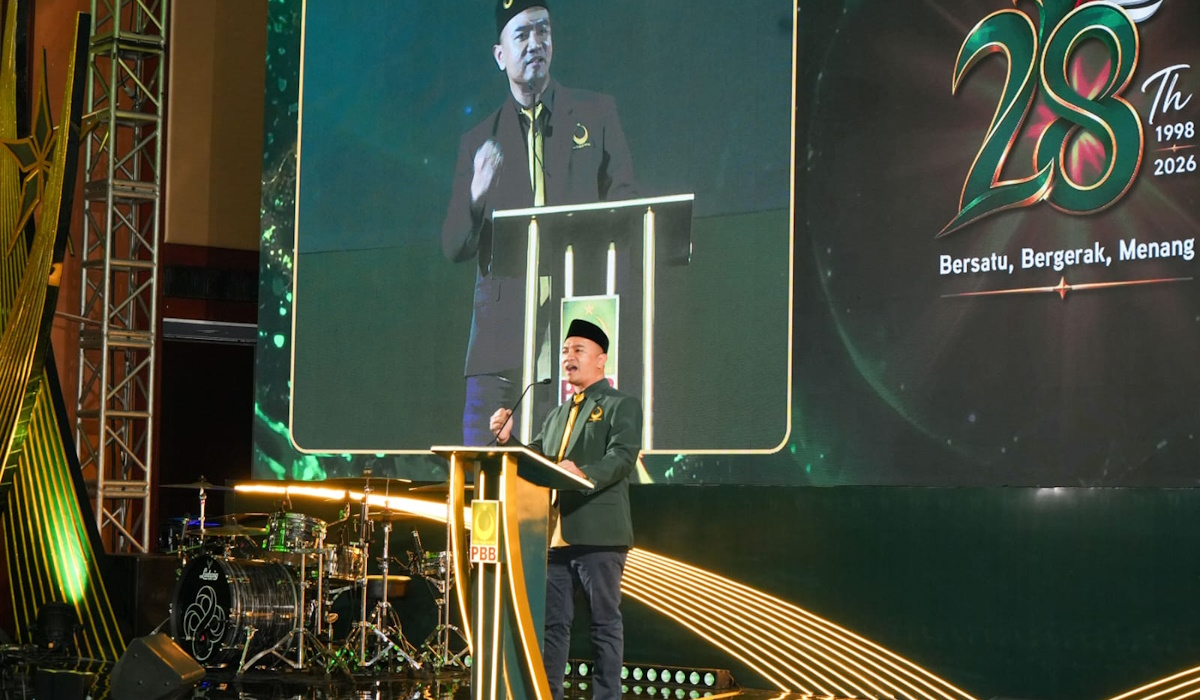
Acting Chairman of the Central Executive Board of the Crescent Star Party (PBB), Yuri Kemal Fadlullah, has stressed that the revision of Law Number 7 of 2017 on General Elections must be a momentum to create a fairer, more democratic electoral system that respects every citizen’s vote. One fundamental issue is the large number of valid public votes that cannot be converted into political representation in parliament due to the parliamentary threshold provision.
‘Every citizen’s vote has equal value. Therefore, the revision of the Election Law must be able to ensure that no public votes are simply lost just because a political party has not met the parliamentary threshold,’ Yuri stated in a release received on 6 August.
He said the discussion on revising the Election Law needs to open space for various ideas and aspirations, particularly from non-parliamentary parties that have also had a base of public support. One concept worth considering is providing a mechanism for political parties to build cooperation or merge political strength after the election results are determined, so that the votes given by the public to these parties still hold representative value in the constitutional system.
‘The essence that must be safeguarded is how the people’s votes remain respected. Do not let millions of valid votes cast by the public lose their political meaning simply because of the current seat conversion mechanism,’ he said.
Yuri assessed that such a mechanism could also serve as a middle ground between the need to maintain the simplification of the party system and the principle of democratic justice. Through this approach, parties sharing similar visions and political platforms can build constitutional cooperation after the election results are determined.
‘A model like this can encourage natural political consolidation. Party simplification is not carried out by eliminating the people’s votes, but through a process of strengthening and merging political forces that have legitimacy from voters,’ he explained.
Furthermore, Yuri expressed hope that the House of Representatives and the Government would genuinely involve all stakeholders in the discussion of the Election Law revision, including non-parliamentary parties, academics, election organisers, and civil society organisations.
‘The revision of the Election Law is not solely about the interests of political parties currently in parliament, but concerns the quality of Indonesia’s democracy in the future. Therefore, all aspirations must be heard so that inclusive, fair regulations are born and capable of strengthening the national democratic system,’ he asserted.