
Revision of Civil Servant Law: A Middle Ground to Protect Contract Workers and Fiscal Stability
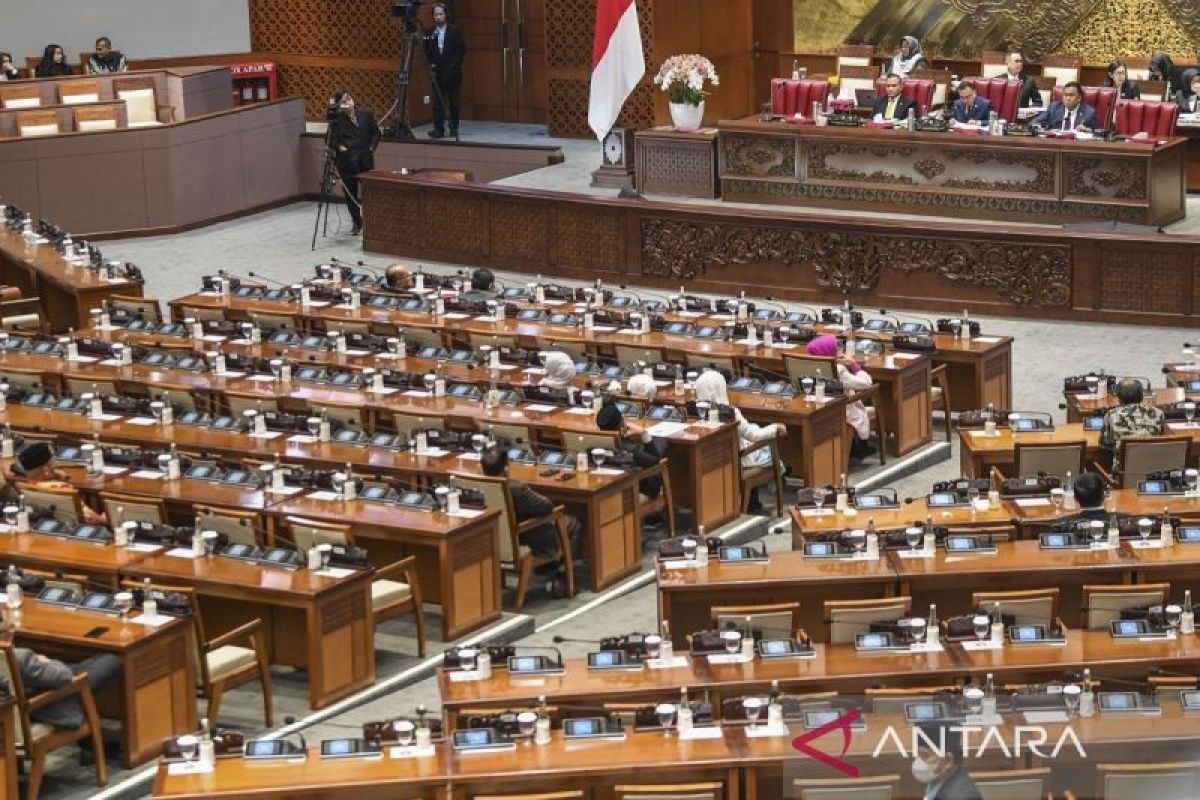
The restructuring of the bureaucracy must be undertaken seriously, including adhering to the mandate of the Constitutional Court Decision Number 121/PUU-XXII/2024 regarding the strengthening of merit system supervision, to ensure that bureaucratic reform truly produces a professional and lean bureaucracy.
Recently, the Minister of Home Affairs, Muhammad Tito Karnavian, the Minister of PANRB, Rini Widyantini, and the Minister of Finance, Purbaya Yudhi Sadewa, held a coordination meeting at the Ministry of PANRB Office in Jakarta. This meeting demonstrates the government’s seriousness in responding to regional concerns regarding the implementation of Law Number 1 of 2022 concerning the Financial Relations between the Central Government and Regional Governments (HKPD).
The meeting serves as a follow-up to recommendations from Commission II of the House of Representatives (DPR RI) and an effort to synchronise inter-ministerial policies. The goal is to ensure that regional bureaucratic restructuring aligns with fiscal capacity, governmental organisational needs, and the certainty of employment status for Government Employees with Work Agreements (PPPK) across Indonesia.
One of the crucial issues discussed was the provision of Article 146 of the HKPD Law, which limits personnel expenditure to a maximum of 30 per cent of the total Regional Budget (APBD). This policy, which is set to take effect in 2027, has raised concerns in many regions, particularly those that remain heavily dependent on apparatus expenditure.
If applied rigidly without considering regional conditions, there are fears that the regulation will narrow fiscal space and reduce the capacity for development spending, which directly impacts the community. The government’s decision to adopt a more adaptive transitional approach is commendable. The Minister of Home Affairs, Tito Karnavian, emphasised that the adjustment period for the 30 per cent maximum limit will be extended and accommodated through a revision of the State Budget (APBN) Law.
This step is vital to ensure that regional governments are not forced into drastic adjustments that could disrupt the stability of public services or the sustainability of bureaucratic reform. With a more adaptive approach, regions with excessively high personnel expenditure compositions will not risk losing the fiscal ability to fund programmes that directly benefit the public.
The central government is also preparing a buffer scheme through fiscal interventions designed by the Ministry of Finance, including the involvement of the local business community to keep the local economic circulation alive. Consequently, public service spending can continue, even as regional budget structures face pressure from high personnel expenditure.