
Revising Presidential Regulations to Decile Classification: Four Years of Empty Hands in Energy Subsidy Reform
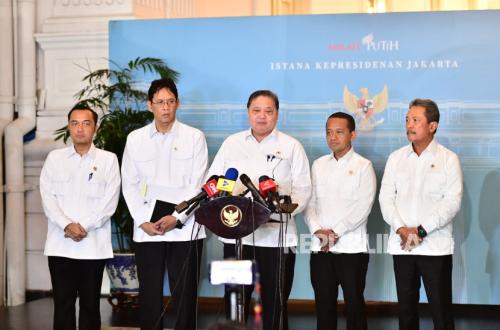
The restructuring of energy subsidies, particularly for fuel oil (BBM), has entered a new chapter. After years of repeatedly promising to revise regulations restricting Pertalite, the government’s approach is now shifting: no longer solely based on vehicle type and engine capacity, but also on the economic condition of the public through decile classification. This change in approach highlights a problem that has remained unresolved since 2022: the government has the idea to make subsidies more targeted but has not yet succeeded in turning that idea into a truly enforceable policy. In fact, the legal problem has long been identified. Presidential Regulation (Perpres) Number 191 of 2014, which serves as the basis for regulating the supply and distribution of BBM, does not yet explicitly regulate which community groups are entitled to use Pertalite as a Special Assignment Fuel Type (JBKP). The government has even prepared its revision several times. The fiscal stakes behind this restructuring are also significant. In 2024, the government allocated approximately Rp435 trillion for energy subsidies and compensation. Of that amount, Minister of Energy and Mineral Resources Bahlil Lahadalia stated that around Rp100 trillion is potentially misdirected. This figure shows that the subsidy problem is not just about who buys the fuel, but also how much of the state budget is absorbed by recipients who should not be enjoying the subsidy.
In July 2022, the government openly stated it was working on a revision of Perpres 191/2014. At that time, the government assessed that the rules needed to be updated so that the distribution of subsidised BBM, including Pertalite, would be more targeted. The Head of BPH Migas at the time, Erika Retnowati, said the revision would include provisions regarding community groups entitled to use subsidised diesel and Pertalite. The problem was quite fundamental: in the prevailing regulation, Pertalite did not have specific consumer regulations. The momentum arose alongside fiscal pressures and increased consumption of subsidised fuel. The government even targeted the revision to be completed soon. In September 2022, the revision was said to be at the Secretariat of State. However, that completion target was not realised. On the other hand, the government had already adjusted BBM prices in September 2022. This condition made the issue of subsidy targeting accuracy even more relevant. Prices could be changed relatively quickly, but deciding who is entitled to enjoy subsidies took years to resolve.
Entering 2023, the discussion on the revision of Perpres 191/2014 became more concrete. The Minister of Energy and Mineral Resources at the time, Arifin Tasrif, said the new regulation would set more detailed criteria for vehicles that could use Pertalite. Parameters that emerged included engine capacity (CC) and vehicle type. The government even began considering different treatment for small vehicles and large vehicles. At the same time, Pertamina began trialling restrictions on Pertalite purchases using QR Codes in several regions. This means that, technically, the government had actually started building infrastructure to control subsidy consumption in a more measured way. The problem is that distribution digitalisation does not automatically solve the policy issue. QR Codes can answer the question of who is buying and how much they are buying, but they still require a legal basis to answer a more fundamental question: who is actually entitled to receive the subsidy. Therefore, in April 2023, the Indonesian Ombudsman assessed that the revision of Perpres 191/2014 was urgent. The Ombudsman considered that the provisions for providing Pertalite compensation did not yet provide firm regulation regarding the beneficiary community groups. In other words, throughout 2023, the government actually had three components: a clear problem, a regulatory draft, and supervisory technology. However, the legal product that was its foundation had still not been issued.
The year 2024 was supposed to be the point of completion. The government again stated that the revision of Perpres 191/2014 would soon be finalised and become the basis for restricting Pertalite and subsidised diesel. From March to May 2024, the government again discussed the criteria for vehicles that could purchase subsidised BBM. The revision was even targeted for completion in the second quarter of 2024. However, the target shifted again. BPH Migas in May 2024 said the completion of the revision could be delayed because there were still a number of substances that had to be discussed across ministries and institutions. In July 2024, BPH Migas again stated that the process was entering the finalisation stage. Information even emerged that the draft revision had been submitted to President Joko Widodo. But once again, the status of “already final”, “already sent”, and “awaiting signature” did not result in the issuance of a new Perpres. Amid this process, the government also began strengthening administrative instruments. As of 1 October 2024, registered Pertalite QR Code users reached 5,515,878 vehicle units. The QR Code is used to record assignment fuel transactions more accurately and transparently, but this instrument still does not replace the need for regulations determining who the subsidy recipients are. The fiscal problem is also becoming more apparent. In 2024, the total allocation for energy subsidies and compensation reached approximately Rp435 trillion. The government estimates that around Rp100 trillion of this is potentially misdirected. This means that almost a quarter of the total allocation is at risk.